Overall Blast Furnace Renovation vs Partial Upgrade: Which Is Better?
Understanding Overall Blast Furnace Renovation and Partial Upgrade
- Understanding Overall Blast Furnace Renovation and Partial Upgrade
- Evaluating the Benefits and Challenges
- Decision-Making Criteria for Procurement Professionals
- Step-by-Step Blast Furnace Renovation Process Overview
- Leveraging Technology and Ensuring Safety
- Conclusion
- FAQ
- Partner with SMEC for Expert Blast Furnace Renovation Solutions
- References
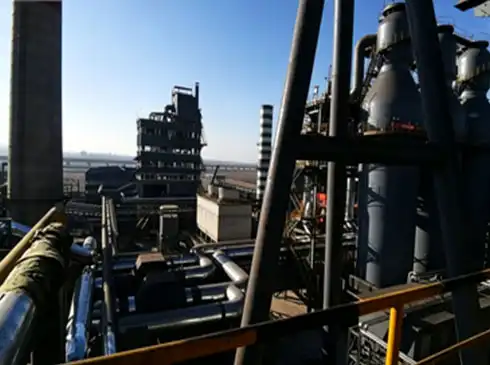
When operating costs rise and production efficiency drops, steel and metallurgical facilities have to decide whether to invest in a full change or make small improvements to deal with current problems. As you can see, an overall blast furnace renovation service provides a methodical solution that increases heat efficiency, extends the life of equipment by 15 to 20 years, and incorporates advanced emission controls. This all-around method fixes structural fatigue, irreversible wear and tear, and outdated technology all at the same time. In contrast, partial changes only fix certain parts temporarily without fixing the system-wide problems that cause them. We'll look at both methods to help procurement professionals make choices that are in line with practical needs and budgetary limits.
Understanding Overall Blast Furnace Renovation and Partial Upgrade
What Defines Comprehensive Renovation?
A full furnace repair is a planned engineering action that involves all of the important parts, from the fire to the throat. This full renovation fixes problems with the structure's integrity, changes worn-out refractory linings in the hearth and bosh areas, adds modern cooling stave systems made of high-purity copper or advanced cast iron designs, and includes automatic control platforms. Usually, the process includes full blow-out steps that let engineering teams look at patterns of carbon block erosion, compare changes in shell thickness, and check how well the cooling water circuit works. When this approach is used, facilities rebuild their ironmaking capacity using modern materials that are made to withstand temperatures above 2,000°C while keeping shell temperatures below 80°C.
Characteristics of Targeted Upgrades
Partially changing things concentrates resources on single parts or sections that need instant attention. Without stopping the whole production cycle, plant managers could replace old tuyeres, fix localized refractory damage in certain areas, improve PLC systems that control load distribution, or make gas cleaning mechanisms better. These fixes deal with problems like lower quality hot metal, higher fuel ratios, or small leaks in the cooling system by replacing specific parts instead of redesigning the whole system. This method works especially well when money issues prevent spending on major items or when production plans don't allow for shutdowns that last longer than two weeks.
Scenarios Dictating Each Approach
Comprehensive renovation is needed when furnaces have been used continuously for 12 to 15 years and show a number of signs of wear and tear, such as hearth carbon blocks that are thinner than the safe operating range, rising failure rates for cooling staves every three months, shell deformation that can be seen with laser alignment surveys, and falling thermal efficiency metrics despite regular maintenance. On the other hand, partial upgrades are best for facilities with newer installations that are having some performance issues. For example, automation systems may need to be updated to work with hydrogen-rich injection technologies, or burden distribution mechanisms may need to be re-calibrated to handle higher pellet proportions in the charge mix.
Evaluating the Benefits and Challenges
Advantages of Complete System Overhaul
Refurbishing everything completely has huge practical benefits that go far beyond just getting things back to normal. When facilities undergo full renovations, their daily production levels hit 2.5 to 3.0 tons per cubic meter, and their coke consumption levels drop by 15 to 22 percent compared to pre-renovation standards. Using microporous carbon blocks that have a thermal conductivity of more than 20 W/m·K stops molten iron from getting through, and carefully designed cooling systems keep the temperature levels the same in all working areas. Environmental compliance gets a huge boost from new top gas cleaning systems that get rid of almost all rogue emissions and make energy recovery more efficient.
The upgrades include multi-layered thermocouple grids and ultrasonic erosion sensors that make digital twins of the thickness of the refractory in real time. This lets maintenance plans be planned ahead of time, which stops catastrophic failures. Automatic Level 1 and Level 2 control systems make charging processes and thermal state management more efficient. This lowers operating variability and raises the uniformity of the hot metal chemistry. The projected campaign life of 15 to 20 years gives businesses financial security and gets rid of the need for frequent emergency repairs that slow down production and cut into profits.
Practical Limitations to Consider
For overall blast furnace renovation service, a lot of money needs to be spent and the boiler has to be shut down for 60 to 110 days, based on how busy it is and how complicated it is. Facilities need to organize a lot of different things, like specialized teams to install refractories, precision welding crews that are approved to meet ASME Section VIII standards, and high-tech testing tools that can look at shell welds without damaging them using ultrasound and radiographic methods. The planning period lasts for 12 to 18 months before the project starts, which means that expert partners need to work together early on and the production schedule needs to be carefully adjusted.
Benefits of Incremental Improvements
Targeted upgrades give facilities that are working with limited funds or output goals the financial freedom and operating consistency they need. For these operations, shutdown windows of 7–14 days are common. This keeps production costs to a minimum and keeps customers' supply promises. Because it is flexible, managers can decide which investments to make based on where operations are currently having trouble. For example, they could improve automation to lower the risk of having to do things by hand, replace worn-out cooling plates in high-stress areas, or update load distribution mechanisms to make gas flow more evenly.
Risks of Limited-Scope Interventions
Some solutions only deal with the signs and not the reasons, which could speed up the breakdown of nearby systems that are still under a lot of thermal and mechanical stress. Facilities may have problems that keep happening and need multiple fixes over the course of three to five years. This can cost more than the total cost of renovations while providing lower performance results. When you combine old systems with new ones that use different technologies, it can make things less efficient or cause problems with connectivity that lower the overall system's reliability.
Decision-Making Criteria for Procurement Professionals
Financial Assessment Framework
Lifecycle cost analyses must be carefully done by procurement teams, who must compare the current capital needs with expected operational costs, repair frequency, and gains in production efficiency over the next 15 years. When a building has to deal with multiple problems at once, like wear and tear, regulatory compliance deadlines, or strategic capacity growth goals, comprehensive improvements give the best return on investment. The study should find out how much energy is saved because of better heat efficiency, how much it saves on upkeep labor costs because of more automation, and how much production is saved because the campaign lasts longer and is more reliable.
Different methods have very different ways of allocating budgets. For full renovations, finance needs to be organized, and the work may be better done in stages on several furnaces to spread out the cost of capital. Paying for only part of an upgrade gives facilities the freedom to plan their spending around their quarterly cash flow trends and put off big investments when the market is down.
Operational Impact Considerations
Different sites have different amounts of downtime they can handle depending on the market, their contractual responsibilities, and the availability of other production capacity. Integrated steel mills with more than one furnace can plan major upgrades to happen in stages while still meeting their production goals. Independent businesses that only use a single furnace may choose to make only partial changes in order to keep making money, even if it means taking less-than-ideal long-term performance paths.
Goals for production ability are very important in choosing a plan. If a facility wants to add on in a brownfield way to make more hot metal within the same area, it needs to do major upgrades that change the shape and volume of the furnace inside. Operations that want to keep their current levels of capacity while also looking for ways to be more efficient may be able to reach their goals by upgrading their automation and control systems.
Selecting Qualified Service Partners
When choosing a partner for overall blast furnace renovation service, you should look for someone who has shown they can install high-temperature refractory, weld precisely enough to meet international standards for pressure vessels, and handle projects during complicated factory shutdowns. Certifications showing that a company follows ISO quality control systems, environmental rules, and safety rules at work are very important for establishing trust.
We've learned over many years of designing and building metallurgical equipment that good relationships include more than just the initial installation. They also include full expert support, operator training programs, and quick response after-sales service networks. When evaluating a provider, it's important to look at examples from similar-sized projects, warranty terms that cover both materials and work, and the ability to get replacement parts for the whole length of the campaign.
Step-by-Step Blast Furnace Renovation Process Overview
Initial Assessment and Planning Phase
Before any renovations can start, the conditions must be carefully checked by metallurgical engineers with a lot of knowledge and the latest testing tools. Teams use laser scanning to record shell shape and find deformation patterns. They also use thermographic imaging to find inefficient cooling systems and look at hot metal chemistry trends to find signs of refractory degradation. These studies lead to detailed reports that list the remaining refractory life, the most important structure reinforcement needs, and goals for improving performance.
The assessment results are turned into thorough engineering specifications by the project design teams. These specifications include choices for refractory materials, cooling system setups, structural changes, and automation architecture. Laser tracking verification methods are built into the designs to make sure that the shell's verticality and the charging system's concentricity stay within ±5mm limits. This is important for making sure that gas distribution is even when operations start up again.
Execution Methodology
Comprehensive repairs follow structured processes that start with controlled furnace blow-out procedures, the orderly removal of worn-out parts, and the careful preparation of shell surfaces for new installs. Installing refractory follows exact thermal management rules and uses microporous carbon blocks that are designed to be very good at conducting heat and not letting it through. When installing a cooling system, the hydraulic pressure is tested at 1.5 times the working pressure to make sure there is no leaking during the campaign.
When you do a partial update, you focus on replacing or improving certain parts of the system while keeping the furnace shell's integrity and reducing the effects on other systems. For these targeted changes to work, careful isolation procedures must be used to keep nearby equipment safe from installation activities and make sure that new parts fit in with the current infrastructure without any problems.
Quality Verification and Commissioning
Through multiple steps of verification, strict quality control methods for overall blast furnace renovation service make sure that the installation is correct. Ultrasonic and x-ray methods are used for non-destructive testing on all important welds to ensure that they meet the requirements of ASME Section VIII. According to ISO 5019 guidelines, refractory materials are tested for their bulk density, cold breaking strength, and thermal shock resistance. Before they can be put into service, cooling systems have to go through a full leak test and flow distribution study.
As part of the commissioning processes, the temperature is slowly raised by following set heating curves that protect new refractory installations from damage caused by thermal shock. Before they take over production control, automated control systems go through a lot of practical testing to make sure the sensors are accurate, the actuators respond quickly, and the algorithms work well. These step-by-step instructions make sure that reconditioned furnaces meet the performance requirements set by the designers from the first starting to full production ramp-up.
Leveraging Technology and Ensuring Safety
Advanced Material Integration
In modern repairs, cutting-edge refractory materials are used that were specially designed to work in harsh thermal conditions and prevent chemical attack. High-performance carbon blocks have a microstructure that is designed to control thermal conductivity, mechanical strength, and resistance to alkali entry, which has been known to speed up hearth erosion in the past. Computational fluid dynamics modeling is used to find the best shape for the water channels in cooling stave designs. This makes it easier to remove heat while reducing pressure drop and the chance of corrosion.
Through real-time process tracking and predictive control methods, automation technologies change how operations can be done. IoT-enabled sensor networks constantly record changes in temperature, gas composition, and the pattern of load fall. They then send this information to mathematical models that figure out the best charging processes and blast parameters. These smart systems lower operational error, increase refractory life through gentler thermal cycles, and let operators respond to process problems before they become a threat to production stability.
Safety and Environmental Excellence
Every part of the makeover is governed by strict safety rules, from the initial shut-down processes to the commissioning and return to service phases. Teams use strict processes for entering tight spaces, systems for obtaining permits for hot work, and fall protection equipment to keep people working at heights on furnace shells safe. Specialized training programs make sure that work teams know how to spot heat hazards, what to do in an emergency, and how to handle advanced refractory materials properly.
Improving the environmental performance of a renovation is a big plus that meets both legal standards and business sustainability goals at the same time. New gas cleaning systems remove small particles from pollution and make it easy to get energy from top gas streams. This lowers the carbon footprint of the plant by 18–25% compared to older systems. Better covering of the hearth gets rid of fugitive fumes that happen during tapping, which protects workers' health and lessens the damage to the environment.
Conclusion
Ultimately, the choice between a full update and a partial upgrade for overall blast furnace renovation service relies on the state of the building, the practical goals, and how well the financial plan fits with those goals. Complete renovations lead to huge gains in performance, campaign lifespans of more than 15 years, and regulatory compliance confidence that makes a big upfront investment worthwhile. Partially upgrading facilities gives you tactical freedom to deal with current issues while keeping capital for facilities that are just starting to work or are temporarily short on funds. When choosing renovation paths, procurement professionals need to look at the total lifespan costs, the needs for production continuity, and strategy capacity plans. The most successful facilities know that putting off thorough upkeep can lead to worsening damage that needs emergency repairs that interrupt operations and cost more than planned for renovations.
FAQ
How long does typical comprehensive renovation require?
The time it takes to go from blow-out to blow-in depends on the size of the furnace, how complicated the structure changes are, and how much of the cooling system needs to be replaced. Renovations of furnaces between 1,000 and 3,000 cubic meters are usually finished in 75 to 85 days using flexible building methods and skilled installation teams. Larger furnaces (more than 4,000 cubic meters) may need longer lead times to allow for more complex cooling stave setups and longer refractory installation processes.
Can partial upgrades postpone comprehensive renovation needs?
When you fix individual problems with degradation, strategic partial upgrades that focus on modernizing automation, fixing refractory in certain areas, or replacing parts of the cooling system can add two to four years to the working life. However, facilities that are getting close to the end of their campaigns and have multiple signs of degradation, such as crust erosion, shell deformation, and widespread cooling system deterioration, can't reliably put off major renovations by making small changes. They would have to accept higher breakout risks and lower thermal efficiency.
What drives renovation project costs?
Specifications for materials, like high-performance carbon blocks, precision-engineered cooling staves, and structural steel that meets pressure vessel standards, make up the biggest part of the cost. The second main type of cost is the specialized work needed for installing refractories, certified welding, and precise alignment processes. The length of a project affects indirect costs by reducing production income during long shutdown times. However, these effects are lessened by careful planning and efficient execution.
Partner with SMEC for Expert Blast Furnace Renovation Solutions
Facility owners looking for reliable overall blast furnace renovation service backed by strict quality standards and full technical support can turn to SMEC. They have a lot of experience in the building of metallurgical equipment. Our engineering teams use their many years of experience in the ironmaking industry, modern diagnostic tools, and long-term partnerships with top refractory providers to provide complete renovation solutions that are perfect for your needs and your budget. We know how hard it is for procurement workers to find the right mix between capital investment, production continuity, and long-term performance improvement.
As part of our full range of services, we do everything from initial condition assessments to commissioning support and operator training. This makes sure that the project runs smoothly and that the building works perfectly after the renovations are done. Email our technical experts at project@smec.cc to talk about the problems your building is facing and to look into unique remodeling plans. SMEC has the knowledge and production skills that top steel makers and metallurgical operations rely on for important infrastructure investments, whether they're looking at full overhaul choices or focused upgrade paths.
References
Biswas, A.K. (2020). Principles of Blast Furnace Ironmaking: Theory and Practice. Brisbane: SIM Publications.
Geerdes, M., Toxopeus, H., & van der Vliet, C. (2019). Modern Blast Furnace Ironmaking: An Introduction (Fourth Edition). Amsterdam: IOS Press.
International Iron and Steel Institute. (2018). Guidelines for Blast Furnace Renovation and Life Extension. Brussels: IISI Technical Committee Report.
Nightingale, R.J. & Tanzil, F.W. (2017). "Economic Analysis of Blast Furnace Maintenance Strategies in North American Steel Operations." Iron & Steel Technology, 14(8), 72-89.
Zhang, J., Liu, Z., & Wang, G. (2021). "Advanced Refractory Materials for Extended Blast Furnace Campaign Life." Metallurgical and Materials Transactions B, 52(4), 2156-2171.
U.S. Department of Energy. (2019). Best Practices for Energy Efficiency in Ironmaking: Blast Furnace Optimization and Renovation Strategies. Washington, DC: DOE Industrial Technologies Program.
Free consultation & volume discounts available
SEMC focuses on the entire metallurgical process—from coking, ironmaking, and steelmaking to continuous casting and rolling. Whether you face challenges related to equipment upgrades, energy efficiency optimization, or overall process transformation, please fill in the following information. Our technical team will provide you with tailor-made high-end equipment upgrade solutions and professional EPC design services to help your project be implemented efficiently.










Recommended Blog
OEM Blast Furnace Tuyere Equipment: Benefits for Steel Plants
Comparing Different Types of Blast Furnace Tuyere Equipment
Why Modern Steel Plants Use Automatic Drill Rod Replacement Devices
A Complete Guide to Blast Furnace Riser Pipe Maintenance and Replacement
Common Issues with Blast Furnace Riser Pipes and How to Fix Them