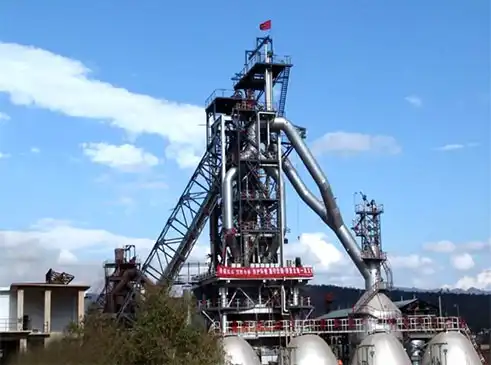
Does Fast Installation Affect the Quality of Self-Standing Furnace Shell Equipment?
Does Fast Installation Affect the Quality of Self-Standing Furnace Shell Equipment?
Understanding Self-Standing Furnace Shells and Their Installation Process
- Understanding Self-Standing Furnace Shells and Their Installation Process
- Does Fast Installation Compromise Furnace Shell Quality?
- Design and Material Considerations That Support Reliable Fast Installation
- Maintenance and Post-Installation Quality Assurance
- Procurement Recommendations: Balancing Installation Speed, Quality, and Cost
- Conclusion
- FAQ
- Connect With SMEC for Reliable Blast Furnace Shell Solutions
- References
When procurement engineers and plant managers first encounter the short installation cycle of blast furnace self-standing furnace shell equipment, a reasonable concern surfaces: does speed come at the expense of structural integrity? The short answer is no — and the reasoning matters. At SMEC, the compressed on-site schedule is not a shortcut. It is the direct result of shifting the most precision-sensitive work — welding, dimensional alignment, and non-destructive testing — from the unpredictable job site into a controlled factory environment. Quality is not traded away; it is relocated and reinforced.

Understanding Self-Standing Furnace Shells and Their Installation Process
A blast furnace self-standing furnace shell equipment is different from other types of shells because it is made as a load-bearing, modular steel covering that doesn't need an outside support system. It combines structural steel plating, expansion joint systems, and cooling plate holes into pieces that are already put together and have been machined to within a few millimeters of accuracy.
What Happens Before the Shell Reaches Your Site?
In a normal production plant, SMEC makes sure that every part they make goes through prefabrication, welding, grinding, and a full-coverage non-destructive examination. This includes x-rays (RT) and ultrasounds (UT) of all longitudinal and circumferential weld seams to make sure there are no holes in the welds. Before any unit ships, 3D laser scanning is used to check the accuracy of the dimensions by checking the unit's circularity and verticality. Every steel plate has a material traceability record that connects it to its original heat number. This shows that it meets standards for chemical composition and impact toughness, like ASME Section VIII Division 1, EN 13445, or GB 713.
What On-Site Installation Actually Involves?
Once the modules get to the plant, the only work that can be done there is lifting, placing, fixing, and connecting the joints. There is no heavy field welding, casting, or hardening. SMEC uses a technical inspection team to make sure that the hoisting is precise, the seams are tight, and the structure is straight all the way through. This streamlined sequence gets rid of the things that usually cause problems: changing temperatures during welding, curing that is affected by humidity, and visual-only weld inspection in low-light situations.
Does Fast Installation Compromise Furnace Shell Quality?
The main question is this, and the data from modular construction methodology makes it very clear. If the problem has already been solved upstream, in a plant, speeding up the timelines on-site doesn't add any risk.
When compared to standard field-erected shells, SMEC's modular pre-assembly method cuts down on the time needed for building on-site by more than 70%. That number doesn't come from getting rid of quality steps; it comes from finishing them faster and better. Here are the main structure benefits this method gives you:
- Weld integrity beyond field capability: Factory welding clamps hold plates in exact places, which lets automatic or semi-automated weld passes that always meet or beat RT/UT acceptance standards happen. This can't be done with field welding in wind, shaking, and changing temperatures.
- Dimensional consistency across zones: The hearth, bosh, belly, and stack parts have already been checked. For tight-tolerance assembly, mating surfaces are machined, which means that alignment on-site only needs millimeter-level changes and not rework of whole sections.
- Residual stress management: Post-weld heat treatment (PWHT) is done and recorded at the plant. This lowers internal pressures that are a major reason why shells crack too soon when they are subjected to cyclic thermal loading.
These benefits directly deal with the three common ways that traditional shell building fails: cracks caused by thermal fatigue, gas leaks at weld seams, and refractory damage caused by misalignment. By taking care of every possible problem before the shell even leaves the factory floor, SMEC ensures structure performance that can't be harmed by shorter field timelines.
Design and Material Considerations That Support Reliable Fast Installation
The speed benefit of SMEC's blast furnace self-standing furnace shell equipment design comes from the engineering accuracy built into the design itself. Picking the right materials and making sure that the shapes are all the same are what make fast installation safe.
High-Strength Plate Selection
High-yield-strength pressure vessel steels like Q345R, P355GH, or ASTM A516 Grade 70 are used for shell plating. Plate widths can be anywhere from 30 mm to over 100 mm, based on the furnace zone. The steel surface doesn't rust up to 400°C, and the structure can handle pressures inside that are higher than 0.3 MPa while it's running all the time. These qualities are checked for each material, they are not taken for granted.
Modular Standardization and CAD/CAM Integration
Advanced CAD/CAM modeling led to standardized section geometry. This means that on-site teams combine already-checked parts instead of starting from scratch. Expansion joints are pre-installed and set up to separate shell sections from external support structures. This keeps the sections from deforming due to stress during thermal cycling. When every part is made to fit a single verified counterpart, installation speed comes from clear engineering, not cutting corners.

Maintenance and Post-Installation Quality Assurance
A quick installation cycle doesn't close the quality loop; it just starts the operating phase, which needs its own set of rules.
Monitoring Practices That Extend Shell Life
SMEC suggests that high-stress areas, like the hearth and bosh areas, should have NDT checks every two to three years during planned small outages. Thermal monitoring systems can find hot spots early on, before they get so bad that they burn through. With sensor data supporting predictive maintenance, plant teams can step in when it suits them, not when there is an emergency. The blast furnace self-standing furnace shell equipment was built to last for 15 years or more, but that estimate relies on how often it is inspected.
Addressing Residual Risks From Any Installation Scenario
Post-installation checks are still the norm, even when parts are prefabricated in the factory. SMEC checks all shell holes and weld joints for vacuum bubble leaks and pressure decay after they are connected on-site. Any difference in circularity or joint gap that isn't within the specifications is fixed before thermal commissioning starts, following written steps instead of winging it in the field.
Procurement Recommendations: Balancing Installation Speed, Quality, and Cost
When choosing a blast furnace self-standing furnace shell equipment provider, you need to look at more than just unit prices. Integrated steel mills, EPC contractors, and independent coking plants all use the same three criteria to make decisions: quality control records that can be shown, quick customer service after the sale, and the ability to install modules.
Self-standing shell systems are better than traditional field-erected alternatives when it comes to operational calculus. Less downtime for the blast furnace during installation means more money for production. With fewer people on-site and a shorter schedule, costs and risks related to site planning go down. Standardized parts make it easier to get replacement parts over the life of the shell.
SMEC's standard lead time, which includes buying materials and putting together modules ahead of time, can be matched with project start dates by ordering in bulk and scheduling deliveries in stages. Customized manufacturing talks help engineering teams choose the right plate thickness, expansion joint layout, and cooling aperture layout for their furnace's volume and pressure needs.
Conclusion
When the building method is engineered properly, speed and quality don't have to be at odds with each other. Because the precise work is done and checked before field installation starts, SMEC's blast furnace self-standing furnace shell equipment shortens the time needed on-site. Factory prefabrication, full NDT coverage, standard modular geometry, and on-site expert direction all work together to make shell structures that are more accurate in size, weld integrity, and long-term thermal stability than traditional field-erected options. There isn't a question of whether fast installation is safe for plant engineers and procurement managers looking at shell options. The question is whether the present supplier has the factory infrastructure to make it possible.
FAQ
Does a shorter installation period reduce the shell's service lifespan?
No, the service life of SMEC's modular blast furnace self-standing furnace shell equipment—which is made to last 15 years or more of continuous cyclic operation—depends on the quality of the materials used in the factory and the strength of the welds, not how long it takes to install on-site. No matter how quickly the assembly is done on-site, factory NDT coverage and PWHT processes protect long-term performance.
What certifications should procurement teams verify when sourcing furnace shell equipment?
ASME Section VIII Division 1, EN 13445, or GB 713 compliance are some of the most important standards to check. It is necessary to have material traceability records (MTR) and recorded NDT data, such as RT and UT reports for all weld seams.
How does material choice affect installation speed and structural performance?
High-yield plates, such as Q345R or ASTM A516 Grade 70, have the right amount of strength to thickness so that smaller, lighter pieces can be used without affecting the structure's strength. It's easier to lift and place perfectly lighter pieces, which directly speeds up installation without lowering their load-bearing capacity or thermal resistance.
Can the shell accommodate future process upgrades, such as hydrogen-rich injection?
Yes. It is possible to add higher-grade alloy plates to independent shells to make them resistant to hydrogen embrittlement. This means that they can adapt to changing ironmaking chemistry without having to have their whole structure replaced.
Connect With SMEC for Reliable Blast Furnace Shell Solutions
SMEC sells blast furnace self-standing furnace shell equipment to steel mills, coking plants, and EPC contractors all over the world. They have a 23,000-square-meter production facility, 168 engineering professionals, and make sure that every unit they ship goes through full NDT protocols. Our team at project@smec.cc is ready to help you with technical questions and manufacturing specs, whether you need a full shell set or replacement modules that are specific to a zone. Visit smecltd.com to review our capabilities and request a project-specific quote.
References
1. Journal of Iron and Steel Research International — 2021
2. Steel Research International — 2020
3. ASME Boiler and Pressure Vessel Code, Section VIII Division 1 — 2023
4. Ironmaking & Steelmaking: Processes, Products and Applications — 2019
5. NDT & E International — 2022
6. International Journal of Pressure Vessels and Piping — 2021
Free consultation & volume discounts available
SEMC focuses on the entire metallurgical process—from coking, ironmaking, and steelmaking to continuous casting and rolling. Whether you face challenges related to equipment upgrades, energy efficiency optimization, or overall process transformation, please fill in the following information. Our technical team will provide you with tailor-made high-end equipment upgrade solutions and professional EPC design services to help your project be implemented efficiently.
Recommended Blog
_1789637847123.webp)
How Long Is the Service Life of Blast Furnace Hot Stove Refractory Lining?
What Makes High-Performance Blast Furnace Valves Different?
How Granulated Blast Furnace Slag Supports Sustainable Manufacturing