Are Dense Welded Cooling Plates Difficult to Install and Retrofit?
Understanding Dense Welded Cooling Plates in Blast Furnaces
- Understanding Dense Welded Cooling Plates in Blast Furnaces
- Common Challenges in Installing and Retrofitting Dense Welded Cooling Plates
- Step-by-Step Guide to Installing and Retrofitting Dense Welded Cooling Plates
- Comparison: Dense Welded Cooling Plates vs. Traditional Cooling Plates in Installation and Retrofit
- Best Practices for Choosing and Working with Dense Welded Cooling Plate Suppliers
- Conclusion
- FAQ
- Partner with SMEC for Your Next Blast Furnace Cooling Upgrade
- References
If you've been weighing a blast furnace cooling system upgrade, this question has almost certainly crossed your mind. The short answer is no — not with the right engineering approach. A high-sealing dense welded cooling plate for blast furnace applications, when manufactured with modular prefabrication, dramatically simplifies on-site work. Unlike conventional cooling equipment that demands extensive field welding, these plates arrive with structural assembly, weld sealing, and pressure testing already completed at the factory. What remains on-site is alignment, fixing, pipe connection, and localized sealing reinforcement — work that experienced crews can execute with precision and speed.

Understanding Dense Welded Cooling Plates in Blast Furnaces
What Sets Them Apart from Conventional Cooling Systems?
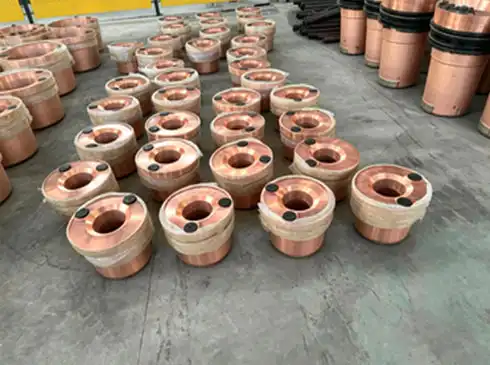
It is designed so that high-sealing dense welded cooling plates for blast furnace can handle the flow of heat in the lower stack, belly, and bosh areas of a blast furnace, which are the hottest spots. The thing that makes them unique is that they have a structure that is tightly sealed and thickly welded, so there are no tiny holes where hot gasses or moisture can get in. These plates are made from special steel alloys that are chosen for their high thermal conductivity and structural strength. They create a stable thermal barrier that helps a protective slag skin form on the furnace lining.
This slag skin behavior isn't just for looks. According to a study released in Ironmaking & Steelmaking, stable slag formation greatly lowers refractory wear and increases the campaign life of blast furnaces. This directly means fewer unexpected shutdowns and lower long-term repair costs for procurement engineers and plant managers.
Core Material and Design Advantages
How well a high-sealing dense welded cooling plate for blast furnace works depends a lot on the material used and how well the welds are done. SMEC engineers these plates using alloy grades that have been tested under repeated thermal loading. This makes sure that the plates' dimensions stay the same over thousands of hours of use. The welded construction, which is done fully in the plant, provides consistent sealing quality that can't be matched by welding in the field.
Common Challenges in Installing and Retrofitting Dense Welded Cooling Plates
Precision Alignment and Sealing Complexity
It's reasonable that many plant engineers are cautious when they do cooling plate retrofits. Traditional field-welded cooling systems need to be carefully installed piece by piece, which can lead to weld flaw risks, alignment drift, and longer burner downtime. Having to deal with custom parts that are too big inside a furnace shell that is still running or has just been turned off adds to the operational stress.
During retrofit jobs, these are the problems that buying teams most often run into:
- Weld quality inconsistency: When you weld in the field under tight site conditions, there is variability. Welds that aren't fully fused together or have holes in them can weaken the cooling circuit and cause leaks that need expensive re-entry.
- Alignment drift during installation: Heavy parts need to be placed precisely. Any change in angle at the mounting surface affects the evenness of the thermal contact and the flow of water across the cooling circuit.
- Integration with legacy infrastructure: Modular cooling upgrades were not thought of when older blast furnaces were built. Site-specific engineering changes are often needed for pipe routing, shell penetration shape, and mounting anchor patterns.
There are real problems here, but they can be fixed. The important thing is how much of the problem is solved before the tools get to the job site.
Step-by-Step Guide to Installing and Retrofitting Dense Welded Cooling Plates
From Factory Completion to On-Site Deployment
The modular prefabrication philosophy at SMEC moves most of the technical work upstream. The manufacturing facility is where the high-sealing dense welded cooling plate for blast furnace structural body, weld sealing, and hydrostatic pressure testing are all done. On-site tasks are cut down to lifting and placing, mechanical fixing, pipe connection, and localized sealing reinforcing. This is a faster and more manageable way of working.
The steps in the practical sequence are as follows:
- Pre-installation assessment: SMEC's technical team checks the shape of the current furnace, the state of the shell, and the layout of the water circuit. Checks for material compatibility make sure that the grade of cooling plate chosen is compatible with the furnace zone's chemical and temperature environment.
- Factory prefabrication and quality verification: All dense weld joints, internal water lines, and pressure-bearing surfaces are done in a controlled workshop. Before being sent out, every module goes through hydrostatic testing, which is a standard SMEC quality checkpoint.
- On-site hoisting, alignment, and fixing: Standardized module sizes and universal connection interfaces make positioning quick and easy. With experienced installation crews managing multiple tasks at once, pipe routing preparation goes on at the same time as alignment and fixing.
- Pipe connection and localized sealing: The final water circuit connections and surrounding sealing strengthening are done, and there is no need for complicated welding to be done on-site. Thermal performance checks and leak detection tests done after installation show that the system is ready to go.
This method shortens the time needed for retrofitting by more than 50% compared to traditional block-by-block field welding. This cuts down on blast furnace downtime and the economic losses that come with long production stops.

Comparison: Dense Welded Cooling Plates vs. Traditional Cooling Plates in Installation and Retrofit
Technical and Economic Differences That Matter
Putting modular high-sealing dense welded cooling plates for blast furnace next to more common options makes the case for them more clear.
When it comes to buying, traditional cooling plates made of cast iron or high-sealing dense welded cooling plate for blast furnace field-welded steel cost less per unit. However, installing them takes longer, requires more work, and depends on welds. When the heat flux is high, the campaign life is shorter, maintenance needs to be done more often, and there is a higher chance of an unplanned failure. All of these things add up to a high total cost of ownership over time.
High-sealing dense welded cooling plates for blast furnace cost more up front and need to be installed with more care. The sealed, fixed design of these structures, along with the strength of high-purity alloy materials, makes them last longer, wear less, and require less emergency repair. For steel mills and coking plants that work together all the time, the business case is simple: fewer shutdowns make the investment upstream worthwhile.
When comparing both options, procurement professionals should look at more than just unit cost. They should also look at the supplier's after-sales service, the availability of installation support, and the lead time for spare parts. The full service partnership, not just the purchase order, determines how reliable operations will be in the long run.
Best Practices for Choosing and Working with Dense Welded Cooling Plate Suppliers
Evaluating Supplier Capability Beyond the Specification Sheet
When choosing a blast furnace cooling plate provider, you need to look closely at a number of factors. The size of the factory, certifications in quality management, and knowledge with customizing furnaces all have an effect on how the job turns out. When it comes to EPC companies handling multi-phase project timelines, lead times and MOQ structures make it harder to be flexible with their schedules.
SMEC's main office is in Taiyuan, Shanxi Province, which is 68,700 square meters and is known as China's center for making energy and heavy chemicals. SMEC has 168 engineering and technical staff, 30 of whom are senior engineers, and an in-house Large-scale Intelligent Coking Equipment Research Institute. This gives the company both the ability to make things and a real depth of engineering knowledge. The construction teams for this company are familiar with a wide range of blast furnace structure setups. This lets them handle multi-process parallel scheduling, which cuts down on retrofit times even more while still meeting strict quality standards.
Partnering with suppliers that offer technical advice, site inspections, and help after the system is installed lowers the risk of buying something and makes sure that it works as planned from the start.
Conclusion
Changing the cooling system in a blast furnace is a big practical choice, but it doesn't have to take a long time or be hard to install. The high-sealing dense welded cooling plate for blast furnace from SMEC are designed with modular prefabrication, factory-completed weld sealing, and standardized interfaces to make the retrofit process controlled, efficient, and technically proven. The operational and economic case is based on technical fact, not marketing claims, since the on-site building time is more than 50% shorter than with standard methods.
FAQ
How much downtime should I expect during a cooling plate retrofit?
When SMEC's modular prefabricated design is used instead of traditional field welding methods, construction time on-site is cut by more than 50%. The exact time depends on the size of the furnace, the scope of the zones, and the conditions at the site. However, parallel multi-process scheduling cuts the time even more.
Are dense welded cooling plates compatible with older blast furnace shells?
Yes, SMEC does pre-installation checks that look at the shape of the old furnace, the integrity of the shell, and the routing of the water circuit. Standardized module interfaces allow for adaptations that are specific to the spot without having to make changes during installation.
What quality checks are performed before delivery?
At the factory, each module is put through hydrostatic pressure testing, weld seam inspection, and dimensional verification. Before the equipment leaves the factory, these checks make sure that the structure is sound and that the cooling system is closed up properly.
Can SMEC help with placement on-site?
Yes, SMEC uses skilled installation teams that know how to work with a lot of different blast furnace designs and retrofit procedures. They make sure the project stays on track with quality standards, precise alignment, and pipeline connections.
Partner with SMEC for Your Next Blast Furnace Cooling Upgrade
Trusted high-sealing dense welded cooling plate for blast furnace maker from SMEC. They offer designed solutions that include modular prefabrication, strict factory quality control, and on-site expert support. Our engineering team is ready to give you site-specific advice whether you're planning a full repair or looking at different cooling system options for a new project. Go to smecltd.com or email project@smec.cc to talk about the needs of your project.
References
1. Ironmaking & Steelmaking — Taylor & Francis, 2019
2. Journal of Iron and Steel Research International — Springer, 2021
3. Steel Research International — Wiley-VCH, 2020
4. Metallurgical and Materials Transactions B — Springer, 2018
5. ISIJ International — Iron and Steel Institute of Japan, 2022
6. Transactions of the Indian Institute of Metals — Springer, 2020
Free consultation & volume discounts available
SEMC focuses on the entire metallurgical process—from coking, ironmaking, and steelmaking to continuous casting and rolling. Whether you face challenges related to equipment upgrades, energy efficiency optimization, or overall process transformation, please fill in the following information. Our technical team will provide you with tailor-made high-end equipment upgrade solutions and professional EPC design services to help your project be implemented efficiently.
Recommended Blog
How Fast Can a Hydraulic Drill Rod Changer Replace Blast Furnace Drill Rods?
What to Look for in Blast Furnace Tower Equipment Suppliers