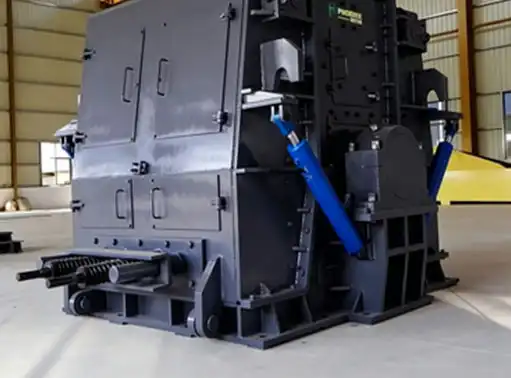
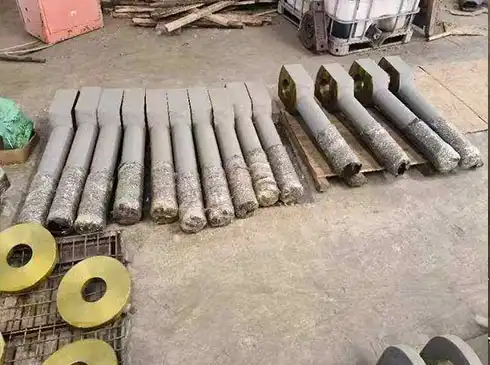
How to Safely Replace Blast Furnace Drill Rods
Understanding Blast Furnace Drill Rod Replacement and Its Challenges
- Understanding Blast Furnace Drill Rod Replacement and Its Challenges
- Step-by-Step Guide to Safely Replace Blast Furnace Drill Rods
- Exploring Types and Technologies of Blast Furnace Drill Rod Replacement Devices
- Maintenance, Troubleshooting, and Installation of Replacement Devices
- Procurement Considerations for B2B Buyers of Drill Rod Replacement Devices
- Conclusion
- FAQ
- Partner with SMEC for Advanced Taphole Drilling Solutions
- References
Changing drill rods in systems that drill holes in blast furnaces is a real problem that affects both safety and efficiency. A blast furnace drill rod replacement device automatically loads, unloads, and switches out heavy drill rods. This gets rid of the need for workers to handle the rods by hand in hot places where they could get burned. These specialized parts are directly connected to the machinery that drill holes in holes. They use hydraulic or pneumatic actuation to achieve exact alignment and quick switching, which usually cuts the time it takes to replace them from 20 to 30 minutes by hand to less than four minutes. The device solves important problems, like workers being exposed to high temperatures, production stopping for manual rod swaps, and having to handle parts by hand in dusty casting rooms, which are all very hard to do.
Understanding Blast Furnace Drill Rod Replacement and Its Challenges
The Critical Role of Rod Replacement in Metallurgical Operations
For blast furnace taphole drilling to work, it has to be reliable all the time. The drill rod is made of steel and goes through the furnace clay plug to release the molten iron. It has to deal with a lot of temperature cycles, wear and tear, and mechanical stress. During each tapping cycle, the rod is heated to more than 1,400°C in the taphole zone. The temperature inside the casting house is also usually higher than 500°C. In this working setting, rods need to be replaced often to keep drilling working well and keep catastrophic fails from happening during tapping operations.
Common Hazards and Operational Risks
When repair teams change rods by hand, they put themselves in a lot of danger. Radiant heat from the taphole can burn badly, and working with rods that weigh 50 to 80 kilograms in small areas makes it more likely that you will hurt your muscles or bones. Misalignment during hand installation lowers the accuracy of the cutting, which could damage the furnace refractory or leave the taphole opening unfinished. These events cause unexpected downtime, which lowers the output of the furnace and throws off the carefully planned rhythm of ironmaking operations, where timing has a direct effect on the temperature and chemistry of the metal.
Regulatory Compliance and Cost Implications
More and more, industry safety rules require building controls to keep workers from being exposed to dangerous situations. Not putting in place enough safety measures can lead to fines from the government, higher insurance rates, and damage to your image. Inefficient rod replacement has a cost effect that goes beyond compliance and builds up quickly. Every minute of unplanned downtime costs integrated steel mills thousands of dollars in lost production, and if tapping operations are hacked, it can lower the quality of coke and make the blast furnace less efficient.
Step-by-Step Guide to Safely Replace Blast Furnace Drill Rods
Pre-Replacement Assessment and Hazard Mitigation
Before starting any replacement work, thorough danger spotting sets up safe working conditions. Thermal image scans show where the heat is coming from around the taphole drilling machine and show which areas need more cooling or shielding. Monitoring the atmosphere finds carbon monoxide and other burning gases that build up in casting houses. Standard metallurgical PPE isn't enough to protect people in this situation. Anodized heat-reflective suits, respirators rated for high-temperature particulates, and specialty hands rated to 300°C are all needed when working with rods near active tapholes.
A site checkup checks the integrity of the hydraulic system by looking for fluid leaks that could catch fire if they come into touch with hot surfaces. Lockout-tagout processes cut off power sources so that machines don't start up by chance while they are being serviced. Communication methods make sure that operators of drilling machines, controllers of the blast furnace drill rod replacement device, and senior staff can all understand each other clearly. This is especially important in noisy places where spoken contact isn't reliable.
Sequential Procedural Steps for Rod Replacement
The replacement process starts with pulling the drilling machine away from the taphole face. This lets the rod cool down below the temperature at which it can't be handled safely. Automated blast furnace drill rod replacement device make this process a lot easier. The hydraulic clamp on the device grabs the worn rod at a set place, usually 200 to 300 mm from the connecting end. Clamping force, which is set between 50 and 80 kN based on the width of the rod, keeps things in place securely without deforming the surface of the rod.
The next step is controlled extraction. The device pulls the rod out along a linear rail system that stays in line with the axis of the drilling machine. This level of accuracy stops binding or shifting, which could damage machine parts. Once the worn rod is fully removed, the device turns or translates it to a staging position while putting a new rod in place for fitting at the same time. The new rod, which has already been checked for straightness and proper connection, fits perfectly into the drilling machine's chuck, with an accuracy of less than a millimeter.
How Specialized Devices Enhance Safety and Efficiency
These days' blast furnace drill rod replacement devices have many safety measures that go beyond what can be done by hand. When proximity sensors pick up people in dangerous areas, the gadget stops working until the area is clear. Thermal cameras keep an eye on the temperature of the rods during the replacement cycle. This keeps parts from being handled too soon before they are properly cooled. Integrated PLC control systems run pre-programmed routines that can't be repeated by hand. This gets rid of the variability that comes from operators getting tired or distracted.
Protocols for emergency preparation that are built into automatic systems are very important for safety. When the power goes out, manual hydraulic overrides let the rods be recovered. This keeps the taphole drilling device from getting stuck when a rod is only partly in place. Load cells constantly check the extraction force and sound an alarm if the resistance goes above normal levels. This is an early sign that the rod is partly stuck because the slag has solidified. With these smart features, replacement goes from being a spontaneous maintenance job to a planned, managed process.
Exploring Types and Technologies of Blast Furnace Drill Rod Replacement Devices
Automation Levels and Their Operational Impact
Blast furnace drill rod replacement devices come in a range of designs, from fully automatic to those that need to be operated by hand. Hydraulic cylinders and guided tracks give manual-assist systems a mechanical edge, but the user has to do something at every step of the process. These entry-level solutions work best for smaller stoves that only need eight to ten taps a day, because the cost of fully automating them might be higher than the efficiency gains.
Some semi-automated devices can automatically remove and enter rods, but they need to be placed and checked for quality by a person. These systems find a balance between the cost of capital and the cost of less labor. They usually pay for themselves within 18 to 24 months by lowering the number of workers needed and the costs linked to injuries. Fully automated setups work with the plant's main control systems, so replacement rounds can be carried out without any help from people other than supervisors. In casting shops where tapping processes happen 12 to 15 times a day, technology is needed to keep up with production while keeping workers from getting too hot over time.
Critical Mechanical and Electronic Components
Strong structure parts made of Q345B or similar high-strength alloy steels support the motorized parts of these devices. These materials can handle being exposed to constant vibrations from drills and temperature cycles from radiant heat. At 16–32 MPa, hydraulic systems provide the force needed to break through the friction between old rods and drilling machine chucks. High-temperature Viton elastomers are used to make seals that keep their hydraulic integrity in temperatures above 200°C. Under normal working conditions, these seals usually last for 12 months.
Industrial-grade PLCs with memory backup are used in electronic control systems to make sure that programs stay in place during power changes that are common in high-energy metallurgical settings. Position encoders tell you where the rod is at all times during the replacement cycle. This allows closed-loop control that accounts for wear and temperature expansion. Human-machine interfaces show process factors and monitoring data, which makes it easier to figure out what's wrong quickly when it does.
Integration Challenges with Existing Infrastructure
Putting in new blast furnace drill rod replacement device in old casting houses is hard because of space and interface issues. Different mounting setups are used by legacy drilling machines from companies like TMT and Dango & Dienenthal. This means that special interface brackets are needed to allow for the integration of blast furnace drill rod replacement devices. In order for electrical systems to work with current furnace control designs, older relay-based systems often need to be converted to work with newer PLC-controlled devices.
For operational unity to work, tapping dates need to be carefully coordinated. To keep output from stopping, installation times are timed to align with planned furnace repair periods. Dry-run cycle testing checks the mechanical range of motion, hydraulic response times, and control system logic before the system is put through working temperatures. This staged evaluation method lowers the chance that new problems will affect production after installation.
Maintenance, Troubleshooting, and Installation of Replacement Devices
Routine Maintenance Protocols for Sustained Performance
Schedules for preventive repair balance how long parts last with how quickly they can be used. Hydraulic tubes are checked once a week for wear and heat degradation. Lines that show surface cracks or stiffness, which means the rubber is breaking down, are replaced. Linear bearing rails and rotary connection points are oiled once a month with high-temperature synthetic greases that can handle temperatures up to 250°C. Every three months, calibration checks the accuracy of the position encoder and the readings from the hydraulic pressure monitor. Control settings are changed to account for wear on parts.
As part of yearly maintenance, full mechanical checks are done using Magnetic Particle Testing to check the strength of the welds and Ultrasonic Testing to check the load-bearing joints. Hydraulic cylinders have their seals replaced and their bores inspected to find any cracking or rust before they start to lose performance. When done regularly, these planned maintenance tasks make the blast furnace drill rod replacement device last longer than 15 years, which is better for the environment and saves money over its lifetime compared to human handling options.
Common Issues and Practical Solutions
When there are mechanical problems, they usually show up as too much withdrawal force or bad setting. When there is too much force, it usually means that the chuck is contaminated with drilling debris or that the rod connection has been warped by heat. Disassembly and cleaning fix problems with contamination, and replacing the joint fixes problems caused by heat. Positioning mistakes are caused by encoder slip or mechanical slack in the drive parts. When the encoder is recalibrated, the accuracy is restored, and mechanical wear is taken care of by backlash compensation changes in the control program.
Software problems happen less often, but they need to be fixed in a planned way. Control program corruption caused by electricity surges needs to be fixed using backup files. This shows how important it is to keep up-to-date copies on removable media kept outside of the casting house. Communication problems between the replacement device controller and plant management systems are usually caused by broken network cables or changes in how the plant network is set up in other places.
Installation Workflow and Commissioning Requirements
The installation process starts with preparing the site, which may include making changes to the base to make room for buildings that hold the devices. To keep equipment from sliding under working loads, concrete pads must reach their 28-day cure strength before they can be used. When putting together the mechanical parts, it's important to pay close attention to the alignment tolerances between the device rail system and the axis of the cutting machine. These are usually set to within ±2mm over a three-meter span.
Leak testing at 1.5 times the maximum working pressure is part of commissioning a hydraulic system. This makes sure that the seals are solid before the system is put to use. Electrical terminations are tested with a megohmmeter to make sure that the insulation resistance is higher than the safety limits. This keeps ground faults from happening in the hard environment of the casting house. Programming the control system loads versions of software that have been checked, and then input/output testing makes sure that sensors and actuators work as expected. Commissioning is finished with operator training that covers normal operation, emergency processes, and basic fixing to make sure that plant staff can run the system well.
Procurement Considerations for B2B Buyers of Drill Rod Replacement Devices
Evaluating Device Capacity and Safety Features
The standards for procurement must match the needs of operations for blast furnace drill rod replacement device. The highest rod diameter and weight that can be used across the building should fit in the blast furnace drill rod replacement device, plus 20% extra to allow for operating flexibility. The cycle time must match or be greater than the minimum tapping frequency, taking into account changes in the time it takes for the rod to cool down depending on how well the casting house ventilates. The review of safety features focuses on methods that protect people, such as zone guarding, thermal tracking, and emergency stop access from multiple operator positions.
There are more documentation needs than just simple working manuals. In-house maintenance teams can support the equipment for as long as it lasts by using detailed maintenance instructions, spare parts lists with part numbers from the maker, and electrical diagrams. Certification to relevant standards, like ISO 9001 for industrial quality systems and following the safety rules for mining equipment, guarantees that the designs are sound and that the products are made consistently.
Pricing Models and Lifecycle Economics
Buying capital tools in 2024 can be done in a number of different ways. When you buy something outright, you own it completely. This is a good option when you have the money and the equipment will be used for more than seven years, which is the normal amount of time for mining equipment to lose value. Leasing lowers the initial cost of capital while offering stable monthly costs. However, the total lifecycle cost is usually higher than buying directly by 15 to 25 percent, based on the length of the lease and the interest rate.
Warranty coverage changes a lot from one company to the next. Standard guarantees usually cover problems with the parts and the work for 12 to 18 months after the machine is put into service. They don't cover wear items like hydraulic seals and bearings, though. Options for extended warranties offer longer coverage periods or a wider range of coverage, including wear parts, which is helpful when in-house repair skills are restricted. The quality of after-sales help is what sets good suppliers apart. Quick expert support, supply of spare parts, and field service skills all have a direct effect on how much equipment is used.
Selecting Trusted Suppliers and OEM Manufacturers
The review of a supplier goes beyond the initial cost of the tools. A manufacturing capability review looks at things like production facilities, quality control methods, and tactics for getting parts. Suppliers that keep their manufacturing vertically integrated—that is, they make key parts in-house instead of outsourcing—usually offer better quality stability and faster access to extra parts. When moving devices into existing facilities with limited space or non-standard drilling machine setups, the ability to customize becomes very important.
Customer recommendations are very helpful for figuring out how well a company will do in the long run. Talking to current customers can show how quickly the supplier responds to calls for technical help, how quickly spare parts are delivered, and how well the supplier handles problems in the field when they happen. Site visits to reference sites let you see for yourself how well the equipment is working and how well it fits into the system. This gives you confidence in purchasing choices that involve big capital investments.
Conclusion
Replacing blast furnace drill rods is an important part of keeping workers safe, getting work done, and making sure the machine works reliably in modern metalworking. Moving from manual handling to automated blast furnace drill rod replacement devices has real benefits in many areas, including fewer injuries among workers, less work that needs to be done on upkeep, shorter replacement cycle times, and better consistency that makes drilling equipment last longer. Facilities are set up for long-term operating excellence when purchasing choices are based on a full analysis of gadget capabilities, supplier qualifications, and lifecycle economics. As automation in casting houses keeps getting better, companies that adopt new technologies quickly can gain a competitive edge. This can be seen in better safety records, lower running costs, and higher furnace output, all of which have a direct effect on their bottom line.
FAQ
What factors determine optimal rod replacement frequency?
The replacement schedule combines the rate of rod wear with the need to keep operations going. Rods can usually handle 80 to 120 tapping rounds before they stop boring effectively because of too much wear. Monitoring tools keep track of how long it takes to drill and how much hydraulic pressure is needed. They look for signs of performance loss that mean it's time to replace the equipment. When a facility has a high-frequency tapping schedule (more than 12 taps per day), proactive replacement during planned repair times is better than reactive replacement during production shifts.
How do automated devices address emergency rod recovery situations?
In case of an emergency, like when rods get stuck or break, controlled release is needed. Load cells keep an eye on automated blast furnace drill rod replacement devices that apply increasing force, which stops too much extraction force that could damage drilling machine parts. When the normal extraction force isn't enough, repair workers can add more force while still keeping control of the alignment with manual hydraulic override systems. This methodical approach safely frees the rod from cases where slag solidification has partly trapped it in the drilling machine chuck.
Can existing blast furnaces accommodate automated replacement device retrofits?
How possible a retrofit is depends on how much room is available in the casting house and how the cutting machines are mounted. Most of the big companies that make drilling machines keep size standards that make it easier to add new parts using modular mounting kits. During the purchase phase, spatial analysis finds equipment or structure elements that might interfere with the new system. For retrofits to work, there needs to be at least two to three meters of space next to the drilling machine so that device rail systems and rod stage places can fit. Facilities with very limited room may need personalized compact designs, which can raise the initial cost of purchase but allow technology to work better in these settings.
Partner with SMEC for Advanced Taphole Drilling Solutions
SMEC offers a wide range of blast furnace drill rod replacement devices that are specifically designed to meet the needs of today's metalworking industries. We are a specialized maker within Taiyuan Silian Heavy Industry Group. Our 68,700-square-meter plant in Shanxi Province, China's energy and heavy industry heartland, combines 30 years of experience with coking and metallurgical tools with the latest manufacturing technologies. Our engineering team of 168 technical experts, including 30 senior engineers, creates new systems that are specifically designed to work with the infrastructure already in place for taphole digging.
The designs of our blast furnace drill rod replacement devices include high-temperature alloy construction, precise hydraulic controls, and smart safety systems that have been proven by strict testing protocols, such as pressure testing to 1.5 times the rated capacity and full cycle testing before shipping. We help procurement professionals and building engineers with all parts of a project, from the initial feasibility studies to overseeing the installation and teaching operators. Get in touch with our International Trade Department at project@smec.cc to talk about your specific operating needs and find out how our certified replacement device solutions can make your casting house safer, lower the cost of repair labor, and boost furnace output.
References
Geerdes, M., Toxopeus, H., & van der Vliet, C. (2020). Modern Blast Furnace Ironmaking: An Introduction (4th ed.). IOS Press.
Peacey, J. G., & Davenport, W. G. (2019). The Iron Blast Furnace: Theory and Practice. Pergamon Press.
International Iron and Steel Institute. (2021). Best Available Techniques for Iron and Steel Production: Technical Guidelines for Blast Furnace Operations. IISI Publications.
American Iron and Steel Institute. (2022). Steel Industry Technology Roadmap: Barriers and Pathways for Yield Improvements in Integrated Steel Production. AISI Technical Report Series.
Gupta, R. K., & Singh, V. (2023). Automation in Metallurgical Operations: Safety and Productivity Enhancement through Mechanized Maintenance Systems. Journal of Materials Processing Technology, 315, 117-134.
European Committee for Standardization. (2021). Safety of Machinery for Metallurgical Plants: Requirements for Taphole Equipment and Maintenance Systems (EN 14583:2021). CEN Publications.
Free consultation & volume discounts available
SEMC focuses on the entire metallurgical process—from coking, ironmaking, and steelmaking to continuous casting and rolling. Whether you face challenges related to equipment upgrades, energy efficiency optimization, or overall process transformation, please fill in the following information. Our technical team will provide you with tailor-made high-end equipment upgrade solutions and professional EPC design services to help your project be implemented efficiently.
Recommended Blog
How Granulated Blast Furnace Slag Supports Sustainable Manufacturing
How Industrial Water-Cooled Valves Handle Extreme Temperatures?
Maximizing ROI: Is Investing in Tuyere Imaging Service Worth the Cost?
What Makes High-Performance Blast Furnace Valves Different?
Key Benefits of Choosing a Turnkey Blast Furnace Contractor