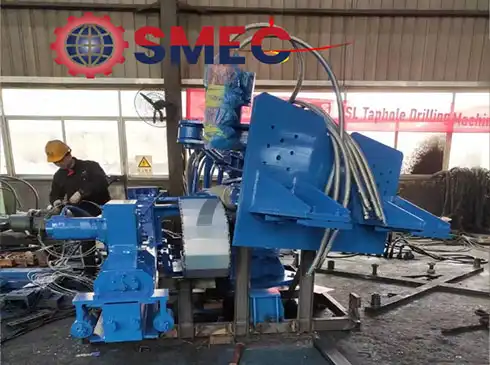
Can Taphole Opening Machine Adapt to Different Blast Furnace Tapholes?
Can Taphole Opening Machine Adapt to Different Blast Furnace Tapholes?
Understanding Taphole Variations in Blast Furnaces
- Understanding Taphole Variations in Blast Furnaces
- Core Features That Enable Adaptability in Taphole Opening Machines
- Comparative Analysis of Taphole Opening Solutions for Different Furnace Scales
- Maintenance and Safety Considerations for Adaptable Taphole Opening Machines
- Making the Right Procurement Decision for Your Blast Furnace Needs
- Conclusion
- FAQ
- Partner With SMEC for Your Cast House Equipment Needs
- References
The short answer is yes — and the degree of adaptability matters enormously in a real cast house environment. A well-engineered taphole opening machine for blast furnace cast house operations must accommodate tapholes that differ in diameter, clay composition, drilling depth, and thermal exposure. At SMEC, our hydraulic taphole opening machines cover blast furnaces ranging from 300 m³ to 5,000 m³, adjusting drill rod length, bore diameter, and penetration depth to match each taphole's actual specifications. That versatility is what separates a reliable production asset from a maintenance liability.

Understanding Taphole Variations in Blast Furnaces
Why No Two Tapholes Are Identical?
Different blast furnace tapholes affect the choice of tools in a direct way. A 4,500 m³ integrated steel mill furnace and a 300 m³ furnace work with very different internal pressures and clay plug densities. Depending on the type of refractory, the drilling depth can be anywhere from 1,500 mm to 3,500 mm, and the diameter of the taphole can be anywhere from 50 mm to over 80 mm. Modern anhydrous taphole clay, which is now common in high-performance furnaces, is much harder than older water-based materials. It takes a lot more impact energy to break through without hurting the walls around it.
Besides changes in size, the makeup of the slag and the temperature of the iron also cause more variation. When working with high-titanium slag, a cast house needs different drilling resistance features than when working with regular blast furnace slag. When procurement engineers treat taphole opening machine for blast furnace cast houses like replaceable goods, they often run into problems like drill paths that aren't lined up right and unplanned downtime. Knowing these differences is the first step in choosing smart tools.
Core Features That Enable Adaptability in Taphole Opening Machines
Adjustable Parameters That Match Real-World Conditions
Modern blast furnace taphole openers are flexible because it's built into their design, not added on as an addition. SMEC's hydraulic opening tools have drill rod length, drilling width, and penetration depth that can be adjusted for each hole. This means that they can be calibrated on-site to meet the exact requirements of each taphole.
SMEC's taphole opening machine for blast furnace cast houses are built to be flexible in the following ways:
- Scalable drilling configuration: Small models are made for furnaces that are 300 to 1,500 m³, and they have a smaller size and are easier to move around in cast house plans that are limited. Heavy-duty versions for furnaces bigger than 2,500 m³ have higher torque outputs (usually between 2,500 and 5,000 N·m) and impact rates (30 to 50 Hz), so they can handle high-intensity drilling cycles without hydraulic fatigue.
- Multi-clay compatibility: The hydraulic drive system keeps the entry force constant whether it's working with regular clay plugs or high-alumina dry refractory compounds. This stops partial bores that mess up the iron flow and speed up taphole erosion.
- Standardized mounting interfaces: SMEC machines have standard installation interfaces that make it easy to replace old taphole openers in the same place. This means that the cast house steel framework, hydraulic lines, or control architecture don't need to be changed.
All of these features make the shift easier and keep operations running smoothly during furnace upgrades, new installs, and equipment replacements.
When a cast house team can replace an opener during the same shift without taking apart nearby infrastructure, it has the least possible effect on production further down the line. That the machine is easy to set up is just as useful from a strategy point of view as how well it drills.
Comparative Analysis of Taphole Opening Solutions for Different Furnace Scales
Hydraulic vs. Pneumatic: Performance Under Real Conditions
In high-pressure, large-capacity furnaces, taphole opening machine for blast furnace cast houses always work better than pneumatic ones. In high-temperature settings, where air compressor efficiency drops, pneumatic systems tend to have smaller torque output and can lose performance. In contrast, hydraulic systems keep the thrust stable, often exceeding 40 kN feed force, even if the temperature changes near the taphole face.
Automated and semi-automated hydraulic openers cut the time a person has to be close to a taphole during active drilling cycles for multi-taphole cast houses in integrated steel mills. This follows modern safety rules for cast houses and makes high-frequency tapping schedules easier to follow without a lot of work.
Manual, Semi-Automated, and Fully Robotic Options
Manual taphole openers are still useful for smaller businesses that want to be flexible and not spend a lot of money. Most mid-size furnaces have semi-automated systems, which combine mechanical precision with operator control to make angle adjustments accurate to within 0.1 degrees. Fully automatic taphole systems, which are only used at a few of the world's best businesses, remove all human contact with the taphole. However, they are much harder to set up and take longer to integrate.
SMEC's product line is designed to meet the needs of independent coking plants, integrated steel mills, and EPC contractors looking for complete cast house solutions. It includes everything from small, semi-automated openers to heavy-duty hydraulic systems built for high-volume tapping that can be used continuously.
Maintenance and Safety Considerations for Adaptable Taphole Opening Machines
Sustaining Performance Across Variable Taphole Environments
Because drilling parameters can be changed, taphole opening machine for blast furnace cast house maintenance schedules need to be able to adapt to the real-world conditions. SMEC says that hydraulic seals and hitting pins should be checked every 500 to 800 tapping cycles. If you are working with hard, anhydrous clay mixtures, the intervals should be shortened. The main test for structural stability is the hydraulic pressure retention test, which makes sure that there is no pressure drop over a 24-hour hold.
To meet safety standards in a cast house, you need heat-resistant Viton seals, fire-resistant hydraulic fluid (water-glycol mixes are common), and thermal shielding on hydraulic hose assemblies that are less than 2 meters from the taphole face. When training operators, anti-jamming protocol should be emphasized. For example, if a drill bit gets stuck in the middle of the hole, it needs automated reverse percussion instead of manual extraction to avoid stress fractures in the swing arm. By checking the welding joints on the swing arm without damaging them on a regular basis, fatigue cracks can be found early on, before they become operational failures.
Making the Right Procurement Decision for Your Blast Furnace Needs
Matching Equipment Capability to Operational Reality
It's not enough to look at the taphole opening machine for blast furnace cast house supplier's headline power numbers; you also need to look at how well it works with your present furnace infrastructure, how often you plan to tap, and the specifications of the refractory clay. Standardized installation interfaces from SMEC get rid of the upgrade cost barrier that drives up the total cost of projects that replace old equipment.
Long-term value evaluation should include the wait time for spare parts, the scope of the warranty, and the supplier's proven ability to do special engineering. A machine that can handle 5,000 m³ furnaces doesn't help with procurement if it causes problems with the schedule of the casting house's maintenance or spare parts. After-sales responsiveness, or how quickly the supplier can provide technical support, is a very important factor that experienced plant engineers use when making purchases.
Conclusion
The shape of the taphole, the type of clay, and the size of the furnace all affect each other in ways that make real taphole opening machine for blast furnace cast house flexibility an essential condition, not an extra. For use in blast furnace cast houses, SMEC's machines are designed to work with all 300–5,000 m³ furnaces. They have hydraulic systems that are tuned for both light and heavy-duty tasks, and each drilling parameter can be changed separately. The flexibility, ease of installation, and maintenance-focused design of this cast house directly lead to less downtime and better reliability in a wide range of operating settings.

FAQ
Can one taphole opening machine handle both small and large blast furnaces?
SMEC doesn't just sell one fixed unit. They have a range of products that are purpose-matched for furnaces from 300 m³ to 5,000 m³, with small models for smaller operations and heavy-duty hydraulic units for large furnaces. Each model can be changed to fit the target furnace's taphole geometry.
Does installing an SMEC taphole opener require modifying existing hydraulic lines?
No, SMEC uses standard installation interfaces that can replace old taphole openers without changing the structure of the cast house steel, the way hydraulics are routed, or the way the control system is set up.
What clay types are compatible with SMEC hydraulic taphole openers?
SMEC tools can work with both old-fashioned taphole clay and new high-alumina anhydrous mixtures. The hydraulic drive keeps the entry force the same even when the clay density changes.
How frequently do hydraulic seals need replacement?
Every 500 to 800 hitting rounds, the seal should be checked. More frequent checks are needed for harder clays or hitting plans with a higher frequency.
Is after-sales technical support available for international projects?
Yes, SMEC has a dedicated Sales & After-sales Service Department that offers full after-sales service. This department helps international installations by providing technical documentation, spare parts, and on-site guidance when needed.
Partner With SMEC for Your Cast House Equipment Needs
SMEC provides custom taphole opening machine for blast furnace cast house solutions for all furnace capacities, from small models for coking plants that operate independently to large, powerful systems for steel mills that are integrated. As a verified manufacturer, SMEC helps with new installations, upgrades to existing equipment, and EPC contractor purchases by offering flexible configurations and quick customer service after the sale. To talk about your unique cast house needs, email our expert team at project@smec.cc or visit smecltd.com.
References
1. Iron and Steel Technology (AIST Transactions) — 2021
2. Journal of Iron and Steel Research International — 2020
3. Metallurgical and Materials Transactions B — 2019
4. Steel Times International — 2022
5. Ironmaking & Steelmaking: Processes, Products and Applications — 2018
6. Revue de Métallurgie — International Journal of Metallurgy — 2017
Free consultation & volume discounts available
SEMC focuses on the entire metallurgical process—from coking, ironmaking, and steelmaking to continuous casting and rolling. Whether you face challenges related to equipment upgrades, energy efficiency optimization, or overall process transformation, please fill in the following information. Our technical team will provide you with tailor-made high-end equipment upgrade solutions and professional EPC design services to help your project be implemented efficiently.
Recommended Blog
Can Blast Furnace Tuyere Camera Work Under Extreme High Temperature Conditions?
How to Reduce Unplanned Downtime with Advanced Tuyere Imaging Services?
Why Is the Upper Sealing Valve Important for BLT Equipment?
Customizing Blast Furnace Riser Pipes for High-Pressure Environments
What Are the Main Components of a Blast Furnace Sealing System?
The Impact of Cooling Water Barrier Integrity on Blast Furnace Longevity