What Is Blast Furnace Slag Resource Utilization?
Understanding Blast Furnace Slag: Properties and Types
- Understanding Blast Furnace Slag: Properties and Types
- Resource Utilization Methods of Blast Furnace Slag
- Comparing Blast Furnace Slag with Alternative Materials
- Procurement Strategies and Supplier Selection for Blast Furnace Slag
- Future Trends and Sustainable Practices in BFS Utilization
- Conclusion
- FAQ
- Partner with SMEC for Comprehensive Slag Processing Solutions
- References
Resource Utilization of Blast Furnace Slag is the organized collection and industrial handling of the molten waste products that are made when iron is smelted. This stuff, which is mostly made up of silicates and aluminosilicates, goes from being industrial waste to being high-value secondary raw materials. The main goal is to solve some of the biggest problems in the industry, like the damage that huge piles of slag do to the environment, the high carbon footprint of regular Portland cement production, and the rising costs of getting natural material. The industry uses fast water quenching to make granulated blast furnace slag or slow cooling to make crystalline aggregates. This creates a cycle economy model that cuts CO2 emissions and land damage by a large amount. At SMEC, we really get these problems because our clients deal with them all the time. Our complete slag processing solutions help steel companies turn operational costs into profitable income streams while still meeting strict environmental standards.

Understanding Blast Furnace Slag: Properties and Types
Slag from blast furnaces comes from making liquid iron. It is different from other industrial waste because of its chemical and physical properties. Limestone flux mixes with impurities in iron ore and coke during the smelting process to make a molten slag layer that floats on top of the liquid iron. Calcium oxide (35–45%), silicon dioxide (30–40%), aluminum oxide (10–18%), and magnesium oxide (5–15%) are some of the important elements that are found in this waste. The chemical makeup has a direct effect on how it is used and how much it is worth on the market.
Four Primary Slag Categories in Steel Production
Four different kinds of slag are made by steel mills. Together, they make up more than 70% of the solid waste from ironmaking. High-temperature liquid blast furnace slag comes out of the furnace at temperatures above 1,500°C and needs to be processed right away. Rapid cooling makes glassy particles with hidden hydraulic properties, which is called water-quenched granulated slag. Dry, air-cooled slag slowly crystallizes into thick materials that can be used to build roads. Taphole slag has a mix of impurities from iron runner ducts, so it needs special methods to be separated. Each group has different working needs and business opportunities, so it is important to classify things correctly to get the most out of resource recovery.
Chemical Composition and Hydraulic Activity
How well slag is used technically depends a lot on how much glass it has and how fine it is. Granulated slag has over 90% glass content when ground to a Blaine fineness of 400–600 m³/kg. It also shows latent hydraulic reactivity. Because of this feature, ground granulated blast furnace slag (GGBFS) can combine with calcium hydroxide in concrete to make chemicals that make it stronger. Specific activity markers must be measured every seven days and every twenty-eight days according to quality standards like ASTM C989 and EN 15167. Key technical features include low hydration heat generation, high resistance to sulfate attack, and better chloride ion entry resistance. These features make it technically better than regular cement in harsh industrial and marine settings.
Environmental Advantages Over Virgin Materials
Blast furnace slag is good for the environment in more ways than one. Using GGBFS instead of Portland cement for one ton of cement cuts down on CO2 emissions by about the same amount. This helps the environment without affecting the strength of the structure. The amount of energy used goes down a lot because handling slag needs a lot less heat than making clinker. As slag replacement cuts down on limestone quarrying and clay extraction, natural resources are protected at the same time. Because it is good for the environment and meets the standards for LEED and BREEAM approval, using slag in green building projects across North America is becoming more and more appealing.
Resource Utilization Methods of Blast Furnace Slag
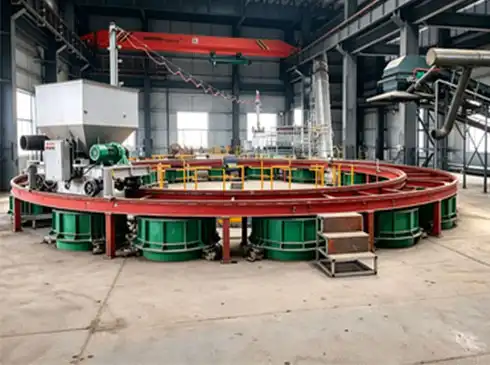
SMEC's combined resource utilization of blast furnace slag services offers complete answers to three major problems that steel mill owners are currently facing. Our closed-loop method includes collection, cooling, separation, deep processing, legal disposal, and business delivery. It turns operating problems into competitive benefits.
Solving Environmental Compliance Stockpiling Issues
Large amounts of slag building up outside is bad for the environment because it can salt the soil, pollute waterways, and release too many particles into the air. Authorities set strict limits on how much solid waste can be stored. Violators are punished with heavy fines, orders to fix the problem, and production stops. Our closed-loop resource processing means that we don't store any resources on-site and don't release any. This makes sure that we meet all the standards for industrial solid waste paperwork and emissions inspections. By getting rid of storage backlogs, steel makers avoid fines from regulators and get back valuable production space that was taken up by waste piles.
Transforming Disposal Costs into Revenue Streams
When steel plants use traditional outsourced slag removal, they have to pay a lot for shipping, disposal, and site management, which can cost over a million dollars a year. Because SMEC can do deep processing on-site, this cost load is completely removed. Instead of paying to have their trash taken away, our clients make money by selling byproducts like commercialized slag derivatives. We get metallic iron bits out of the ground by magnetic separation, screening, grinding, and cleaning. This allows us to make mineral micropowder, eco-friendly building materials, and substrates for soil amendment. This change turns dangerous industrial trash into valuable raw materials for businesses, which means steel mills no longer have to spend money to make money.

Streamlining On-Site Operational Management
As slag builds up, it takes up land that could be used for other things and creates safety risks through dust and water pools that get in the way of normal facility operations. Our defined closed-loop collection and processing system gets rid of current slag stocks and sets up regular management procedures for new material that is made. This method helps keep working areas clean, upholds safety standards, and makes operating excellence projects easier to carry out. Steel companies can immediately improve the organization of their sites without taking resources away from their main ironmaking tasks.
Comparing Blast Furnace Slag with Alternative Materials
Knowing how one extra cementitious material performs compared to others helps you make smart purchasing choices that are in line with project requirements and sustainability goals.
Technical Performance Against Fly Ash and Steel Slag
When it comes to a number of important factors, granulated blast furnace slag is clearly better than fly ash. When properly activated, GGBFS shows higher early-age strength development, which makes it better for projects that need to remove formwork quickly. Its sulfate protection is better than that of most fly ash sources, which makes it useful in wastewater treatment plants and farm buildings. But fly ash usually costs less per ton and makes things easier to work with. Procurement managers have to weigh these pros and cons based on the needs of each application. Even though steel slag is a great aggregate, it doesn't have the pozzolanic reactivity that is needed to replace cement. This means that it needs to be carefully tested for volume stability before it can be used in concrete.
Cost-Effectiveness and Long-Term Durability
Economic research on the resource utilization of blast furnaces Slag needs to look at more than just the original cost of materials; it also needs to look at how well they work over their whole life. In general building, GGBFS replacement levels are between 30 and 50%. However, in specialized uses like marine infrastructure, levels can go up to 70%. This gives concrete makers the freedom to find the best mixing designs that balance lower costs with better performance. The longer service life that comes from better resistance to chloride and less leakage creates a lot of long-term value by lowering upkeep costs and delaying when assets need to be replaced. These long-lasting benefits are especially appealing to infrastructure owners who look at the total cost of ownership instead of just the budget for the original building.
Ecological Benefits Versus Natural Aggregates
The removal of natural aggregates uses up limited geological resources and damages habitats and landscapes. Air-cooled slag particles have the same or better mechanical qualities without having these negative effects on the environment. Slag pebbles usually have higher friction ratings than limestone, which makes pavement less likely to slip. Their angular particle shape improves how well they interlock, making stable road bases with great load distribution properties. Different thermal qualities are also good. For example, slag's high thermal mass keeps pavement temperatures from changing too much, which could extend its useful life in places where yearly changes are very big.
Procurement Strategies and Supplier Selection for Blast Furnace Slag
For slag procurement to work well, quality control, logistics, and supplier dependability must all be carefully considered so that the material performs consistently throughout the lifecycle of a project.
Quality Standards and Certification Compliance
Strict quality control is based on five important inspection criteria that are needed to make choices about industrial buying. Using X-ray diffraction or optical microscopy to measure the glass content shows that the cooling rates are right for the formation of hydraulic activity. Because specific surface area and strength gain rates are directly related, Blaine fineness testing is a must. Chemical reactivity levels are confirmed by standard mortar bar tests done at seven and twenty-eight days to check the activity index. Moisture content affects how well grinding works and how easy it is to transport, so it needs to be carefully watched. Chemical stability testing for sulfide content and loss on ignition makes sure that the volume stays the same over time, which keeps concrete structures from expanding inside. These tests are in line with worldwide standards like GB/T 18046, ASTM C989, and specific ISO methods.
Regional Availability and Logistics Considerations
Being close to waste sources has a big effect on the project's finances because it lowers the cost of shipping. Areas that make steel, like the Great Lakes route and the Gulf Coast, are close to a lot of supplies that can be used for building projects in those areas. People who buy a lot of goods can save money by using facilities like train sidings and barge ports for bulk handling. When it comes to packaging, things are very different for ready-mix makers who use bags and big concrete batch plants that use pneumatic bulk delivery. Building ties with suppliers and keeping enough inventory on hand can help protect against supply problems that could cause important building plans to slip. Because SMEC's processing facilities are strategically located, they can reliably get materials to customers and offer a range of delivery options that can be tailored to the specific needs of each project.
Evaluating Supplier Sustainability Credentials
Aside from basic quality measures, procurement professionals for the Resource Utilization of Blast Furnace Slag are looking more closely at suppliers' environmental management systems and their promises to being environmentally friendly. When suppliers use closed-loop water recycling, renewable energy, and complete dust control, they show operational excellence that goes beyond just following the rules. Sustainability certifications from a third party and clear environmental data show that a company is dedicated to always getting better. Customer testimonials and case studies are great ways to find out how responsive a provider is, how good their expert help is, and how well they can solve problems when the project conditions are tough. When choosing long-term strategic partners over transactional commodity suppliers, these qualitative factors often make all the difference.
Future Trends and Sustainable Practices in BFS Utilization
Slag use is changing all the time thanks to new ways of processing and making products, which gives buying organizations that are looking ahead better value offers.
Advanced Processing Technologies
New grinding technologies make it easier to distribute particles of different sizes while using less energy than traditional ball mill systems. With vertical roller mills and high-pressure grinding rolls, you can get the fineness you need while also cutting down on prices and your carbon footprint. Classification technologies sort slag particles by their size and density, which lets them be made into products that are specifically designed for their uses. Automated quality tracking systems that use X-ray fluorescence and near-infrared spectroscopy do makeup analysis in real time, making sure that products always meet the standards. These technological breakthroughs make businesses more profitable and help reach sustainable goals by making operations more efficient.
Circular Economy Integration
Blast furnace slag is a good example of the cycle economy because it turns waste products from factories into useful materials for other businesses. More and more, companies that make building materials see slag as a useful resource rather than trash that needs to be thrown away. Integrated supply chains that link steel mills directly to cement plants and concrete makers cut down on wasteful shipping and boost the rate at which resources are recovered. By properly valuing environmental externalities, policy frameworks like carbon pricing systems and green procurement rules speed up this shift. Managers of procurement who set up their companies to take advantage of these trends gain a competitive edge by improving sustainability measures and lowering business costs.
Composite Material Development
New uses for slag and other industrial waste are being looked into by research projects that want to make better building materials. With alkali-activated binders that use slag and fly ash instead of Portland cement, carbon-neutral or carbon-negative concrete products can be made. Engineered cementitious composites that contain slag show strain-hardening behavior, which lets smaller structural elements work as well as or better than thicker ones. These new uses for slag open up new market opportunities for companies that make it and give specifiers better material choices to meet ever-tougher performance and environmental standards.
Conclusion
Using Resource Utilization of Blast Furnace Slag as a resource is a tried-and-true way to protect the environment, keep costs down, and improve operating performance all at the same time. Systematic processing technologies help steelmakers turn their trash into assets that bring in money, and they also help people who use building materials get sustainable, high-performance materials. When slag is properly treated, it has technical qualities like dormant hydraulic activity, better longevity, and less damage to the environment that make it an important part of modern sustainable building practices. As ideas about a circular economy become more popular and pressure to cut carbon emissions grows, slag will be used in more and more different ways. Purchasing managers who build relationships with suppliers today set their companies up well for tomorrow's market, which will focus on sustainability.
FAQ
What specific waste materials does blast furnace slag processing handle?
Four main types of ironmaking waste are dealt with in Resource Utilization of Blast Furnace Slag: high-temperature molten slag, water-quenched powdered slag, air-cooled dry slag and taphole mixed slag. These things make up more than 70% of the solid trash that comes from making steel, so managing them well is important for both protecting the environment and running the business efficiently.
How does cooling speed affect slag properties and applications?
Rapidly cooling water makes structures that are glassy and not crystalline, which gives them latent hydraulic qualities that are important for cementitious uses. Crystalline slag is made when air cools slowly. It is mostly used as building aggregates. The way of cooling greatly impacts the following processing choices and commercial uses, making this choice very important during the initial handling of the slag.
What replacement ratios are optimal for ground granulated blast furnace slag in concrete?
Replacement ratios of 30 to 50 percent are common in standard building uses. Marine settings and places with a lot of sulfate can handle up to 70% refilling to make things last longer. The best ratios depend on the performance needs, the environment, and the cost, so they need to be carefully thought out when designing a mixture.
Does slag utilization qualify for green building certifications?
Of course. Through recycled material requirements, lower embodied carbon, and better longevity, GGBFS helps earn LEED and BREEAM credits. Proper proof of where the slag comes from and how it helps the environment is needed for certification applications in many credit categories. This makes it useful for projects that want to get sustainability recognition.
Partner with SMEC for Comprehensive Slag Processing Solutions
SMEC provides integrated solutions for Resource Utilization of Blast Furnace Slag to make problems in steel production into long-term competitive benefits. Our closed-loop processing method gets rid of the costs and risks of stockpiling while turning materials that were once thought of as waste into commercial products. We use cutting-edge magnetic separation, grinding, and purification technologies to get the metallic iron out of the ore, make mineral micropowder, and make eco-friendly building aggregates that meet strict international quality standards. For decades, our engineering team has been creating unique solutions for coking plants, integrated steel mills, and mining businesses all over North America. As a reliable provider of blast furnace slag processing, we offer full design support, installation advice, and ongoing expert support to make sure the system works at its best. Get in touch with our experts at project@smec.cc to talk about how our resource utilization solutions can meet your unique business needs while also helping you meet sustainability goals and government regulations.
References
1. American Society for Testing and Materials. (2020). Standard Specification for Slag Cement for Use in Concrete and Mortars. ASTM C989/C989M-20.
2. European Committee for Standardization. (2019). Ground-Granulated Blast Furnace Slag for Use in Concrete, Mortar, and Grout. EN 15167-1:2019.
3. National Slag Association. (2021). Blast Furnace Slag: Material Description and Applications Guide. Technical Report Series, Volume 17.
4. Shi, C., & Qian, J. (2018). High Performance Cementing Materials from Industrial Slags: A Review. Resources, Conservation and Recycling, 145, 371-388.
5. U.S. Geological Survey. (2022). Mineral Commodity Summaries: Iron and Steel Slag. Department of the Interior Annual Report.
6. World Steel Association. (2023). Sustainability Indicators Report: Industrial By-Products and Circular Economy Practices. Brussels: WSA Publications.
Free consultation & volume discounts available
SEMC focuses on the entire metallurgical process—from coking, ironmaking, and steelmaking to continuous casting and rolling. Whether you face challenges related to equipment upgrades, energy efficiency optimization, or overall process transformation, please fill in the following information. Our technical team will provide you with tailor-made high-end equipment upgrade solutions and professional EPC design services to help your project be implemented efficiently.
Recommended Blog
What Makes High-Performance Blast Furnace Valves Different?
Overall Blast Furnace Renovation vs Partial Upgrade: Which Is Better?
Maintenance Tips for Blast Furnace Drill Rod Replacement Equipment
Why Choose Blast Furnace EPC Contracting Over Separate Outsourcing?
A Complete Guide to Blast Furnace Coal Injection System Upgrade Services
Key Considerations Before Starting a Blast Furnace Renovation