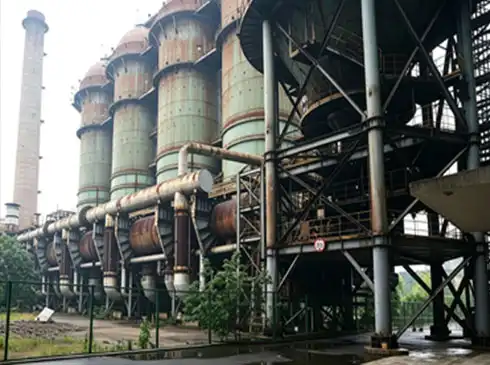
What Does Blast Furnace Cast House Dedusting Remove?
Understanding What Blast Furnace Cast House Dedusting Removes
- Understanding What Blast Furnace Cast House Dedusting Removes
- How Does a Blast Furnace Cast House Dedusting System Work?
- Types of Dedusting Systems for Blast Furnace Cast Houses: A Comparative Overview
- Benefits of Installing an Efficient Dedusting System in Blast Furnace Cast Houses
- Selecting and Maintaining Your Blast Furnace Cast House Dedusting System
- Conclusion
- FAQ
- Partner With SMEC for Advanced Cast House Emission Control Solutions
- References
A Blast Furnace Cast House Dedusting System is designed to get rid of four main types of high-temperature dust that are produced during ironmaking: instantaneous high-temperature iron oxide fumes that are released during tapping operations; volatile alkaline dust that is released during slag skimming processes; oxidised particulate matter that is spread out during molten iron transfer; and unorganised fugitive dust that comes from equipment surfaces and airflow disturbances. These specialised systems get concentrations below 10mg/Nm³ at the outlets, which meets the very low emission standards set by environmental agencies and protects frontline workers from health risks at work.

Understanding What Blast Furnace Cast House Dedusting Removes
The activities of a casting house create different sources of pollution that need specific ways to be removed. When purchasing managers look at environmental control equipment, they need to know exactly what these systems record in order to make smart buying decisions.
High-Temperature Iron Oxide Fumes from Tapping Operations
When a blast furnace taphole opens, temperatures above 1100°C cause iron oxide particles to burst forth right away. These submicron particles, which are usually between 0.5 and 2 microns, move quickly through the cast house. The percentage of fumes rises sharply in the first few seconds of tapping, making what operators often describe as yellow-brown plumes that can be seen. Using strategically placed hoods that operate at high suction speeds of 0.8 to 1.2 m/s, specialized dedusting equipment collects these emissions right where they come from. If these metallic oxides are not contained properly, they settle on the surfaces of equipment, speeding up corrosion and making the workplace unsafe. Plant experts always say that tapping fumes that aren't stopped are responsible for about 60% of all cast-iron particle emissions.
Volatile Dust from Slag Skimming Activities
When slag is separated, it makes a special kind of alkaline dust that has calcium compounds, sulfur leftovers, and carbonaceous materials in it. During skimming, temperatures of the molten slag that are getting close to 1400°C make volatile substances evaporate and then condense back into small particles. This alkaline dust is hygroscopic, which means it easily takes in water from the air around it, leaving behind sticky deposits that are hard for normal filtration media to remove. These corrosive substances can't damage modern dedusting systems because they use special filter materials like PPS with PTFE layers that keep filtration efficiency above 99.9%. Strong slag dust control is especially helpful for integrated steel mills that use continuous casting processes, since uncontrolled emissions have a direct effect on the quality of the products that come after.
Oxidized Particulates During Molten Iron Transfer
Fine particles are constantly being made by surface oxidation as ladles move liquid iron from tapping places to casting machines or torpedo cars. The emissions from tapping are more concentrated, but the dust streams from transfer activities are more diffuse and spread out over larger operating zones. These oxidised particles stay in the air because of the thermal currents made by hot metal radiation. To catch them, capture zones with balanced airflow patterns need to be carefully planned. The technical requirements for dedusting the transfer zone stress the importance of keeping the negative pressure differences between 80 and 150 Pa so that containment works well without affecting the important temperature management around the ladle operations.
Unorganized Fugitive Dust Emissions
Along with dust from specific processes, cast houses also have to deal with dust that builds up on structure surfaces, equipment housings, and floor areas. When high-temperature airflows move these layers around, they create new sources of emissions that are hard for traditional point-capture systems to deal with. Complete dust-removal systems combine enclosure strategies with general ventilation systems that keep the air moving 15 to 20 times an hour. Zoned pressure control is used by the best metalworking facilities to keep work areas slightly lower in pressure than neighboring areas. This keeps dust from moving to administrative areas.

How Does a Blast Furnace Cast House Dedusting System Work?
To get rid of dust effectively in a cast house, you need more than just normal industrial filters. You need specially designed systems that can handle high temperatures, rough particles, and changing emission profiles during the tapping cycle.
Advanced Filtration Technologies and Media Selection
Today, pulse-jet baghouse technology with special high-temperature filter media is mostly used for a Blast Furnace Cast House Dedusting System. Polyphenylene Sulphide (PPS) felts with expanded PTFE membrane lamination are the standard in the industry. They can handle continuous temperatures of up to 180°C and temperature changes of up to 220°C. These composite materials are good at filtering out particles smaller than a micron, and they don't break down easily when exposed to acidic sulphur compounds that are found in blast furnace gas. Filter bags are made with strengthened cages that keep them from collapsing under pulse cleaning pressures, which are usually 5 to 7 bar of compressed air coming through venturi tubes. When the system resistance hits 1400 to 1600 Pa, the cleaning cycle usually starts. It is controlled by preset timers or differential pressure triggers.
Before the filter stages, there are gas-conditionsing units that cool the inlet streams from tapping temperatures above 300°C to safe ranges for baghouse operation. Dilution air mixing, indirect heat exchanges, and evaporative water pumping systems are all ways to cool something down. Plant engineers have to carefully weigh the benefits of cooling against the risks of condensation. To avoid moisture-related filter blinding, temperatures must be kept above the acid dew point, which is usually set at 120°C or higher. Variable Frequency Drive (VFD) managed fans change the amount of air that flows through them on the fly, matching their collection capacity to the amount of pollution they are actually removing instead of running at full speed all the time. This saves 30 to 40 percent of the energy used by fixed-speed systems.
Real-Time Monitoring and Automated Controls
Modern systems include continuous emission monitoring (CEM) equipment that checks the levels of particulates coming out of the system and makes sure it is in line with government standards. There are differentiable pressure sensors in each filter compartment that let you know when repair is needed before the performance starts to drop. Temperature monitors placed along the gas path set off an automatic cooling system or a warning, which keeps the filtration media from getting damaged by heat. These monitoring points send information to programmable logic controllers (PLCs), which control how the system reacts by changing fan speeds, starting cleaning cycles, and controlling damper positions to get the best performance in a range of operational situations.
When dedusting tools and blast furnace tasks are connected to plant-level distributed control systems (DCS), they can work together more smoothly. Automated sequences safely empty collection hoppers and lock down airflow systems during planned maintenance shutdowns. These control systems record operational data that helps with predictive maintenance strategies. By looking at patterns in energy use, cleaning cycle frequencies, and pressure drop trends, these strategies can plan interventions before unplanned outages happen.
Types of Dedusting Systems for Blast Furnace Cast Houses: A Comparative Overview
When making a procurement choice, you have to look at a number of different technology platforms. Each one has its own benefits that depend on the site conditions, government rules, and practical goals.
Baghouse Filtration Systems
Pulse-jet baghouses are the most common type of cast house because they are reliable in high-dust environments like those found in ironmaking. The constant output emissions from these systems are less than 5mg/Nm³, which means they easily meet strict environmental standards like those set by the EPA and the EU Industrial Emissions Directive. Online maintenance is possible with modular compartmentalised designs; separate parts can be used to change filters while the remaining compartments keep the collection capacity. The initial costs of properly sized baghouse systems can be moderate to high, depending on the amount of gas and the amount of filtration area needed. Ongoing costs are mostly made up of replacing the filter media every 18 to 36 months and using compressed air for pulse cleaning.
Leading steel makers are very happy with how well baghouses work once they are properly sized and the right media is chosen. When installations are too small to handle the design gas volumes and don't have enough filtration area, the filters wear out too quickly and there are compliance issues. Reliable providers, like SMEC, stress correct capacity estimates during the planning stages to make sure that the equipment fits the unique thermal and particle characteristics of each location.
Electrostatic Precipitators
Electrostatic precipitators (ESP) are an alternative option when very large amounts of gas are needed and less maintenance is needed to support a higher initial investment. High-voltage electrical fields (40 to 70 kV) are used in ESP technology to ionize particles and pull them to gathering plates. Some benefits are that the filter media doesn't need to be replaced, the system can run continuously without stopping for cleaning cycles, and it can handle higher temperature streams without needing to be cooled. However, particle resistance has a big effect on how well ESP works. Some types of dust have electrical properties that make the collection rate less than 95%, which is not good enough for ultra-low emission standards. ESP systems have much bigger installation sizes than similar baghouse options, which can be a problem in retrofit situations where space is limited.
Hybrid and Emerging Technologies
Innovation keeps improving dedusting skills for the Blast Furnace Cast House Dedusting System by mixing different ways of getting rid of dust into hybrid designs. Before the baghouses, pre-separation fans get rid of the bigger particles. This keeps the filters from getting too full and increases their life. Wet-dry hybrid systems use water sprays to cool and clump together submicron particles before the dry filter steps. This works especially well for dust mixtures that stick together a lot. Intelligent automation that uses machine learning algorithms looks at trends in operational data and changes system settings automatically to improve efficiency and get a better idea of when maintenance is needed.
Benefits of Installing an Efficient Dedusting System in Blast Furnace Cast Houses
When you invest in improved emission control, you get many benefits that go beyond just meeting legal requirements.
Environmental Compliance and Corporate Responsibility
Globally, stricter rules about emissions that affect steel production are still being put in place. Facilities in the US must show that they meet the National Ambient Air Quality Standards (NAAQS) for particulate matter. Many states have even stricter rules. Ultra-low emission dedusting systems give you a safety net in case you break the rules, which could lead to big fines and limits on your operations. Environmental stewardship is not only the law, but it also improves a company's reputation, which is becoming more important as institutional investors use Environmental, Social, and Governance (ESG) criteria to evaluate portfolio companies. Major steel buyers now check the environmental performance of suppliers. This makes emission control skills competitive differentiators in the buying process.
Workplace Health and Safety Improvements
Metal particles in the workplace can cause major health problems, such as lung diseases and heavy metal buildup throughout the body. Effective dust control lowers the amount of dust in the air in cast house work areas by a large amount. This protects workers' health and lowers the number of workers' compensation claims. Less dust in the air makes it easier to see, which improves operational safety and lowers the risk of accidents around heavy equipment and areas where molten metal is handled. Facilities that use comprehensive dedusting report measurable productivity gains because workers spend less time cleaning up and mechanical systems break down less often because of dust buildup.
Extended Equipment Service Life
Metal dust that is abrasive speeds up the wear on mechanical parts in the cast house infrastructure. Instrumentation, electrical switch gear, and hydraulic systems become less reliable when dust keeps getting into them. Dedusting systems keep dust from settling on important equipment by collecting emissions where they are made. This increases the time between maintenance visits and decreases unplanned downtime. Bearing units, conveyor systems, and overhead cranes all work better in cleaner settings, and their service lives are said to be 40 to 60% longer than when dust control isn't used properly.
Economic Returns and Energy Efficiency
Even though the original investment of capital seems big, a full lifecycle cost study always shows that the results are positive. Payback times are usually less than four years because of things like avoiding fines from the government, lower maintenance costs, lower workers' compensation costs, and better operating efficiency. Modern VFD-controlled systems use a lot less electricity than older designs that kept the speed constant, which saves money over time. Some places can cut the cost of their dedusting systems by 25 to 35 percent by using smart automation to match collection capacity to real emission creation instead of always running at full capacity.
Selecting and Maintaining Your Blast Furnace Cast House Dedusting System
To be successful at procurement, you need to do a full technical review, evaluate suppliers, and commit to continued operational excellence.
Critical Specification Parameters
To get the right blast furnace cast house dedusting system size, you need to know a lot about the sources of emissions, like how much gas they release, how hot or cold they are, how many particles they load, and what chemicals are in the dust. Systems that aren't defined well don't meet requirements, and setups that are too specific waste money and time. Before completing designs, reputable engineering firms use computational fluid dynamics (CFD) modelling to guess how gases will flow and how well the hood will capture them. Choosing the right filtration media depends on the conditions it will be used in—PPS for moderate temperatures and general chemical resistance, P84 polyimide for higher temperatures, or specialised PTFE for environments with a lot of corrosion.
When specifications are being made, integration needs should be given a lot of thought. Electrical supply characteristics, the availability of compressed air for pulse cleaning, space limitations for routing ductwork, and the ability of the structure to support the equipment loads all affect how easy and how much it costs to install. Integration problems during startup can be avoided if the automation and control systems are compatible with the plant's current infrastructure.
Supplier Evaluation and Partnership Development
When choosing equipment providers, you need to look at their technical know-how, manufacturing quality, customer service, and ability to stay in business in the long run. Well-known companies show how knowledgeable they are by keeping records of their completed projects, giving examples from customers who have used similar products, and having engineers who can create unique solutions. Quality certifications, such as ISO 9001 and standards specific to the business, prove that rules are in place during production and that the product is consistent.
Long-term satisfaction is heavily affected by how well after-sales support works. When problems happen, suppliers can quickly fix them by keeping regional service centers stocked with important extra parts and giving technical training to plant maintenance staff. The coverage terms, reaction times, and performance promises in equipment warranties should be made clear. This way, if systems fail to meet certain standards, there is a way to get them fixed.
Maintenance Protocols and Performance Optimization
To keep the dusting working at its best, you need to do regular maintenance. Filter inspections done every three months find wear patterns, broken bags, or unusual dust cake buildups before they fail. Maintenance on the compressed air system makes sure that pulse cleaning works properly. Moisture separators, pressure controls, and air quality that meets standards for filtration keep contaminants from hurting the solenoid valves. Hopper release systems need to be checked on a regular basis to keep dust from building up and lowering the collection rate.
Maintenance plans work better when practical data is used. Trending differential pressure patterns show that filters are gradually becoming blind, which means that the media needs to be replaced or the process needs to be changed to change how the dust behaves. Cleaning cycle frequency analysis finds compartments that are loading abnormally, which could mean that there are problems with local airflow or filters that are broken. Monitoring energy use finds fan performance loss or too much system resistance, which calls for a review.
Conclusion
In conclusion, Blast Furnace Cast House Dedusting Systems get rid of harmful pollution like high-temperature tapping fumes, alkaline slag dust, oxidised transfer emissions and stray particulates. These specialised installations protect workers' health, follow environmental rules, make equipment last longer, and make money for the business. For procurement to go well, there must be detailed technical specifications, a careful review of the suppliers, and a dedication to continued maintenance excellence. As emission rules get stricter and companies become more concerned about being environmentally friendly, improved dedusting skills stop being nice-to-have environmental investments and become necessary for competing in the market.
FAQ
What Specific Pollutants Do Cast House Dedusting Systems Target?
These specialised systems get rid of four main types of pollution: instantaneous high-temperature iron oxide fumes produced when tapholes are opened (at temperatures above 1100°C); volatile alkaline dust from slag skimming that contains calcium and sulphur compounds; oxidised fine particles from molten iron surface reactions during transfer operations; and disorganised fugitive dust that is moved around by thermal currents in the cast house. Systems that work well get concentrations below 10mg/Nm³ at the outlet, which meets the standards for ultra-low emissions.
How Frequently Do Filter Elements Require Replacement?
The service life of filter media depends on things like gas temperature, particulate loading, dust chemistry, and how well pulse cleaning works. Systems that are properly set up and use the right high-temperature materials (PPS, P84, or PTFE compounds) usually last between 18 and 36 months. Facilities that have filters that fail too soon are usually having problems with not enough gas cooling, too much moisture condensation, or chemical attack from dust compositions that don't mix well. These are all problems that can be fixed by optimising the system instead of taking filters that don't last as long.
Can Existing Installations Upgrade to Modern Technologies?
Retrofit applications are big chances to make current facilities more environmentally friendly and more efficient in how they run. During upgrades, old filter media are usually swapped out for more advanced composite materials. VFD fan controls are also often added to save energy, automated tracking equipment is added, and CFD analysis is used to improve hood capture designs. Experienced suppliers look at the infrastructure that is already there, find ways to make it better, and come up with phased implementation plans that keep production as smooth as possible during installation.
Partner With SMEC for Advanced Cast House Emission Control Solutions
As a division of Taiyuan Silian Heavy Industry (Group) Co., Ltd., SMEC brings specialised knowledge in blast furnace environmental protection systems to metalworking facilities all over the world. Our engineering team, which is made up of 168 technical professionals and 30 senior engineers, creates custom dedusting solutions that meet your exact operational needs. Our 68,700-square-meter factory is in Shanxi Province's comprehensive reform showcase zone and makes high-quality blast furnace cast house dedusting system equipment that meets international standards. As an experienced supplier, we offer full turnkey solutions, from the initial design consultation to ongoing technical service and support during installation. Our Large-scale Intelligent Coking Equipment Research Institute is always improving emission control technologies so that our clients can get the newest ideas in energy economy and particulate capture. Talk to our International Trade Department at project@smec.cc about how SMEC's proven dedusting systems can help your building get very low emissions, protect the health of your workers, and cut costs.
References
1. Chen, W., & Liu, H. (2021). Advanced Dust Control Technologies in Modern Blast Furnace Operations. Metallurgical Engineering Press.
2. International Iron and Steel Institute. (2020). Environmental Best Practices for Cast House Operations. IISI Technical Report Series.
3. Morrison, R. D., & Peters, K. A. (2022). Industrial Air Pollution Control Equipment: Selection, Design, and Operation. Engineering Publications International.
4. United States Environmental Protection Agency. (2019). Emission Standards for Iron and Steel Manufacturing: Technical Guidance Document. EPA Office of Air Quality Planning and Standards.
5. Zhang, Y., Wang, L., & Chen, S. (2023). High-Temperature Filtration Media for Metallurgical Applications: Performance and Durability Analysis. Journal of Environmental Engineering, 149(3), 45-62.
6. World Steel Association. (2022). Sustainability Indicators Report: Environmental Performance Benchmarks for Integrated Steel Production. Brussels: Worldsteel Publications.
Free consultation & volume discounts available
SEMC focuses on the entire metallurgical process—from coking, ironmaking, and steelmaking to continuous casting and rolling. Whether you face challenges related to equipment upgrades, energy efficiency optimization, or overall process transformation, please fill in the following information. Our technical team will provide you with tailor-made high-end equipment upgrade solutions and professional EPC design services to help your project be implemented efficiently.
Recommended Blog
Common Problems in Three-Ring Cone Scrubbers and How to Fix Them
Key Benefits of Choosing a Turnkey Blast Furnace Contractor
A Complete Guide to Blast Furnace Coal Injection System Upgrade Services
How Three-Ring Cone Scrubbers Improve Blast Furnace Gas Quality
Blast Furnace Riser Pipe Failures: Causes, Prevention, and Best Practices