Blast Furnace Riser Pipe Failures: Causes, Prevention, and Best Practices
Blast Furnace Riser Pipe Failures: Causes, Prevention, and Best Practices
Understanding Blast Furnace Riser Pipe Failures
- Understanding Blast Furnace Riser Pipe Failures
- Diagnosing and Analyzing Failure Causes
- Best Practices for Preventing Blast Furnace Riser Pipe Failures
- Comparing Solutions and Making Informed Procurement Decisions
- Technical Support and Installation Best Practices
- Conclusion
- FAQ
- Partner with SMEC for Reliable Blast Furnace Riser Pipe Solutions
- References
When big blast furnaces are in use, the blast furnace riser pipe system is one of the most important and easily broken parts. High-temperature, dusty gases are sent from the furnace throat to the downcomer through the blast furnace riser pipe, which is its main vertical path. When these lines suddenly break, work stops, repair costs go through the roof, and safety risks go through the roof. Understanding how failures happen, how to diagnose them, and how to stop them from happening is important for procurement managers and plant engineers who want to keep operations running smoothly while keeping repair costs low.
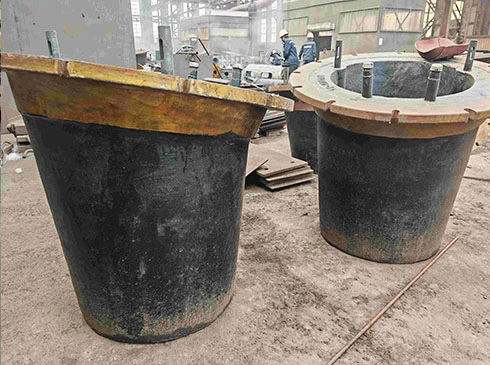
Understanding Blast Furnace Riser Pipe Failures
In ironmaking settings, blast furnace riser pipes are put through more physical stress than most industrial parts ever see. These heavy-duty tubes have to be able to handle temperatures from 200°C to 1000°C, move rough particles at high speeds, and keep their shape even though they are constantly being heated and cooled and attacked by chemicals.
Design and Material Composition Fundamentals
Modern blast furnace riser pipes are made of materials that were designed to work in harsh metalworking circumstances. A basic option is high-grade carbon steel that meets ASTM A106 Grade B standards. However, many more advanced systems now choose heat-resistant alloy steels or high-chrome alloys for longer service life. Wall thickness usually falls between 20 mm and 50 mm, which allows for weathering and extends the life of the structure. Whether ductile iron, cast iron, or special metals are used depends on features of the furnace, such as the top pressure, how oxygen is added, and the desired gas speeds.
As part of the design process, things like built-in expansion joints or stuffing boxes that allow for vertical temperature movement without affecting gas seals are taken into account. Large furnaces with more than 2500 cubic meters of space usually have four blast furnace riser pipe lines set up in an orderly way to even out the flow of gas and stop pressure differences that could stop the load from descending.
Common Failure Modes and Their Triggers
One of the most constant problems with blast furnace riser pipe systems is thermal stress. Heating and cooling the same thing over and over again puts stress on the material, which finally shows up as tiny cracks that go through the pipe wall. It gets worse near welds, where heat-affected parts have different thermal expansion coefficients than the parent material.
Corrosion processes are just as damaging. Sulfur molecules in raw blast furnace gas start chemical processes that make pipe walls thinner over time. At the molecular level, CO breaks down the steel matrix. This sulfur-related corrosion is most common in places where gas movement slows down or instability causes temperature differences in one area.
Failures that happen too soon are often caused by mechanical stress from bad support structures or fitting mistakes. Gas channeling, in which preferred flow paths form through the load, leads to uneven pressure distribution and erosion points in certain areas. Manufacturing flaws are less common these days thanks to stricter quality standards, but they can still cause secret security holes through poor weld penetration or material inclusions.
Diagnosing and Analyzing Failure Causes
Systematic testing methods that find problems before they become catastrophic are essential for maintenance programs to work. Structured inspection procedures that combine eye assessment with advanced testing methods are helpful for plant engineers.
Inspection Methodologies and Symptom Recognition
Surface conditions should be recorded on a regular basis by looking for external oxidation, covering decline, and warping that can be seen, and these inspections are especially important for a blast furnace riser pipe, where external signs often precede internal failures. During repair windows, checks inside show erosion patterns, the state of the refractory lining, and the buildup of deposits. Thermal imaging cameras find changes in temperature that could mean that the refractory material inside is damaged or the insulation outside is failing.
Dimensional readings keep track of changes in flange alignment and ovality that show that the structure is in trouble. When measures are off from the baseline specs by more than normal margins, the problem needs to be looked into more deeply to find out what's going on before the blast furnace riser pipe's integrity is compromised.
Root Cause Analysis Through Case Studies
Industry data from integrated steel mills shows that about 60% of early blast furnace riser pipe failures are caused by gas channeling-induced localized erosion, and 25% are caused by stress corrosion cracks at weld heat-affected zones. The last 15% are evenly split between manufacturing flaws, bad fitting methods, and poor upkeep schedules.
In one case study from a 3200 cubic meter blast furnace, the blast furnace riser pipe broke after only 18 months of use, which is a lot less than the predicted 5-year lifespan. The problem was found to be caused by improper fitting of the refractory lining, which let gas directly hit the steel shell. The fast, rough flow quickly tore away at the pipe wall, which led to a huge leak that had to be stopped right away.
Manufacturing Quality and Material Traceability
Blast furnace riser pipe durability starts a long time before it is installed. All horizontal and circumferential welds must be tested with x-rays or ultrasonic waves as part of complete quality control measures in manufacturing facilities. Mill test papers that show the full history of the material make sure that steel plates meet certain standards for their chemical make-up and mechanical properties.
Verification of the dimensions makes sure that the flange surfaces stay straight within the allowed ranges. This stops gas from leaking at the connection points. Before a part leaves the factory, it is tested for structural stability using either hydrostatic or air pressure at 1.5 times the design pressure.
Best Practices for Preventing Blast Furnace Riser Pipe Failures
When it comes to value, prevention methods are better than reactive maintenance techniques. When plant managers spend money on the right materials, improved blast furnace riser pipe designs, and strict installation practices, parts last longer and there is less unplanned downtime.
Material Selection Criteria for Operating Conditions
To match the features of a material to the conditions of a furnace, you have to balance a lot of different performance factors while staying within your budget. High-chrome alloys are very resistant to rust caused by sulfur and keep their mechanical strength at high temperatures. This makes them perfect for furnaces that use a lot of air or have high top pressures. When compared to normal carbon steel, these new materials usually make things last 40 to 60 percent longer.
Ductile iron is a cheap option for projects that will be used in mild situations. It protects against rust and thermal fatigue and doesn't cost as much to buy. Cast iron versions work well for old systems where new parts need to fit the existing infrastructure. However, they are fragile and need to be handled carefully during installation, so they can't be used in high-stress areas.
Design Optimization and Engineering Strategies
Engineers use computational fluid dynamics models to find the best internal shape to reduce erosion hotspots, and this design approach is particularly valuable for a blast furnace riser pipe, where gas velocity and particle trajectories directly influence wear patterns. Gradual changes in width lower noise, and refractory linings placed in key places protect weak spots from direct gas entry. Adding thermal expansion adjustment devices stops stress concentration, which speeds up the spread of cracks.
External protection systems keep parts from rusting in the air, which makes them last longer. Environmental rust can be stopped with high-temperature silicone-based aluminum paints or thermal spray aluminum coats that meet ISO 12944 standards. In very rough service conditions, water-cooling jackets can help some systems, but they are more complicated and need more upkeep.
Installation and Maintenance Protocol Development
Installing something correctly sets the stage for long-term dependability. Welding processes must follow the AWS D1.1 structural welding codes, and only trained welders should follow the written instructions for each operation. Post-weld heat treatment reduces leftover stresses and evens out the microstructure in areas that were heated, which makes the material much more resistant to stress corrosion cracking.
Maintenance programs should set checkpoints based on how often something fails in the past and how hard it is to operate. The refractory linings usually need to be serviced every three to five years, while the steel shell can last up to ten years if it is properly protected. Non-destructive testing during planned maintenance windows finds problems early on, so fixes can be planned for when the machine isn't being used, instead of having to be done quickly when something goes wrong.
Comparing Solutions and Making Informed Procurement Decisions
When specifying and finding blast furnace riser pipe systems, it's important to think about the total cost of ownership, technical needs, and the skills of the suppliers.
Material Performance Comparison
High-chrome metals are very good at resisting rust and staying strong at very high and very low temperatures. However, their higher material cost needs to be justified by predictions of longer service lives. The way thermal conductivity works affects how much cooling is needed and how temperatures are distributed, which changes the design of the whole system. Ductile iron has average performance across most factors. It is also cheaper, which makes it a good choice for projects on a budget or setups with lower-demanding operating profiles. Even though it's not very strong or resistant to thermal wear, standard cast iron can still be used in some old uses.
Procurement Evaluation Framework
When choosing a provider, you should pay close attention to a number of important factors. A manufacturing capability review should check the company's ability to produce goods, its quality control methods, and its history of working on projects like this before. Certification compliance shows that you follow well-known rules like ASME Section VIII for pressure tanks and other related national codes.
Lead time estimates vary a lot between providers because of things like when the materials are available, how complicated the fabrication is, and how the production schedule is set up, and for a blast furnace riser pipe, these factors are amplified by the need for specialized welding procedures and non-destructive testing. When normal setups don't meet the needs of an installation, the ability to customize becomes important. It is very helpful to have technical support during the installation, commissioning, and operational stages. This is especially true for difficult retrofits or new construction projects.
Technical Support and Installation Best Practices
To get the best return on investment, you need more than just the product itself. You also need help with installation, commissioning, and ongoing operating advice.
Installation Procedure Requirements
When parts are put together correctly, they don't pile up stress that speeds up failure. Support systems need to be able to handle thermal growth while still staying in place. For flange connections to work reliably in real life, the bolt pressure patterns must be exact and the gasket materials must be the right ones.
To do welding work, you need trained people who follow the right steps. Preheating and controlling the temperature between passes keeps materials that are likely to crack from hydrogen, and a heat treatment after the welding process reduces any remaining stresses. Before the system goes into service, quality is checked by looking at finished welds without damaging them.
Inspection and Maintenance Techniques
Performance indicators that show problems are starting to show up are tracked by routine tracking systems. By measuring temperatures in several places, problems with the cooling system or the breakdown of refractories can be found. Vibration research finds structure damage or mechanical looseness. Regular readings of the thickness help figure out how fast erosion is happening and how long something is expected to last.
When fixes are needed, tried-and-true methods can make parts last longer at a fraction of the cost of replacing them. Weld overlay methods fix areas that have been worn down, and patch-plate installs fix damage that is only in one place. All replacement work must go through the same quality control steps as new construction, such as pressure and non-destructive tests when needed.
Quality Assurance and Performance Monitoring
Continuous monitoring systems that keep an eye on important factors in real time are helpful for more advanced setups. Sensors that measure temperature, pressure, and sound send information to control systems that let workers know when something is wrong before it breaks. This proactive method cuts down on unplanned shutdowns and makes the best use of production needs to schedule repair.
Conclusion
Managing blast furnace riser pipe systems well requires a complete plan that includes choosing the right materials, making sure the designs are as good as they can be, making sure the systems are installed correctly, and keeping up with regular upkeep. Because these parts require a large amount of cash, procurement decisions and operational methods need to be carefully thought out. By knowing how failures happen and using tried-and-true methods to stop them, metallurgical facilities can make sure that their blast furnaces work reliably, with low upkeep costs and few unplanned downtimes. Modern ironmaking is very technical, so it's important to work with providers who can provide not only high-quality goods but also engineering help and support for as long as the equipment lasts.
FAQ
What factors affect the service life of a blast furnace riser pipe?
Service life is mostly determined by the choice of material, how it is used, and how well it is maintained. The steel shell of properly described pipes with enough refractory protection should last for 10 to 15 years, but the interior linings need to be replaced every 3 to 5 years. Conditions that are harsh, like high sulfur levels, high temps, or bad upkeep can shorten the lifespan by a large amount.
Can damaged pipes be repaired or must they be replaced?
During planned maintenance times, many types of damage can be fixed on-site using weld overlay or patch-plate methods. The fixes must be done according to written instructions, and then the quality must be checked with non-destructive tests. Full replacement is usually needed to make sure safe continued operation after a lot of damage or structural weakness.
What kinds of qualifications should buying teams look for?
Important licenses include ISO 9001 quality management system registration, ASME Section VIII compliance for pressure tank parts, and AWS D1.1 compliance for structural welding. Material identification through mill test certificates makes sure that the chemical make-up and mechanical qualities meet requirements.
Partner with SMEC for Reliable Blast Furnace Riser Pipe Solutions
SMEC can help you with your blast furnace riser pipe needs. SMEC has decades of experience with mining tools and can help you with even the most difficult blast furnace component needs. Together with customers, our engineering team figures out the best riser pipe designs by balancing performance needs with price concerns. At our Taiyuan factory, we have strict quality control measures in place, such as inspecting every weld, testing for hydraulic pressure, and keeping track of all the materials used. We help with installations all over North America by giving expert advice on how to do the installations, helping with commissioning, and providing operating support. As a provider of blast furnace riser pipes, we have a history of working with big steel companies and industrial contractors.
Connect with our technical team to talk about your unique needs and look into options that are engineered to work in your environment. You can set up a meeting with project@smec.cc to get full product specs that are made to fit the needs of your blast furnace.
References
Chen, W., & Zhang, L. (2021). "Failure Analysis and Service Life Prediction of Blast Furnace Riser Pipes in Modern Ironmaking." Journal of Iron and Steel Research International, 28(4), 421-435.
Müller, H., & Schmidt, K. (2020). "Material Selection Criteria for High-Temperature Gas Transport Systems in Metallurgical Applications." Steel Research International, 91(7), 1900542.
Tanaka, Y., Sato, M., & Kobayashi, T. (2019). "Corrosion Mechanisms in Blast Furnace Gas Systems: A Comprehensive Study." ISIJ International, 59(3), 389-398.
American Society of Mechanical Engineers. (2019). ASME Boiler and Pressure Vessel Code, Section VIII: Rules for Construction of Pressure Vessels. New York: ASME Press.
Peterson, R. J., & Thompson, D. A. (2018). "Best Practices for Installation and Maintenance of Blast Furnace Top Equipment." Iron & Steel Technology, 15(9), 76-88.
International Organization for Standardization. (2017). ISO 12944: Paints and Varnishes – Corrosion Protection of Steel Structures by Protective Paint Systems. Geneva: ISO Standards.
Free consultation & volume discounts available
SEMC focuses on the entire metallurgical process—from coking, ironmaking, and steelmaking to continuous casting and rolling. Whether you face challenges related to equipment upgrades, energy efficiency optimization, or overall process transformation, please fill in the following information. Our technical team will provide you with tailor-made high-end equipment upgrade solutions and professional EPC design services to help your project be implemented efficiently.
Recommended Blog
Comparing Manual Inspection vs. Automated Tuyere Imaging Services
How to Reduce Operating Costs of Three-Ring Cone Scrubbers
Why Wear-Resistance is Key for Your Next Blast Furnace Riser Pipe?
How Much Does Blast Furnace Slag Granulation Equipment Cost?