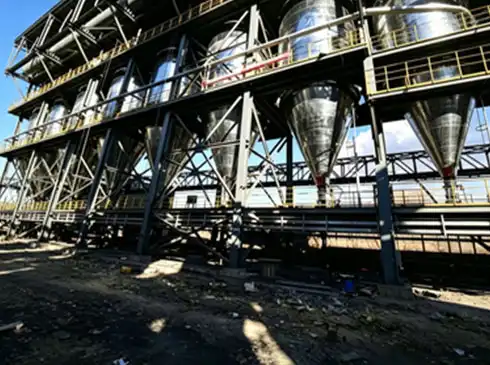
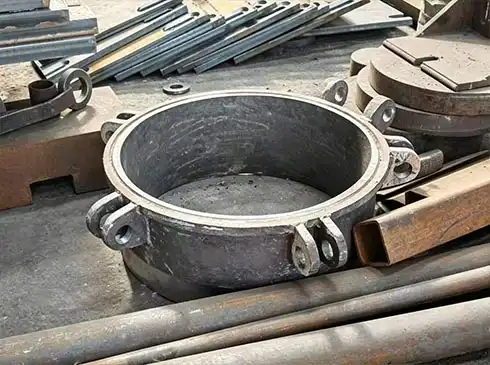
OEM Feeding Hopper for Blast Furnace BLT Equipment: Benefits and Applications
OEM Feeding Hopper for Blast Furnace BLT Equipment: Benefits and Applications
Understanding the Role and Function of Feeding Hoppers in Blast Furnace BLT Equipment
- Understanding the Role and Function of Feeding Hoppers in Blast Furnace BLT Equipment
- Benefits of OEM Feeding Hopper Solutions for Blast Furnace BLT Equipment
- Comparison and Selection Guide for Feeding Hoppers in Blast Furnace BLT Equipment
- Procurement Considerations for OEM Feeding Hopper Solutions
- Real-World Applications and Case Studies of OEM Feeding Hoppers in BLT Equipment
- Conclusion
- FAQ
- Partner with SMEC for Advanced Feeding Hopper Solutions
- References
When updating blast furnace operations, the feeding hopper for the blast furnace BLT equipment always does a great job of making things more efficient and reliable. This pressure-retaining vessel is at the heart of Bell-less Top charging systems. It keeps the critical pressure seals in place as raw materials like sinter, pellets, coke and additives move smoothly from the conveyor systems into the furnace. Older bell-type systems leak useful gases and waste energy. BLT feeding hoppers, on the other hand, allow exact batch weighing, controlled discharge sequences, and high-top pressure operation that directly increases production while lowering coke consumption rates.

Understanding the Role and Function of Feeding Hoppers in Blast Furnace BLT Equipment
Defining the Core Purpose of Blast Furnace Feeding Hoppers
In Bell-less Top charging systems, feeding hoppers for the blast furnace BLT equipment act as both buffers and measuring vessels. They get big loads of materials from conveyors further upstream and hold them under controlled pressure before sending them into the distribution chute in measured batches. This design gets rid of the huge problems with gas leaks that come with old-fashioned bell charging systems. These hoppers keep a pressure barrier between the furnace's interior and the outside air. This lets higher operating pressures happen inside the blast furnace shaft, which speeds up chemical reduction reactions and makes the whole process of making iron more efficient.
Structural Components and Operational Workflow
The hopper body is usually made of high-strength structural steel like Q345B or Q355R, which can handle design pressures of up to 0.4 MPa and temperatures of up to 250°C during gas cycling. Wear-resistant liners made of high-chromium cast iron, micro-crystalline alumina ceramics, or tungsten carbide hard-facing protect the inside surfaces from the constant rubbing of ore particles falling down. The funnel-shaped geometry is optimised using the Discrete Element Method to keep materials from separating and bridging, which keeps the flow patterns consistent.
Upper and lower closing valves built into the body of the feeding hoppers for the blast furnace BLT equipment make airtight spaces that let material come in from above while keeping the furnace pressure below steady. High-precision load cells—usually three or four units with heat shielding—keep an eye on the weight of the material and can be accurate to within 0.1%. This lets the recipe be controlled precisely for stable furnace chemistry. During operation, the upper valve opens to let material from the conveyor into the feeding hoppers for the blast furnace BLT equipment, then seals before the lower valve opens to release the batch onto the spinning distribution chute. This keeps the feeding cycles constant while still being controlled, which is important for blast furnaces that are used 24 hours a day, seven days a week.
Types and Capacity Considerations for Maximum Throughput
The size and shape of the feeding hoppers depend on the furnace and the amount of work that needs to be done. Large integrated steelworks with blast furnaces bigger than 4,000 cubic meters often use two hopper systems that work together to move up to 10,000 tonnes of material every day. Single-hopper systems with capacities between 40 and 100 cubic meters may be used in smaller furnaces.
Material choice also changes based on what the job needs. When plants work with rough materials like high-alkali sinter or nut coke, they choose multi-layer impact plate shapes to keep the shell from shrinking in certain places. The size of the furnace's capacity directly affects how well it works. Hoppers that are too small cause problems that stop charging cycles, while units that are too big add extra costs and make upkeep harder. To get the best output without limiting operating freedom, the right sizing formulas take into account how often the material is charged, how dense it is, and the desired safety limits.
Benefits of OEM Feeding Hopper Solutions for Blast Furnace BLT Equipment
When it comes to demanding continuous metallurgical production situations where downtime costs can reach over a thousand dollars per hour, OEM feeding hopper for the blast furnace BLT equipment solutions are clearly better than generic options.
Certified Design Standards Make Things Safer
OEM manufacturers strictly follow international pressure vessel codes like ASME Section VIII or GB/T 150. This makes sure that the equipment works without any leaks for the whole time it's being used. Radiographic and ultrasonic tests are done on every circumferential and longitudinal weld to make sure the structure is sound. Before shipping, the seal is made sure to be tight by checking it under 1.25 times the original pressure with either pneumatic or hydrostatic pressure. Specialised silicone or Viton-based gaskets that have been tried for 300,000 cycles at 200°C keep the pressure limits in place even when temperatures change quickly. This keeps people safe from high-pressure gas releases and stops catastrophic bypass during charging sequences.
Less expensive repairs and a longer service life
OEM hoppers, including feeding hoppers for the blast furnace BLT equipment, are made with modern materials that are resistant to wear and were designed to work in blast furnaces. In high-wear areas, inspections are only needed every six months, and full replacements can happen every two to four years, based on how rough the load is. Testing for hardness makes sure that lining plates meet certain Brinell or Rockwell scales (HRC 58–62), which guarantees that they will not wear down over time. Laser-tracked flange flatness within 0.5 mm makes sure that material gates and seal valves seat perfectly, so they don't wear out too quickly because they aren't lined up right. These changes to the design directly lead to lower lifecycle costs, fewer unplanned shutdowns, and more accurate planning for upkeep.
Integration of customisation and automation
OEM suppliers give solutions that are custom made to meet the needs of each business. Capacity scaling works for both fresh setups with the newest automation features and brownfield retrofits that replace bell-type systems. Integration with programmable logic controllers lets you set up automatic charging routines, track the load in real time, and do troubleshooting from afar. Systems across the whole plant use data from load cells to keep track of inventory and improve production. Because of this, coking plants, steel mills, and EPC companies can choose designs that work perfectly with their processes. This helps them get the most out of their investments and prepares them for the future of Industry 4.0.
Comparison and Selection Guide for Feeding Hoppers in Blast Furnace BLT Equipment
Choosing the right steel grade has a huge effect on how long feeding hoppers for the blast furnace BLT equipment last in harsh blast furnace environments. For normal uses, Q345B is very easy to weld and has a modest level of strength. Q355R, on the other hand, is better at withstanding high temperatures and pressures. Wear resistance is based on the protective coatings and lining materials used. Micro-crystalline alumina ceramics work best in very rough conditions, while tungsten carbide hard-facing is better at protecting materials from impacts when they are dropped from high heights.
Material Selection and Protective Coatings
When plants choose liner materials, they have to think about the characteristics of the burden. Those that process a lot of rough nut coke should use multi-layer ceramic linings. On the other hand, those that mostly process pellets may be able to get by with cast iron liners and save money on capital costs. During the design phase, talking to experienced OEM engineers makes sure that the choice of materials is based on real-world working conditions instead of general suggestions.
Manual Versus Automated Feed Control Systems
Although manual feeding systems require more up-front money, they don't require as much precision for optimal furnace chemistry and need to be watched over by an operator all the time. Automated systems with servo-controlled valves and programmable discharge sequences provide consistent batch weights within tight tolerances, which lowers the amount of variation in how the load is distributed. This accuracy means that the gas flow is better distributed inside the furnace shaft, the blast furnace works more efficiently, and the coke rates are lower.
Labor costs play a big role in this decision. When there aren't enough skilled operators or the cost of labour is high, facilities that invest in automation see faster payback periods. Automation also makes it possible to work 24 hours a day, seven days a week without having to stop for shift changes. It keeps detailed operating logs for quality checks and makes remote fixing easier, which cuts down on response times when equipment breaks down.
Sizing and Capacity Alignment with Production Goals
To choose the right hopper size, you need to carefully look at filling cycle times, material handling rates, and output goals. When hoppers are too small, they have to be charged more often, which speeds up the wear on the seal valves and makes repair more often necessary. Oversized units can make it hard for materials to stay in one place for a long time, especially if they are sensitive to moisture and can bridge or cake during long storage.
Engineering teams should use real material densities, goal production rates, and planned repair windows to model charging processes. Adding buffer capacity for production surges stops bottlenecks from happening during times of high demand. Modular designs that let capacity grow in the future give operations the freedom to plan for multi-phase growth strategies without having to replace all of their equipment.
Procurement Considerations for OEM Feeding Hopper Solutions
To choose a trustworthy feeding hopper for the blast furnace BLT equipment maker, you need to look closely at their technical skills and quality control methods. OEM suppliers that have been around for a while have quality management systems that are certified to ISO 9001 or similar standards. When you visit an industrial facility, you can see how much they can make, how advanced their equipment is, and how skilled their workers are. Looking at portfolios of past projects shows that people have worked with furnaces of similar sizes and conditions before.

Evaluating Supplier Credentials and Manufacturing Standards
It's not just manufacturing standards that need to be met in order to get a certification. Material traceability, welding procedure qualifications, and inspector credentials are also part of the process. All materials that are under pressure should come with mill test results that list their chemical make-up and mechanical qualities. Third-party inspection services make sure that the assembly steps, surface finish standards, and tolerances for sizes all match the engineering plans exactly.
Long-Term Value Beyond Initial Capital Costs
When choices about what to buy are based only on the lowest bid price, the total cost of ownership is often higher. When figuring out lifecycle costs, you have to think about things like the availability of spare parts, the ease of getting repair services, and the length of the guarantee. Reputable manufacturers keep large inventories of spare parts and guarantee delivery times. This keeps operations from being shut down for long periods of time while waiting for replacement parts.
The quality of technical support has a big effect on the continuity of operations. Suppliers with a hotline that is open 24 hours a day, seven days a week, remote diagnostic tools, and field service networks help keep downtime to a minimum when problems happen. Training programs for plant maintenance teams make the companies less reliant on outside service providers while also increasing their own knowledge. Together, these factors show how much the equipment is really worth over the many decades it is usually used in blast furnaces.
Customization Capabilities for Non-Standard Configurations
Upgrading old bell-type systems to BLT technology can be hard because of limited room, existing structural connections, and material handling needs that are unique to the plant. Off-the-shelf options are often not an option. Leading original equipment makers (OEMs) have engineering teams that can build special hopper setups that work with current systems without any problems.
Control system interfaces, material flow patterns, and environmental protection features can all be changed to fit your needs. Suppliers who know how to integrate systems from more than one provider are helpful for plants that need to connect to their own automation platforms. Different places have different rules about controlling emissions. Feeding hopper facilities in places with strict dust laws have sealed material transfer points and dedusting links that keep the equipment in compliance for its entire life.
Real-World Applications and Case Studies of OEM Feeding Hoppers in BLT Equipment
A big integrated steel mill with a 4,500-cubic-meter blast furnace had problems with uneven load distribution that made the furnace less productive and used more coke. The facility improved the consistency of its charging cycles by 15% after adding two OEM feeding hoppers for the blast furnace BLT equipment with advanced load cell systems and automatic discharge control. This led to a 3.2% drop in the coke rate and a noticeable increase in the efficiency of using fuel. This saved a lot of money since more than 2.5 million tonnes of hot metal are made every year.
Performance Improvements in Large-Scale Steel Production
Concerns about safety were also addressed by the retrofit, as the old bell-type system leaked gas. Fugitive emissions were removed through thorough pressure testing and approved seal valve design. This made working conditions better for operators and met environmental standards. Maintenance costs went down by about 40% because seal valves lasted longer and there were fewer emergency repairs.
Adaptability Across Diverse Metallurgical Processes
Independent coking plants that sell coke to trade markets need feeding systems that can adapt to different types of coal and coke needs. A 1.2 million-ton-per-year coking plant installed an OEM feeding hopper with modular liner designs that made it easy to switch between making standard and premium coke. Being able to change discharge patterns improved the charging density of the coke oven, which improved the quality of the coke while keeping production rates the same.
Chemical processing plants that use blast furnace gas for later use in synthesis can benefit from precise burden control that keeps the gas composition stable. A coal chemical plant combined OEM feeding hoppers with real-time gas analysis systems. This allowed for automatic changes in the load that kept the CO and H2 ratios stable, which is important for making methanol. This combination shows how modern feeding tools can be used to improve processes outside of the blast furnace.
Emerging Technologies and Industry 4.0 Integration
Smart feeding hopper systems with vibration tracking, thermal imaging, and predictive repair algorithms are being used by workers who are looking to the future. Continuous vibration analysis tracks the wear on the liners, which lets condition-based maintenance planning keep things running smoothly and avoid unexpected shutdowns. With thermal imaging, you can find localized hot spots that could mean refractory fails before they damage the structure.
Integrating data with manufacturing execution systems used across the whole plant lets you see real-time information about the stock of materials, the efficiency of charging cycles, and the health of equipment. Machine learning algorithms look at past performance data to find the best charge patterns for each operating situation so that the furnace works as efficiently as possible. Because of these Industry 4.0 features, advanced OEM feeding hopper systems are now seen as strategic assets that drive continuous operational improvement, not just fixed parts of the infrastructure.
Conclusion
In conclusion, OEM feeding hopper for the blast furnace BLT equipment solutions are important investments that pay off in a big way by making operations safer, cheaper to maintain, and more productive. To pick the right equipment, you need to carefully consider the material requirements, the capacity needs, and the supplier's abilities, as well as the overall lifecycle value, which goes beyond the initial capital costs. When blast furnace operators switch from old bell-type systems to new BLT technology with precise feeding hoppers, they can get higher output, better environmental compliance, and more stable running costs. Metallurgical industries are moving closer and closer to smart production and integrating Industry 4.0. To stay ahead of the competition, feeding hopper systems that include automation, real-time tracking, and predictive maintenance will become more and more important.
FAQ
1. How frequently do feeding hopper liners require replacement?
How often do the liners in feeding hoppers for the blast furnace BLT equipment need to be changed? Replacement intervals depend a lot on how rough the load is and how hard it is being used. Usually, high-wear areas need to be checked every six months. Under normal conditions, the liner should be replaced completely every two to four years. Facilities that work with very rough materials may have shorter service lives, while facilities that mostly work with pellets usually go longer than four years between replacements. Using ultrasonic thickness readings in condition tracking tools lets you set up replacement schedules that are based on data and strike a balance between liner life maximization and the risk of an unexpected failure.
2. What causes material bridging inside hoppers, and how can it be prevented?
When particles stick together and make stable bridges that stop flow, this is called material bridging. Some of the things that can cause this are too much moisture, wrong hopper wall curves, and the buildup of solid fines. Some ways to stop this from happening are to keep valley angles at least 65 degrees, use low-friction ceramic linings, put in vibration systems to stop bridging from forming, and precondition the material to control the amount of moisture it contains. For reliable discharge performance, make sure the design is based on the real flow properties of the material, which can be found through lab tests.
3. Can standard feeding hoppers accommodate pulverized coal injection systems?
Standard hoppers for feeding lump materials into blast furnaces are made to hold things like sinter, pellets, and coke. For pulverised coal injection, you need special high-pressure tank systems that can move the coal around pneumatically and follow completely different design rules. Trying to use a load hopper for coal input hurts the performance of both systems and poses major safety risks. Integrated blast furnace operations keep each stream of materials on its own set of specially designed equipment.
Partner with SMEC for Advanced Feeding Hopper Solutions
SMEC, which is part of Taiyuan Silian Heavy Industry (Group) Co., Ltd., has decades of experience making blast furnace tools for customers all over the world. Our feeding hopper for the blast furnace BLT equipment incorporates advanced materials engineering, precision fabrication, and comprehensive quality assurance processes that meet international standards like ASME Section VIII and GB/T 150. You can trust us to provide you with reliable equipment. Our 68,700-square-meter factory in Taiyuan City has a lot of production space, and it's staffed by 168 engineering and technical staff who are experts in designing metallurgical equipment.
We know that every blast furnace activity has its own problems that need unique answers. Our engineering teams work closely with clients to make sure that the hopper configurations, covering materials, and robotics are all exactly what the operations need. Full support after the sale includes having spare parts on hand, being able to do service work in the field, and offering technical advice throughout the lifecycle of the equipment. Contact our international trade experts at project@smec.cc to talk about how our OEM feeding hopper solutions can help you reach your long-term production goals, make your blast furnace more efficient, and lower your running costs. Visit smecltd.com to see all of our products and learn why top steel makers, coking plants, and EPC builders around the world choose SMEC as their equipment partner.
References
1. Biswas, A.K. (2020). Principles of Blast Furnace Ironmaking: Theory and Practice. SBA Publications, Calcutta.
2. Geerdes, M., Toxopeus, H., and van der Vliet, C. (2009). Modern Blast Furnace Ironmaking: An Introduction. IOS Press, Amsterdam.
3. Gupta, G.S. and Rudolph, V. (2006). "Comparison of Blast Furnace Charging Systems: Bell-type versus Bell-less Top." Steel Research International, 77(5), 325-332.
4. International Iron and Steel Institute (2018). Advanced Blast Furnace Technologies and Operational Practices. IISI Technical Report Series, Brussels.
5. Peacey, J.G. and Davenport, W.G. (2017). The Iron Blast Furnace: Theory and Practice. Pergamon Press, Oxford.
6. Zhang, J., Liu, Z., and Yang, T. (2019). "Optimization of Blast Furnace Burden Distribution Using Bell-less Top Charging Systems." Journal of Iron and Steel Research International, 26(8), 801-809.
Free consultation & volume discounts available
SEMC focuses on the entire metallurgical process—from coking, ironmaking, and steelmaking to continuous casting and rolling. Whether you face challenges related to equipment upgrades, energy efficiency optimization, or overall process transformation, please fill in the following information. Our technical team will provide you with tailor-made high-end equipment upgrade solutions and professional EPC design services to help your project be implemented efficiently.
Recommended Blog
How Does High Furnace Body Lining Replacement Improve Efficiency?
How to Improve the Efficiency of Slag Granulation Equipment
What Is Blast Furnace Tuyere Equipment and Why Is It Important?
Maximizing ROI: Is Investing in Tuyere Imaging Service Worth the Cost?
How Does a Three-Ring Cone Scrubber Work in Blast Furnace Gas Cleaning?