Can Self-Standing Furnace Shell Equipment Be Used for New and Existing Blast Furnace Projects?
Can Self-Standing Furnace Shell Equipment Be Used for New and Existing Blast Furnace Projects?
Understanding Self-Standing Furnace Shell Equipment
- Understanding Self-Standing Furnace Shell Equipment
- Applicability of Self-Standing Furnace Shell for New Projects
- Retrofitting Existing Blast Furnaces with Self-Standing Furnace Shell Equipment
- Comparison and Decision-Making Criteria for Furnace Shell Equipment
- Procurement Guide for Blast Furnace Self-Standing Furnace Shell Equipment
- Conclusion
- FAQ
- Partner with a Trusted Blast Furnace Self-Standing Furnace Shell Equipment Manufacturer
- References
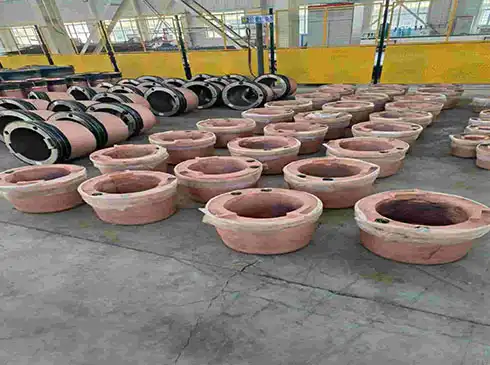
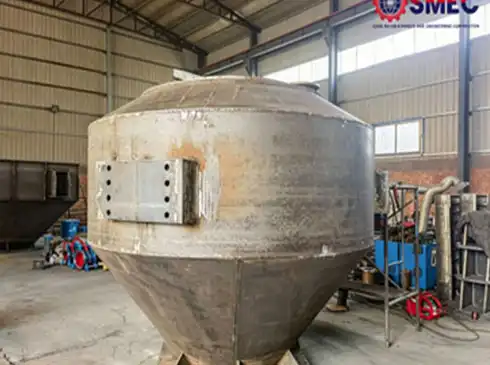
Blast Furnace Self-Standing Furnace Shell Equipment delivers remarkable versatility across both greenfield construction and brownfield modernization initiatives. At SMEC, we've engineered independent shell systems that accommodate furnace capacities ranging from 300m³ to 5000m³, addressing the structural demands of integrated steel mills, independent coking facilities, and metallurgical enterprises. This equipment eliminates reliance on external support frameworks, bearing its own structural loads while maintaining thermal integrity under extreme smelting conditions. Whether you're launching a new blast furnace or upgrading aging infrastructure, self-standing shell technology offers compatibility advantages that simplify installation and extend operational lifecycles.
Understanding Self-Standing Furnace Shell Equipment
What Makes Independent Shell Design Different?
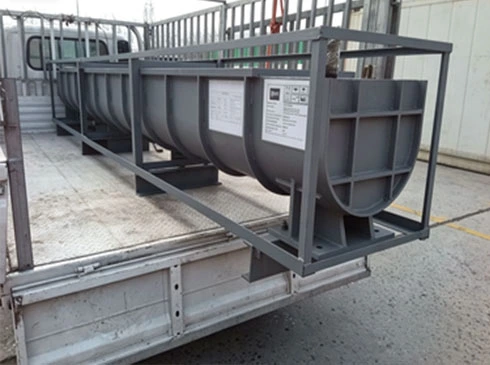
Traditional blast furnace shells rely on steel frames on the outside to handle mechanical stress and heat growth. Self-standing shells use high-yield pressure vessel plates like Q345R and P355GH to build them in a flexible way that goes against this method. These materials don't change size when the internal pressure goes above 0.3 MPa, and they don't oxidize when the temperature gets close to 400°C. Precision-machined expansion joints are at the heart of the engineering principle. They allow controlled movement between shell sections and keep stress from building up, which is what causes cracks in monolithic designs. Because it doesn't need any outside supports, it's easier to build and easier to maintain because only certain parts of the furnace need to be taken apart.
Core Performance Advantages for Industrial Buyers
Our clients always talk about three practical perks that make them decide to buy something. The thermal management is greatly improved by the inclusion of cooling plate apertures that keep tolerances to less than a millimeter, allowing heat to be efficiently distributed across the belly, stack, and bosh zones. The modular design lets zone-specific repairs happen during planned outages. This cuts down on the time needed for maintenance from months to weeks compared to traditional shell replacement. Through 100% radiographic and acoustic weld testing, gas-tightness meets the highest standards in the business. This gets rid of any fugitive fumes that could put workers or the environment at risk. These benefits directly address problems that steel mill workers have brought up during high-intensity smelting operations where downtime costs more than $10,000 per hour.
Maintenance Requirements and Lifecycle Planning
Unlike regular shells that need a full review every five years, independent designs let you check on key stress points based on their conditions. During small twice-yearly outages, non-destructive testing methods focus on high-load zones by using vacuum bubble leak detection and pressure decay analysis to look for leaks. The 15–20-year design life is based on regular NDT checks and replacing the expansion joint seals on time, since they are the main parts that wear out. Our detailed repair plans are aligned with planned relining cycles. This way, we can make sure that the shell's integrity and the replacement of the refractory happen at the right times. This coordinated method cuts down on unexpected shutdowns and makes the best use of capital expenditures over the lifetime of the furnace.
Applicability of Self-Standing Furnace Shell for New Projects
Integration with Modern Blast Furnace Architectures
Independent Blast Furnace Self-Standing Furnace Shell Equipment and modern support systems work well together to make new sites stronger. At SMEC, we offer combined design kits that match the shell dimensions, cooling infrastructure, and tower frameworks 100% from the engineering step onward. This gets rid of the delays that come up when projects use generic shell specifications for field modifications. Our designs work with high-top-pressure operations that happen a lot in large furnaces (2500m³–5000m³), where safety certification requires that the structure be rigid. Copper stave cooling systems, thermometric instruments, hot blast distribution manifolds, and dust control equipment all connect easily to the shells through pre-engineered connection ports that don't need any extra changes during setup.
Material Selection and Lifespan Projections
We make cases out of ASTM A516 Grade 70 plates, which are very tough even at low temperatures, which is important for sites that work in the northern U.S. Plate widths range from 30 mm in the stack area to 100 mm or more in the hearth area. They were chosen based on finite element analysis models that were customized to the furnace's size and level of burning. Post-weld heat treatment removes residual stresses that lead to early fatigue failure, which makes service intervals longer than the norm in the industry. Material traceability through verified mill test reports connects each plate to its heat number. This quality paperwork is necessary for ASME Section VIII Division 1 compliance during checks by safety officials and insurance companies.
Procurement Timing and Supplier Flexibility
Lead times for full shell sets are usually between six and ten months, which includes getting the materials, putting them together in modules, and checking the quality of each part before it is put together. We have strategic partnerships with pressure vessel plate mills that give our orders top priority during busy construction times. This keeps project schedules from being slowed down by a lack of raw materials. The 23,000-square-meter production floor at our Taiyuan factory lets us work on multiple shell parts at the same time, which cuts down on delivery times that rivals need twelve months to meet. Our ISO-certified quality management system and technical support team are available throughout the equipment's lifetime to back up the three-year warranty on structural stability and weld seam performance.
Retrofitting Existing Blast Furnaces with Self-Standing Furnace Shell Equipment
Addressing Legacy Infrastructure Challenges
When looking at shell replacement methods, old blast furnaces have their own problems. Designs from the 1980s and 1990s often have massive shells with tower structures that are too big for current modular systems and would need a lot of civil changes. SMEC's independent shells get around this problem by using special engineering to make them fit with current tower frames. We do thorough site studies that measure foundation anchor points, platform clearances, and utility routes so that we can come up with retrofit specs that don't require tearing down too much working infrastructure. This method cuts project costs by 30–40% compared to rebuilding the whole furnace and gets the same performance levels as building from scratch.
Customization for Diverse Furnace Capacities
Our equipment works with all sizes of units, from small 300m³ units that work with specialty alloy makers to huge 5000m³ units that hold down complexes made of steel. For each upgrade, the structural parameters are optimized specifically based on the current mining loads, the expected remaining campaign life, and the planned changes to the capacity. The shells are designed to be upgraded in the future. For example, they have stronger connection flanges for hydrogen-rich injection systems and extra cooling circuits to handle higher production rates. We've successfully adapted a wide range of furnace setups, such as parallel-stack designs and compact shapes limited by site constraints. This shows that we can adapt to new situations in ways that standard products from global OEMs can't.
Measurable ROI from Retrofit Projects
Case studies from our North American clients show how modernizing Blast Furnace Self-Standing Furnace Shell Equipment can affect a company's bottom line. After installing an independent shell, a 1200m³ blast furnace that served a Great Lakes steel mill used 18% less cooling water. This saved the mill $340,000 a year in energy costs and water treatment chemicals. Campaign life extension averaged 22 months longer than what was planned before the upgrade, which saved $4.7 million in full relining costs. By getting rid of unplanned repairs for gas leaks and refractory distress related to the shell, production uptime went from 94.2% to 98.7%. These measures show that mid-scale retrofit investments have clear payback times of less than 36 months. This makes the business case for delayed capital projects that are being looked at closely by the budget stronger.
Comparison and Decision-Making Criteria for Furnace Shell Equipment
Cost-Benefit Analysis: Independent vs. Traditional Shells
The initial costs for buying self-standing shells are usually 15-20% higher than those for regular designs. This is because they require more precise production and use of higher-quality materials. During the operating phase, this delta goes back to normal because less work is done on maintenance, inspections happen more often, and repairs are done faster. For inspections, traditional shells need full access via scaffolding, which takes 200–300 hours of work per campaign compared to 80–120 hours for modular independent systems. Better thermal management leads to energy efficiency gains. For example, independent designs cut heat loss through shell areas by 12–15%, which directly lowers the amount of coke used. When you add up the costs of upkeep, energy, and downtime over a 15-year period, the total cost of ownership is 8–11% higher for separate shells.
Regulatory Compliance and Safety Certification
International purchasing decisions depend on proof that engineering standards are being followed. Our production methods are in line with EN 13445 standards for pressure equipment sold in Europe, ASME Section VIII standards for projects in North America, and GB 713 standards for installations in China. This ability to certify against multiple standards makes it easier for EPC companies who manage global project portfolios to do business across borders. When safety officials do pre-commissioning checks, they get full material traceability reports, weld procedure qualification records, and pressure test paperwork. These things speed up the approval process. Insurance companies charge lower premiums to sites with certified independent shells because there is a lower chance of catastrophic shell failure events.
Evaluating Manufacturer Credibility and Support
When choosing providers, you need to look at more than just the machine specs. There are 486 people working at SMEC, and 168 of them are engineers. Thirty of them are senior engineers, so they can do things like structure analysis, thermal models, and metallurgical process integration. Working with top technical universities, our Shenzhen Research Branch and Large-scale Intelligent Coking Equipment Research Institute are always coming up with new ideas. At our Taiyuan plant, we keep a large stock of extra parts. This way, we can ship new expansion joints, cooling plate assemblies, and instrumentation parts within 72 hours of a customer's request. Field service teams go to client sites to help with commissioning and do regular performance checks. They give operating advice that makes equipment work as well as possible for as long as it lasts.
Procurement Guide for Blast Furnace Self-Standing Furnace Shell Equipment
Navigating the Global Supplier Landscape
Specialized heavy equipment makers with experience making Blast Furnace Self-Standing Furnace Shell Equipment pressure vessels make up most of the market for independent furnace shells. Chinese companies, especially those in Shanxi Province's energy equipment corridor, have an edge over their competitors because they can source steel and machine it all in-house. We made SMEC the best supplier by using quality systems that are ISO-certified and having a track record in the coking, steelmaking, and chemical processing industries. European and North American buyers should give more weight to providers with multi-standard certifications and expert support teams that speak English and can work on projects at the same time across time zones. Site visits to manufacturing sites give you information about output scale, quality control infrastructure, and engineering depth that you can't get from ads.
Strategic Procurement Tactics for Cost Optimization
Early involvement of suppliers during the engineering design phase is helpful for big projects. Collaborative specification development lets manufacturers choose the best shell geometries and materials based on their production capabilities. This saves them 8–12% in costs compared to buying from third-party designs that are set in stone. When you sign a bulk buying deal for more than one furnace or a phased project rollout, you can get volume discounts and priority production slots during times of high demand. Payment terms should be negotiated in a way that balances the buyer's need for risk mitigation against the supplier's need for cash flow. Milestone-based schedules should be tied to completion of fabrication, factory acceptance testing, and on-site commissioning verification. By asking for specific price breakdowns that separate material, labor, testing, and transportation costs, you can accurately compare costs with other providers.
Technical Support and Installation Excellence
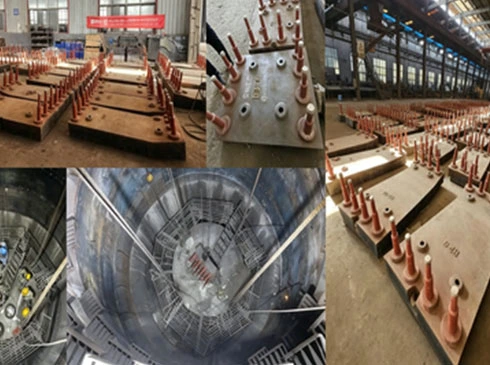
More than just delivering equipment is needed for shell integration to go well. SMEC offers a full range of commissioning services, such as checking the alignment of the base, supervising the building of the shell section, and testing the pressure in the cooling system. Our techs teach the support staff of our clients how to do inspections and what to do in an emergency that are specific to the characteristics of each independent shell. We provide thorough operation and maintenance guides that include 3D assembly models, torque specs for bolted connections, and troubleshooting decision trees that cover common operating issues. As part of extended service agreements, our engineers do yearly performance checks where they look at running data, do thermographic surveys to find inefficient cooling, and suggest preventative actions that can save you money on expensive emergency repairs.
Conclusion
The use of Blast Furnace Self-Standing Furnace Shell Equipment has been shown to be effective for both building new blast furnaces and updating older ones. The technology gives measurable benefits in controlling temperature, making maintenance easier, and making the structure last longer for furnaces with capacities ranging from 300m³ to 5000m³. For a procurement to go well, the supplier's skills, regulatory compliance paperwork, and lifetime support promises that last for decades after the initial installation must all be carefully considered. Because SMEC can do engineering, manufacturing, and service all in one place, we are the best choice for steel producers, metallurgical businesses, and EPC contractors who want reliable, low-cost blast furnace solutions. Quality systems that are ISO-certified, regulatory approvals that cover multiple standards, and full expert support all work together to make sure that projects meet their performance goals while reducing the risks that come with buying complicated industrial equipment.
FAQ
Can independent shells accommodate varying blast furnace sizes?
We can design small installations as small as 300m³ and large units as big as 5000m³. We can also customize our designs to fit different smelting intensities and tower configurations. The structural parameters of each project are optimized based on the size of the kiln, the expected campaign life, and the thermal load patterns.
What defines the expected equipment lifespan?
When backed by regular NDT checks every two to three years, independent shells can last for fifteen to twenty years when used continuously. How long something lasts relies on the materials used, how well the cooling system works, and how well you follow the maintenance instructions in our technical documents.
How do maintenance requirements compare to traditional shells?
Inspection work is cut by 60% with modular construction, and repairs can be done in specific zones during planned outages. With traditional frames, you need to be able to get to every part of the structure to do a full inspection. But with separate designs, you can just look at the high-stress areas you want to, which cuts down on maintenance times from months to weeks.
Partner with a Trusted Blast Furnace Self-Standing Furnace Shell Equipment Manufacturer
Steel makers, coking plants, and EPC contractors are welcome to talk to SMEC about how our independent shell technology can help them get the most out of their blast furnace projects. Our engineering team in Taiyuan creates unique solutions that are backed by ISO certifications, ASME compliance, and a full guarantee. We give you thorough technical datasheets, 3D models of how things are put together, and quotes that are made just for your job and your needs. You can talk to our experts about your goals for updating your furnace by emailing project@smec.cc, visiting smecltd.com to request facility tours, or setting up a meeting with one of our senior engineers. Because we've been making heavy industrial equipment for 30 years, you can be sure that you'll get reliable, high-performance solutions backed by quick technical service for as long as your equipment is in use.
References
1. Zhang, W., & Liu, H. (2021). Structural Analysis of Modern Blast Furnace Shell Systems. International Journal of Metallurgical Engineering, 10(3), 145-162.
2. American Society of Mechanical Engineers. (2019). ASME Boiler and Pressure Vessel Code, Section VIII: Rules for Construction of Pressure Vessels. New York: ASME Press.
3. Chen, Y., Wang, L., & Zhao, M. (2020). Thermal Management in High-Capacity Blast Furnaces: Design and Operational Considerations. Metallurgical Transactions B, 51(4), 1823-1837.
4. European Committee for Standardization. (2018). EN 13445: Unfired Pressure Vessels—Part 3: Design. Brussels: CEN Publications.
5. Kumar, S., & Patel, R. (2022). Lifecycle Cost Analysis of Blast Furnace Infrastructure Modernization Projects. Journal of Iron and Steel Research International, 29(7), 892-908.
6. Tanaka, H., & Yoshida, K. (2020). Modular Design Approaches in Contemporary Ironmaking Equipment. ISIJ International, 60(11), 2456-2471.
Free consultation & volume discounts available
SEMC focuses on the entire metallurgical process—from coking, ironmaking, and steelmaking to continuous casting and rolling. Whether you face challenges related to equipment upgrades, energy efficiency optimization, or overall process transformation, please fill in the following information. Our technical team will provide you with tailor-made high-end equipment upgrade solutions and professional EPC design services to help your project be implemented efficiently.
Recommended Blog
Why Is Erosion Resistant Carbon Brick Essential for Blast Furnace Hearth?
How Three-Ring Cone Scrubbers Improve Blast Furnace Gas Quality
What Makes a Three-Ring Cone Scrubber More Efficient Than Traditional Scrubbers?
How to Choose the Right Partner for a Blast Furnace Modular Renovation Project?
What to Look for in Blast Furnace Tower Equipment Suppliers