How to Choose the Right Partner for a Blast Furnace Modular Renovation Project?
How to Choose the Right Partner for a Blast Furnace Modular Renovation Project?
Understanding the Challenges and Benefits of Modular Renovation for Blast Furnaces
- Understanding the Challenges and Benefits of Modular Renovation for Blast Furnaces
- Core Criteria to Evaluate When Choosing Your Modular Renovation Partner
- Comparing Leading Modular Renovation Providers: What to Look For
- Step-by-Step Approach to Selecting the Right Partner
- Real-World Case Studies of Successful Modular Renovation Projects
- Conclusion
- FAQ
- Partner with SMEC for Your Blast Furnace Modular Renovation
- References
If you don't choose the right partner for your modular renovation project for the blast furnace, you might not get smooth integration, little downtime, or long-term operational efficiency. The ideal partner should have a track record of success in the modular renovation project for the blast furnace, complete quality control systems, and the ability to handle the whole project, taking into account the unique challenges of blast furnace overhauls. Your partner must not only be technically skilled but also understand the delicate balance between tight deadlines and strict safety standards. They must be able to make sure that pre-assembled modules work perfectly with existing infrastructure and meet strict industry regulations and environmental standards.
Understanding the Challenges and Benefits of Modular Renovation for Blast Furnaces
In the past, renovating a blast furnace has been a long, hard process that required production to stop for several months. The Modular Renovation Project for the Blast Furnace completely changes this way of thinking by moving most of the building work off-site, where parts like furnace shells, cooling staves, refractories, and pipe systems are put together ahead of time in controlled environments. This way directly addresses the steel industry's biggest problem: the big loss of money that comes with long periods of downtime.
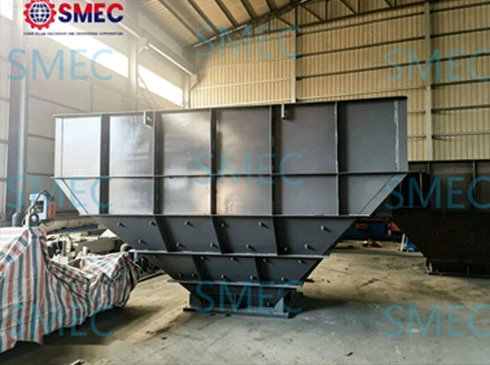
Technical Complexity and Integration Challenges
Modular renovation projects for the blast furnace need to be planned and carried out with great accuracy. To align the interfaces between old foundations and new modules, you need to use advanced measuring tools, such as 3D laser scanning, to make digital copies of the old structures. Even though modules can weigh up to 1000 tonnes, they have to meet limits of +/- 2 mm. The problem of integration goes beyond just the physical measurements; it also involves thermal expansion, pressure tank compliance, and the integrity of the refractory lining during shipping and installation. Because of these technical problems, we need partners who are very good at engineering and have a history of fixing problems in heavy industry settings.
Measurable Benefits Over Traditional Methods
The benefits of the modular renovation project for the blast furnace go far beyond cutting down on time. Compared to traditional brick-by-brick relining methods, facilities usually see 40–60% shorter on-site construction times, which saves 30 days or more of production time. This speeding up brings in money right away, which more than makes up for the higher initial engineering cost. The controlled workshop environment allows for better quality control, with full non-destructive testing and trial assemblies that check the accuracy of the dimensions of the modules before they even get to the furnace site. Less work needs to be done on-site, and high-risk tasks that need to be done at heights or in small areas need to be done less often.
Environmental and Operational Performance Gains
Modern modular renovation projects for the blast furnace use advanced cooling technologies and pollution control features that make the furnace campaign work better as a whole. Using carbon-microporous refractories with high-conductivity copper or cast iron cooling staves improves thermal management, making equipment last longer and using less energy per tonne of iron produced. The precise production setting makes sure that the refractory is applied consistently, which gets rid of the differences that come with installing it in the field. These changes directly help reach goals for sustainability while also making the blast furnace more reliable throughout its lifetime.
Core Criteria to Evaluate When Choosing Your Modular Renovation Partner
To find the best partner, you need to carefully look at a lot of different factors that affect the modular renovation project for the blast furnace's overall success. Instead of relying on marketing claims, your evaluation system should focus on track records that can be checked and technical skills that can be measured.
Technical Expertise and Engineering Capability
We've seen that the partnerships that work best involve suppliers who have research and development facilities that are only used for modular renovation projects for the blast furnace technologies. Find groups that work with universities or study institutions that do metallurgy to keep their labs, testing facilities, and work-together agreements up to date. Partners should show they know how to use advanced engineering tools like finite element analysis to check the strength of structures, computational fluid dynamics to make cooling systems work better, and building information modeling to find clashes during the design phase. The engineering team should have senior professionals with well-known credentials and a lot of experience working in the field on multiple blast furnace campaigns. Ask for detailed case studies that show how the partner has dealt with technical problems that are similar to the ones your project will face.
Quality Assurance and Standards Compliance
Quality control rules are the basis of a successful modular renovation project for the blast furnace. Your partner must use multi-stage inspection processes that include checking the dimensions of the raw materials while they are being made, using radiography and ultrasonic tests to confirm the quality of the welding, and finally testing the cooling circuits under 1.5 times working pressure using hydraulic pressure. International standards like ISO 9001 for quality management, AWS D1.1 for structural welding, and ASME rules for pressure tank parts should be followed and logged so that they can be checked. Before shipping, the provider should put together full test assemblies in their workshop to make sure that the bolt holes are lined up correctly and that the pipes join properly and that modules can connect to each other. This upfront confirmation stops expensive delays during the crucial installation window, when every hour of furnace downtime hurts profits.
Project Management and Execution Track Record
Good project management is what sets good modular renovation projects for the blast furnace partners apart from good suppliers. Look at the project's organizational framework and the experience levels of the project manager, site boss, and quality assurance lead. The partner should show a thorough action plan with clear due dates, backup plans for common problems, and rules for how to talk to stakeholders and keep them informed. Look at their written work from past projects, paying special attention to how well they stuck to deadlines, stuck to budgets, and kept safety records without any accidents. Referrals from similar projects are very helpful because they show how the partner handles stress when unexpected problems arise during important installation stages.
Comprehensive Support and Long-Term Partnership Value
The connection goes far beyond the modular renovation project for the blast furnace itself. Look at how well the partner can offer ongoing technical support, spare parts availability, and services that improve furnace performance during the campaign. Training programs that teach your operations and repair teams what they need to know make sure that they can do their jobs on their own while still being able to get help from experts when they need it. Partners that offer retrofitting and upgrade tracks show that they are willing to change with the needs of your building. The warranty terms should make it clear how long the coverage lasts, how to report technical problems, and how to fix problems with performance. This will protect your finances and give you peace of mind in your operations.
Comparing Leading Modular Renovation Providers: What to Look For
There are many companies in the global market that say they can handle a modular renovation project for the blast furnace, but there are big differences in their actual skills, their ability to lead innovation, and how they treat their customers. To tell these differences, you need to look deeper than the marketing on the surface and look at the real differentiators.
Market Reputation and Customer Satisfaction
Well-known service providers build their reputations by consistently completing modular renovation projects for the blast furnace in a wide range of working settings. Find out who their customers are and look for proof of return business from big steel companies and successful projects with blast furnaces of different sizes and shapes. Customer comments should include specific measures that show value delivery, such as the real length of downtime compared to estimated lengths of time, gains in efficiency after renovations, and responsiveness during commissioning problems. Receiving prizes, attending technical workshops, and publishing research show that you are a thought leader in your field and are dedicated to improving the modular renovation project for the blast furnace methods.
Technology Leadership and Innovation Capacity
Leading suppliers are always putting money into new technology and making their own solutions to new modular renovation projects for the blast furnace problems in the industry. Check out their patents, unique design features, and how well they can work with Industry 4.0 technologies like digital monitoring platforms and predictive maintenance systems. Innovative transportation solutions include self-propelled modular transporters for moving heavy modules, advanced vibration tracking during transport to protect the integrity of the refractory, and rapid connection systems that reduce the need for welding in the field. The most forward-thinking partners offer simulation tools that can be used to model different renovation scenarios. These tools can predict how the Modular Renovation Project for the Blast Furnace will work and help you find the best design parameters before starting the fabrication process.
Customization Flexibility and Turnkey Solutions
Because blast furnaces have been used for decades, they have developed unique configurations that need a modular renovation project for the blast furnace partners who can adapt standard modular ideas to the specific needs of the site. Check to see if the supplier is willing and able to change the module sizes, refractory materials, cooling system designs, and instrumentation packages to fit your exact needs. Providers of turnkey solutions offer a wide range of services, including initial assessment, detailed engineering, module fabrication, logistics coordination, on-site installation supervision, and support during commissioning. This unified method makes it easier to keep track of who is responsible for what and makes project planning simpler by cutting down on the points where communication breaks down in multi-vendor situations.
Step-by-Step Approach to Selecting the Right Partner
A disciplined selection process for a modular renovation project for the blast furnace makes sure that evaluations are fair and reduces the chance of partners not being a good fit. We suggest a step-by-step process that gradually reduces the number of candidates while conducting more thorough research on those who are still in the running.
Define Project Scope and Establish Success Criteria
Start by making sure everyone inside the company agrees on the goals of the modular renovation project for the Blast Furnace, whether they are to extend the campaign's life, make it more energy efficient, make it better for the environment, or a mix of these. Detailed inspections of the existing furnace should be used to record its condition and show which parts need to be replaced and which ones can be kept. Set measurable success criteria, such as the longest amount of downtime that is acceptable, the target date for production to resume, the budget limits, and the performance expectations after the renovation. These factors will help you figure out how well possible partners understand your priorities and can help you reach them.
Conduct Market Research and Develop Shortlist
Through trade shows, industry groups, technical magazines, and recommendations from other steel producers, systematic market research finds qualified modular renovation projects for the blast furnace candidates. Create basic evaluation standards that take into account things like proximity, culture fit, financial stability, and technology fit. Send out requests for information to get a sense of initial interest and ability, then narrow the field down to four to six serious contenders that deserve requests for detailed proposals. This first screening gets rid of suppliers that don't meet basic requirements. This saves review resources for partnerships that look the most likely.
Evaluate Proposals and Conduct Site Visits
Requests for comprehensive proposals for a modular renovation project for the blast furnace should include specifics about technical methods, project dates, quality assurance plans, strategies for reducing risk, and business terms. Use the criteria you've already set to judge responses. Instead of generic answers, look for signs of real understanding. Visit potential factories and look at their manufacturing skills, quality control methods, and finished units that are ready to be shipped. Talking to tech teams in person can reveal ways of fixing problems and cultural fit that written plans can't fully show. Checking references with past customers gives you a clear picture of how the partnership really works compared to what was said during the sales process.
Negotiate Terms and Formalize Partnership
Not only should commercial terms be talked about in the final negotiations, but also specific roles and responsibilities for each party, how to handle changes and disagreements, and guarantees of performance. Misunderstandings can be avoided during the project execution by writing down clearly the acceptance criteria, payment triggers for milestones, and warranty conditions. When people work together to make a contract that protects both sides' rights, it sets the stage for constructive problem-solving when the expected problems arise during the modular renovation project for the blast furnace.
Real-World Case Studies of Successful Modular Renovation Projects
Analyzing the results of real modular renovation projects for the Blast Furnace gives us useful information about what makes relationships work and what doesn't. The cases below show important factors for success and lessons learned from different work situations.
European Steel Mill: Complete Shell Replacement
A big European integrated steel producer had to repair a badly damaged blast furnace shell piece right away, which put the campaign's continuation at risk. A normal repair would need 90 days of downtime, which would cause production breaks and delivery risks that customers would not accept. The modular renovation project for the blast furnace method made it possible to make new shell pieces away from the site, complete with cooling staves and refractory linings already installed. A thorough 3D scan of the existing foundation made sure that the new foundation would fit perfectly in terms of size. Self-propelled modular transporters put new sections in place so that they could be quickly connected to furnace parts that were already there. The real shutdown lasted 38 days, instead of the 42 days that were planned. Within 72 hours, output was back to 98% of what it was before the renovation.
Asia-Pacific Coke Producer: Integrated Cooling System Upgrade
A separate coking plant that helps several steel mills needed to update its cooling system to make campaigns last longer and use heat more efficiently. The chosen partner for the modular renovation project for the blast furnace provided cooling stave modules that were already put together and designed to be easily swapped out for the old system. Before shipping, leak-free performance was confirmed by hydrostatic pressure testing at 1.5 times the operating pressure. Field welding was cut down by 70% with modular piping assemblies, which sped up installation and made the joints more reliable. After the renovation, monitoring showed that 15% less cooling water was used and that the temperature profiles were more even, which extended the life of the refractory.
Lessons Learned Across Multiple Projects
Successful modular renovation projects for the blast furnace have a few things in common. Planning carefully ahead of time and keeping detailed digital records will keep installation surprises to a minimum. Transparent communication protocols that quickly escalate problems allow for quick problem-solving before they have a bigger effect on the schedule. The most useful partners are those who can adapt to changing situations in the field without lowering quality standards. The clients who are very happy always say that their partners treated the project more like a partnership than a sale of equipment. They put effort into building relationships, which paid off when problems needed creative solutions.
Conclusion
Choosing the right partner for your modular renovation project for the blast furnace is a big strategic choice that will affect how well you do for years to come. The best collaborator has proven professional skills, thorough quality systems, open project management, and a real desire to help you succeed in the long run. You can make sure that your renovation project goes smoothly by carefully screening candidates based on clear criteria, doing thorough research like checking references and visiting the facility, and negotiating terms that make everyone's goals the same. The Modular Renovation Project for the Blast Furnace offers transformative benefits in timeline acceleration, quality consistency, and safety improvement, but these advantages materialize only when partnered with suppliers possessing the engineering depth, manufacturing capability, and customer focus to navigate the inherent complexities of blast furnace renovation.
FAQ
1. What advantages does modular renovation offer compared to traditional blast furnace refurbishment?
Compared to traditional methods, the Modular Renovation Project for the Blast Furnace cuts on-site building time by 40 to 60 percent, which means 30 days or more of lost production time is avoided. The controlled workshop environment enables superior quality control through comprehensive testing before modules reach the site. By cutting down on high-risk activities on-site and workers' exposure to dangerous conditions, safety profiles get a lot better. Even though the original engineering costs are higher, the extra money saved from less downtime far beats the modularization premium, and the investment starts to pay off in the first few weeks of production again.
2. How can we verify a contractor's technical competencies and safety compliance?
Ask for proof of important certifications, such as ISO 9001, AWS D1.1, and ASME compliance with third-party audit results. Read in-depth case studies from similar modular renovation projects for the blast furnace that have proven customer examples ready to talk about how the project actually turned out. Visit the factory and look at how things are made, how quality control is done, and examples of finished work. Check the credentials of the engineering team, such as the professional registrations and published technical contributions of the senior engineers. Accident rates, lost-time accident rates, and proof of putting safety management systems into place should all be kept in safety records.
3. What are typical project timelines and major cost drivers?
For full modular renovation projects for the Blast Furnace, engineering and pre-assembly work is to be done off-site for 8 to 12 months before the furnace is shut down. Depending on the size of the project, installation and commissioning on-site usually take 30 to 45 days. Engineering complexity, module transportation logistics, the need for specialized refractory materials, and the extent of the needed infrastructure changes are some of the main factors that affect costs. Downtime in production has the biggest effect on the economy, so keeping to the schedule is very important for the overall economics of the project.
Partner with SMEC for Your Blast Furnace Modular Renovation
SMEC is the company that top steelmakers, coking plants, and metallurgical businesses trust for their most difficult modular renovation projects for the blast furnace. We are based in Taiyuan City, which is in Shanxi Province's national energy and heavy chemical industry base. Our Large-scale Intelligent Coking Equipment Research Institute and Shenzhen Research Branch have done a lot of study to give us the specialized knowledge we bring to the table. Our 168 engineering and technical staff members, 30 of whom are senior engineers, provide customized modular renovation projects for the blast furnace solutions that are backed by strong quality systems and excellent project management. We offer turnkey services from the initial assessment to post-installation optimization. Our 68,700 square meters of advanced manufacturing facilities and strategic industry-academia partnerships ensure constant innovation. Our international trade department specializes in helping foreign buying teams with clear communication, open paperwork, and fast technical support throughout project lifecycles. Get in touch with our team at project@smec.cc to talk about your specific blast furnace renovation needs and find out how SMEC's tried-and-true methods deliver measurable performance improvements while minimizing operational disruption.
References
1. International Iron and Steel Institute (2022). "Best Practices in Blast Furnace Campaign Extension Through Modular Technologies." Technical Report Series on Ironmaking Innovations, Volume 18.
2. Zhang, L., and Kumar, R. (2021). "Modular Construction Approaches in Heavy Industrial Plant Renovation: A Comparative Analysis." Journal of Engineering Project Management, 45(3), pp. 112-129.
3. European Steel Technology Platform (2023). "Guidelines for Blast Furnace Renovation Project Execution and Risk Management." Brussels: ESTEP Publications.
4. Wang, H., Schmidt, J., and Patel, M. (2020). "Quality Control Protocols for Pre-Assembled Blast Furnace Components: NDT Methods and Dimensional Verification." Materials and Structures in Engineering, 52(7), pp. 1847-1863.
5. American Society of Mechanical Engineers (2022). "ASME Pressure Vessel Code Applications in Metallurgical Equipment Renovation Projects." New York: ASME Standards Publication.
6. Yamamoto, T., and Fischer, A. (2021). "Economic Analysis of Modular Versus Traditional Blast Furnace Relining: Case Studies from Asia-Pacific and European Operations." International Journal of Industrial Economics, 38(4), pp. 445-467.
Free consultation & volume discounts available
SEMC focuses on the entire metallurgical process—from coking, ironmaking, and steelmaking to continuous casting and rolling. Whether you face challenges related to equipment upgrades, energy efficiency optimization, or overall process transformation, please fill in the following information. Our technical team will provide you with tailor-made high-end equipment upgrade solutions and professional EPC design services to help your project be implemented efficiently.
Recommended Blog
What Makes High-Performance Blast Furnace Valves Different?
What Makes a Three-Ring Cone Scrubber More Efficient Than Traditional Scrubbers?
Why Wear-Resistance is Key for Your Next Blast Furnace Riser Pipe?
Innovative Tuyere Imaging Technologies: Remote Monitoring in Extreme Heat
5 Key Factors When Buying Blast Furnace Water-Cooled Valves
How to Improve the Efficiency of Slag Granulation Equipment
Key Considerations Before Starting a Blast Furnace Renovation