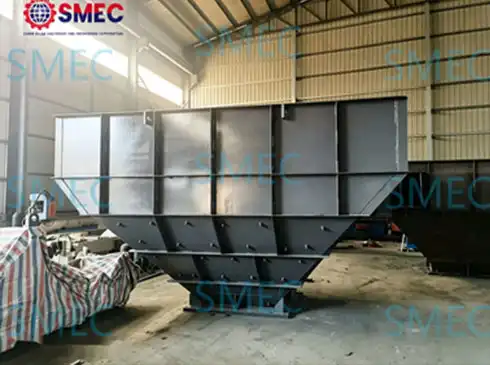
Advantages of Advanced Blast Furnace Monitoring Systems
Understanding Advanced Blast Furnace Monitoring Systems
- Understanding Advanced Blast Furnace Monitoring Systems
- Core Advantages of Using Advanced Safety Monitoring Systems
- Comparing Integrated Monitoring Solutions with Traditional Systems
- Choosing the Right Blast Furnace Monitoring System for Your Operation
- Real-World Applications and Future Trends
- Conclusion
- FAQ
- Partner with SMEC for Industry-Leading Blast Furnace Safety Solutions
- References
Modern blast furnace operations face unprecedented safety and efficiency challenges. An integrated safety monitoring & early warning system for blast furnace operations transforms how steel mills, coking plants, and metallurgical facilities manage operational risks. These advanced platforms combine real-time sensor fusion, predictive analytics, and intelligent diagnostics to eliminate the "black box" uncertainty that has plagued the industry for decades. By digitizing internal thermal states and structural health, these systems convert reactive maintenance into proactive risk management, delivering measurable improvements in uptime, energy efficiency, and worker safety.

Understanding Advanced Blast Furnace Monitoring Systems
Because blast furnaces are so complicated, they need more than just temperature readings. Modern monitoring systems combine many data streams from different types of sensors, such as thermocouples built into refractory linings, fiber optic arrays that track temperature gradients, acoustic emission sensors that find structural stress, and pressure detectors that track how gas flows. Traditional single-parameter systems can't compare to this multidimensional method when it comes to getting a full picture of how things are running.
Components and Technology Architecture
Advanced tracking tools have three layers that are all linked to each other. The sensing layer uses ruggedized hardware that was made to work in harsh industrial settings that are often over 1,200°C and have corrosive gases and electromagnetic interference. The data collection layer uses high-frequency sampling to get thousands of data points every second and sends data using two different types of communication methods. The intelligence layer uses mathematical models and machine learning techniques to turn raw data into ideas that can be used.
The ability to model heat resistance and predict deterioration is what makes complex systems stand out. Instead of just saying that a thermocouple reads 850°C, more advanced platforms figure out how much refractory is still there, how fast it will wear away based on past patterns, and how long it will be before maintenance is needed. This ability to predict the future changes business planning in a big way.
Real-Time Data Analysis and Automated Alerts
When trying to stop catastrophic mistakes, speed is important. Sensor inputs are processed in modern systems in milliseconds, and current readings are compared to dynamic limits that take into account operating phase, raw material composition, and performance patterns from the past. When strange things happen, like a quick rise in temperature in the hearth lining, an odd difference in the cooling water temperature, or acoustic signatures that show refractory cracking, the system sends out alerts with different levels of urgency.
Automated warning generation gets rid of the mistakes that happen when tracking is done by hand. There are several ways for plant workers to get clear, prioritized warnings: displays in the control room, mobile notifications, and connecting to current DCS/SCADA systems. This immediate notification lets people act quickly before small problems turn into emergencies or safety incidents that stop production.
Core Advantages of Using Advanced Safety Monitoring Systems
Using all-encompassing tracking technology of Integrated safety monitoring & early warning system for blast furnace has measurable advantages in terms of safety, speed, and compliance. These benefits directly address the needs of steelmakers, coking plant operators, and EPC contractors who want to improve metallurgical operations.
Enhanced Operational Safety and Early Warning Capabilities
Accident prevention is its main benefit. Liquid iron breaking through the refractory layer in hearth burn-through occurrences is one of the most dangerous conditions in ironmaking because it can damage the facility and endanger humans. Modern tracking systems can detect heat erosion thermal indicators weeks or months before they fail, allowing for repairs and planned shutdowns.
Another key safety use is cooling system leak detection. Water entering melted iron through cooling staves or tuyeres can cause hydrogen bombs. Cooling circuit monitoring platforms monitor thousands of temperature differential points. These micro-leaks generate temperature fluctuations that can't be observed by hand. Early discovery has prevented many explosions at plants with full monitoring.
Improved Production Efficiency and Energy Optimization
Big economic improvements bring safety benefits. You must carefully adjust the furnace temperature to maximize its performance. If it's too hot, the refractory will wear faster, and too cold, work stops. Real-time tracking helps workers maintain optimal temperatures, increasing throughput and refractory life. Advanced systems extend campaign life by 15–25% compared to manual tracking and regular checks.
The amount of energy used also matters. Monitoring systems maintain temperature and prevent shutdowns, reducing fuel use and improving coke efficiency. The information also helps engineering teams uncover and fix productivity issues that would otherwise be concealed by the complexity of running a continuous blast furnace.
Regulatory Compliance and International Standards
As safety rules for workers and the environment get stricter around the world, it gets harder to follow the strict rules. Compliance with OSHA rules, EPA environmental standards, and industry-specific safety protocols is made possible by monitoring tools that keep records and allow for audits. Automated data logging makes permanent records that show good operational safety management. This lowers the risk of liability and helps with insurance requirements.
Systems that are made to work with a lot of different regulatory setups are especially helpful for international sites. Multinational companies and EPC firms working on projects in different countries can be sure that their platforms meet the practical safety standards set by IEC 61508 and the quality management principles of ISO 9001. This standardization makes it easier to share technology and helps make sure that safety procedures are followed the same way everywhere in the world.
Comparing Integrated Monitoring Solutions with Traditional Systems
Figuring out the difference in technology between old-fashioned monitoring methods and current, unified systems helps to support investment choices. The differences go beyond just comparing features; they affect basic risk management and tactical intelligence skills as well.
Limitations of Traditional Manual Monitoring
Traditional blast furnace tracking uses hand inspections, thermocouple readings at predetermined points, and the operator's understanding of the furnace to diagnose issues. This strategy adds multiple failure points. Manual inspections occur once a week or once a month; thus, problems may go undetected. Fixing thermocouples may miss damage between sensor locations. Risk assessment can vary depending on the interpreter's expertise and attention.
Traditional monitoring is reactive; thus, problems are generally detected after much damage. A refractory crack may grow for weeks before workers notice. Before a manual inspection can detect the problem, emergency repairs are needed, which cause unplanned shutdowns and disrupt production and supply schedules.
Advanced AI-Enabled Technologies and Predictive Maintenance
Constant monitoring, many sensors, and clever analysis of Integrated safety monitoring & early warning system for blast furnace help integrated systems avoid these issues. AI applications learn how burners perform and adjust baselines automatically when conditions change. This flexible modelling finds tiny problems that strict threshold-based systems would overlook, such as a sluggish temperature distribution change, a weird pressure-temperature relationship, or auditory signs of structural defects.
Predictive maintenance turns emergency response into planned interventions during planned outages. Maintenance teams estimate refractory weathering and component degradation to schedule materials, workers, and repairs. This strategy reduces furnace maintenance costs and hassles significantly while improving equipment performance.
Total Cost of Ownership and ROI Analysis
When procurement managers look at monitoring systems, they need to think about more than just the initial capital cost. Even though more complicated platforms cost more up front than simple temperature monitoring, the full study shows that they save a lot of money in the long run. Accidents that don't happen often make investments worth making—one big accident can cost millions in damage to equipment, lost production, and possible insurance claims.
Over the life of the furnace program, operational gains add up. Longer refractory life, less unexpected downtime, better production, and optimized energy use all add up to a return on investment that is usually seen in 18 to 36 months for large-scale operations. When you look at the costs that were avoided, like emergency repair costs, faster material purchase premiums, and missed production income during unplanned shutdowns, the business case gets stronger.
Choosing the Right Blast Furnace Monitoring System for Your Operation
To choose the right monitoring technology, you need to carefully look at the technical skills, the supplier's reputation, and the possibility of a long-term relationship. Because the choice will have long-lasting effects on safety and business efficiency, it is important to do a full assessment.
Key Evaluation Criteria for Procurement Managers
Scalability is one of the most important things to consider when making a choice. In the future, when facilities add more sensors, furnaces, or more advanced analytical tools, their monitoring systems should be able to handle the growth. Modular architectures that allow for incremental improvements protect the initial investment and allow for improvement all the time.

Integration compatibility tells us how well new tracking tools can connect to plant systems that are already in place. Standard industrial interfaces like OPC UA, Modbus TCP, and Profibus are supported to make sure that data can be easily shared between DCS/SCADA systems, ERP platforms, and history databases. This integration makes it possible to do a full study of operations and helps people at all levels of a company make decisions based on data.
Supplier dependability needs close attention. The monitoring system provider becomes an important part of keeping the building safe and productive over time. When evaluating a supplier, you should look at their expert assistance, supply of spare parts, software update policies, and how many good implementations they have had in the past. References from similar companies can tell you a lot about how well a partnership will work in real life.
SMEC's Technological Advantages in Blast Furnace Monitoring
SMEC stands out because it has many technological advantages that it has gained by working with top universities on metal research for more than 20 years. Our system design gets around the main problems with regular single-parameter tracking platforms by using four main features that set it apart from the competition.
The most important technological advance is our unique three-dimensional unsteady heat transfer mathematical model. SMEC's method blends forward and backward heat transfer algorithms with a large knowledge base for abnormal detection, while competing systems use simplified one-dimensional heat transfer formulas. This complex modeling accurately finds hidden problems like irregular refractory thermal conductivity, circular cracking, air gaps, and iron entry that less complex models can't. The three-dimensional visualization feature reconstructs furnace erosion profiles and temperature distributions with calculation accuracy proven by looking at over one hundred decommissioned blast furnaces after the fact.
The accuracy of hardware is another standard. Engineers at SMEC made high-temperature flexible thermocouples with an IP67 rating that are especially made for blast furnace conditions and last a very long time. Our digital water temperature difference monitors are accurate to within ±0.02°C, and our high-definition air-cooled tuyere cameras can handle the worst working conditions. Every important piece of hardware is certified for accuracy by national metrology centers, and more than 90% of the equipment that is put stays stable throughout the whole furnace campaign.
Practices for installation and field safety set the rules for the business. Everyone agrees that SMEC's centralized hearth bottom thermocouple routing method is the best. This protects the whole installation from high temperatures, explosions, impact damage, and gas leaks. Our sensors allow for online replacement under pressure without stopping normal blast furnace production. This means that maintenance has the least possible effect on operations.
Intelligence and comparison tools give operations new levels of understanding. The system uses standard thresholds for big data in the business and instantly creates warnings with different levels of severity. Connecting to SMEC's national database of similar blast furnaces allows cross-facility safety comparisons among furnaces with similar capacities, which helps to improve safety all the time by comparing to others. With this smart analysis, raw monitoring data is turned into strategic operational guidance.
The value argument is finished with closed-loop service delivery of Integrated safety monitoring & early warning system for blast furnace. SMEC's platform offers integrated monitoring, warning, diagnosis, and process guidance services, unlike other products that only collect temperature data and don't offer diagnostics, benchmarking analysis, or production guidance. Based on monitoring data, our metallurgical expert team regularly creates furnace condition analysis reports that include specific suggestions for protecting the furnace and making changes to its operational parameters. This all-around method makes sure that clients get the most out of their investment in tracking.
Practical Procurement Guidance
When you ask for quotes, be sure to include full details about the facility, such as the furnace's capacity, the year it was built, the instruments that are already there, and any operating problems that you know of. With this information, suppliers can offer customized solutions instead of standard ones. Talk about the installation schedule carefully, since putting in sensors often needs to be coordinated with production phases or repair breaks.
Maintenance agreements should be carefully talked over. Make it clear how long technical help will take to respond, when new sensors and parts will be available, and how to update software and make algorithms better. Knowing these practical details will keep you from being surprised when you set up the system and will also make sure it runs smoothly in the long run.
Real-World Applications and Future Trends
The benefits of advanced monitoring become real when we look at examples of successful implementations and new technologies that are changing the future of the business.
Case Studies Demonstrating Safety and Efficiency Improvements
In 2022, a large integrated steel mill in the United States put in over 2,000 sensor points across two furnaces to do full blast furnace monitoring. In just six months, the system found hearth erosion in Furnace #1 that had not been seen by human tracking. Because of the early warning, planned repairs could be made during a maintenance window. This kept the plant from having to shut down unexpectedly, which would have cost about $3.2 million in lost production and repair costs. The building stretched the furnace campaign by 18 months longer than planned, which gave a big return on the money spent on the monitoring system.
In 2023, an independent coking plant that worked with several steelmakers moved from simple temperature tracking to an all-in-one platform. The improved system found inefficiencies in the cooling circuit that were wasting too much energy. This allowed operational changes that cut fuel costs by 11% a year. The predictive maintenance features cut unexpected downtime by 34% in the first year of the installation. This made the coke supply more reliable and strengthened relationships with customers.
Emerging Technologies and Innovation Directions
Internet of Things architectures are changing how monitoring systems are set up and what they can do. Wireless sensor networks make it easier to add more sensors and lower the cost of installation. Cloud-based analytics platforms give real-time industrial apps access to computing power that wasn't available before. Edge computing solutions handle important data close to where it's needed for quick action, while also sending gathered data to cloud platforms for more in-depth analysis and long-term pattern recognition.
Artificial intelligence keeps getting better, moving from easy pattern recognition to real predictive intelligence. Next-generation systems will be able to predict how a furnace will behave days or weeks in advance by looking at operational parameters, the properties of the raw materials, and outside factors like the temperature. With this ability to predict the future, practical changes can be made ahead of time to boost output and stop problems before they start.
Digital twin technology may be the most important new invention. By making virtual copies of real blast furnaces, it is possible to practice different operating situations, test changes to parameters without affecting production, and teach operators on accurate models. As digital twins get real-time tracking data, they change from being static models to being dynamic operational partners that help everyone in the company make decisions.
Preparing for Technology Upgrades
Implementing a facilities planning tracking system should be done in stages so that there is as little impact as possible while the organization's skills are built. Start with important safety monitoring, like watching the heat and cooling systems. As teams get better at using the technology, add apps for improving efficiency and predicting maintenance.
Data infrastructure needs to be looked at right away. Before setting up large sensor networks, make sure they have enough network speed, storage space, and security measures. To get the most out of the information these systems produce, set up data governance policies that spell out who is responsible for access, retention, and analysis.
Conclusion
Steel mills, coking plants, and other metallurgical businesses that want to improve safety, efficiency, and competitiveness can get huge benefits from modern blast furnace tracking systems of Integrated safety monitoring & early warning system for blast furnace. The unified method, which includes advanced sensors, smart analytics, and the ability to predict the future, solves basic operational problems that regular monitoring can't. The difference between basic and advanced monitoring systems will get bigger as AI, IoT connectivity, and digital twin integration keep making technology better. Companies that buy all-encompassing monitoring tools set themselves up for long-term operational success and a competitive edge in an industry that is becoming more demanding.
FAQ
How quickly can advanced monitoring systems detect potential hazards?
Different types of hazards and tracking design affect how fast they are found. Critical temperature anomalies that mean failure is about to happen send out alerts within seconds of being detected by the sensor, letting the user act right away. Structure problems like refractory cracking usually show signs hours or days before they get really bad. This gives you time to shut down safely and plan your repairs. Long-term trends of degradation, like heat erosion and cooling stave deterioration, can tell you weeks or months in advance what maintenance needs to be done, which helps you make the best schedule.
What ongoing maintenance do these monitoring systems require?
Modern platforms don't need much regular maintenance besides software changes and checking the sensors' calibration every so often. Specially made monitors for blast furnaces usually work reliably during furnace missions with little help from the operator. Systems that let you replace sensors online let you do maintenance without stopping production. To make sure long-term performance, most suppliers suggest full system audits once a year that check the condition of the hardware, the accuracy of the algorithms, and the integrity of the data.
Can monitoring systems be customized for specific operational conditions?
Of course. Leading providers make monitoring tools that can be changed to fit different furnace types, ways of running them, and the needs of each site. Customization includes choosing which sensors to use and where to put them, setting the alert level, integrating them with other systems in the plant, and creating special analytical programs to solve specific operational problems. This makes sure that monitoring systems don't get in the way of normal operations, but instead work with them.
Partner with SMEC for Industry-Leading Blast Furnace Safety Solutions
SMEC has unique experience as a specialist in an Integrated safety monitoring & early warning system for blast furnace manufacturers. They have over 20 years of experience in metallurgical research and have worked on national-level science projects. Our all-inclusive platform does more than just collect data; it also integrates monitoring, diagnosis, and guidance, which is exactly what modern steel and coking operations need. With their own three-dimensional thermal modeling, precisely calibrated hardware that stays operationally reliable for 90%+ of furnace campaigns, and closed-loop expert support that gives operators actionable suggestions, SMEC systems improve safety and efficiency from the moment they are installed. Procurement managers, plant engineers, and facility operators are welcome to set up a technical consultation to talk about how our advanced monitoring solutions can help you with your specific operational problems. Visit smecltd.com or email project@smec.cc to set up a detailed system demonstration and talk about how to make it work for your facility.
References
1. Chen, W., & Zhang, L. (2023). Advanced Sensor Technologies for Blast Furnace Thermal State Monitoring: A Comprehensive Review. Journal of Iron and Steel Research International, 30(4), 445-462.
2. Industrial Safety Engineering Society. (2024). Best Practices for Integrated Safety Monitoring in Metallurgical Operations. ISES Technical Report Series, Volume 18.
3. Morrison, R. D., & Patel, K. (2023). Predictive Maintenance in Heavy Industry: ROI Analysis and Implementation Strategies. International Journal of Production Economics, 251, 108-124.
4. Nakamura, T., Kim, S., & Rodriguez, M. (2024). Artificial Intelligence Applications in Blast Furnace Operations: Current Status and Future Directions. Metallurgical and Materials Transactions B, 55(2), 789-808.
5. United States Department of Labor, Occupational Safety and Health Administration. (2023). Safety and Health Management Systems in Steel Manufacturing: Regulatory Compliance Guidelines. OSHA Publication 3885.
6. World Steel Association. (2024). Technology Roadmap for Sustainable Steel Production: Digital Monitoring and Process Optimization. WSA Technical Committee Report, Brussels.
Free consultation & volume discounts available
SEMC focuses on the entire metallurgical process—from coking, ironmaking, and steelmaking to continuous casting and rolling. Whether you face challenges related to equipment upgrades, energy efficiency optimization, or overall process transformation, please fill in the following information. Our technical team will provide you with tailor-made high-end equipment upgrade solutions and professional EPC design services to help your project be implemented efficiently.
Recommended Blog
_1786960232216.webp)
Why Cast House Equipment Maintenance Is Critical for Blast Furnace Safety
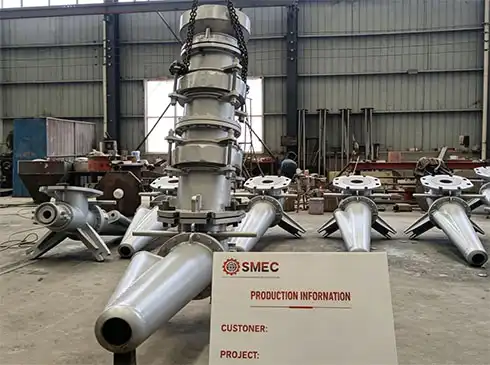
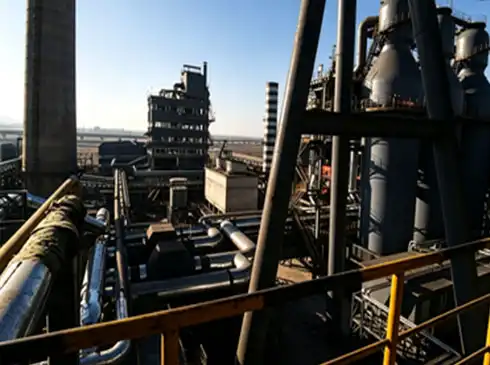
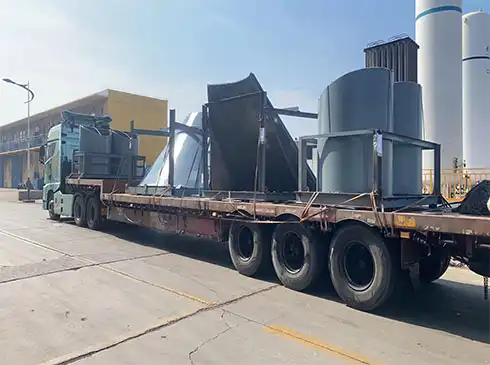
What Is Blast Furnace Tuyere Equipment and Why Is It Important?
Comparing Manual Inspection vs. Automated Tuyere Imaging Services
Common Issues with Blast Furnace Riser Pipes and How to Fix Them
Why Is Blast Furnace Dry Dedusting Better Than Wet Dedusting?