Comparing Manual Inspection vs. Automated Tuyere Imaging Services
Understanding Tuyere Inspection Methods
- Understanding Tuyere Inspection Methods
- Advantages and Limitations of Manual Inspection vs. Automated Tuyere Imaging
- Evaluating Tuyere Imaging Technologies: What Procurement Managers Need to Know?
- Choosing the Right Tuyere Inspection Service Provider
- Future Trends and Innovations in Tuyere Inspection
- Conclusion
- FAQ
- Partner with SMEC for Advanced Blast Furnace Monitoring Solutions
- References
When looking at different blast furnace tuyere imaging service choices, it's important to know the main differences between human inspection and automated methods to keep operations running smoothly. Modern automatic systems use infrared sensors, high-temperature-resistant optical systems, and AI-driven picture processing to show the blast furnace track in real time. This changes how metallurgical facilities do preventative maintenance. Even though people are used to using traditional human methods, they put people in dangerous situations and give inconsistent data quality. This comparison looks at both ways of doing things and helps plant engineers and procurement managers figure out which one fits their business goals, safety standards, and long-term maintenance plans the best.
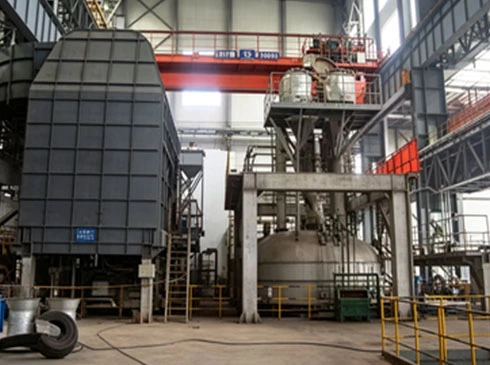
Understanding Tuyere Inspection Methods
Traditional Manual Inspection Techniques
Manual inspection is a hands-on test in which experts use simple tools like flashlights, handheld mirrors, and peepholes to look inside and judge the state of the tuyere. People who use this method have to work close to the blast furnace during short inspection times, which usually happen when maintenance is being done or when production is being slowed down. Inspectors use written records and photos to keep track of wear patterns, slag buildup, and damage that can be seen. They rely heavily on their own knowledge and personal opinion.
It's easy to see where this method falls short in hot places where vision is still low and getting to the area is hard. Safety is the most important thing in these jobs because workers are at risk from direct heat, harmful gases, and broken equipment. There are big differences in how consistent the data is between inspectors, which makes it hard to use trend analysis and plan for preventative maintenance.
Advanced Automated Tuyere Imaging Systems
High-definition endoscopes and thermal imaging tools that can handle temperatures of up to 2300°C and 1200°C for gases are examples of automated imaging solutions that are a big step forward in technology. These systems use special jackets that cool with nitrogen or water, sapphire lenses with anti-reflective coatings, and 1080p to 4K clarity to continuously record detailed visual data. The blast furnace tuyere imaging service turns raw visual data into useful insights by using AI algorithms to find oddities like tuyere blocking, slagging patterns, and the size distribution of coke particles.
Modern systems have multiple layers of protection, such as nitrogen-curtain air purge that blocks slag splash with high-pressure barriers, keeping the lens clear for long periods of time. Fiber-optic communication sends input to central control rooms with no delay, so problems can be fixed right away. The technology works continuously without requiring production delays, providing 24/7 tracking capability that human methods cannot match.
Advantages and Limitations of Manual Inspection vs. Automated Tuyere Imaging
Benefits of Manual Inspection Approaches
There are some benefits to manual inspection that make it appealing to businesses with small funds or basic tracking needs. Technicians with years of experience can use their instincts and the contextual knowledge they've gained through years of hands-on experience in direct eye assessment. Operators can quickly connect what they've seen with recent changes to the way things are done, which is something that automatic systems might miss if they aren't programmed correctly.
Because manual ways are simpler, you don't have to buy as much specialized tools up front, and you don't have to rely on as much complicated technology infrastructure. Manual inspection may be easier for places that don't have a lot of computer help, especially if the people who work there already have the right skills and safety certifications. This method also avoids problems with connecting to current control systems, which gets rid of interface worries that can make automatic deployments harder.
Limitations Constraining Manual Methods
Even though manual checking has these benefits, it also has major problems that make care less effective overall. Inconsistency between inspectors makes it hard to trust the data, which makes it hard to find trends and use prediction analytics, especially for a blast furnace tuyere imaging service, where precise and repeatable visual data is essential for monitoring refractory wear and raceway conditions. Safety issues are still the most important thing, because exposing workers to high temperatures and dangerous environments is a constant risk that regulations are working harder and harder to get rid of.
Because manual inspections only happen sometimes, there are important gaps in tracking coverage that let problems happen without being noticed between planned checks. The quality of the documentation changes a lot, and subjective statements are used instead of measures that can be used to make accurate decisions. These problems mean that maintenance plans are more likely to be reactive than proactive, which increases the chance of unexpected downtime and expensive emergency fixes.
Advantages Driving Automated Imaging Adoption
Automated tuyere imaging collects a lot of data that can be used to plan preventative repair and improve operations. With real-time tracking, workers can always see what's going on with the furnace and spot problems before they become major problems. Advanced HDR features record both bright areas of burning and darker slag movements at the same time, giving you a full picture of what's going on that you couldn't get by looking at it by hand.
Better safety is probably the most important benefit, as people are no longer exposed to dangerous inspection settings. AI programs do consistent, objective analysis that isn't affected by human error. They can find small patterns that a person might miss when looking at them directly. The systems accurately measure important factors like temperature differences, combustion efficiency, and wear development. This information helps improve coal input tactics and extends the life of equipment.
Standard industrial protocols like Modbus TCP/IP and OPC UA make it easy to connect to current control systems and integrate with plant automation design. Automated alerts for tuyere sleeve wear and water leaks let you know right away when problems start to happen, so you can fix them before they become catastrophic and stop production.
Considerations Around Automated System Implementation
Compared to human methods, automated solutions may seem to require a large initial capital investment. However, lifetime cost analysis usually shows a positive return on investment through less downtime and better operations. To make sure a smooth deployment, equipment providers, automation teams, and operations staff must work together on integration projects. Organizations that aren't very good at technology may have problems during the implementation phase and need to spend money on partner help or staff training.
Evaluating Tuyere Imaging Technologies: What Procurement Managers Need to Know?
Imaging Capability Comparisons
When procurement experts look at imaging solutions, they have to look at a number of technical factors that have a direct effect on the practical value. Two-dimensional imaging gives you basic visual information that you can use for general condition monitoring. Three-dimensional systems, on the other hand, give you spatial analysis that lets you measure wear precisely and get a sense of how much slag is building up. Which of these features to use relies on how complex the maintenance plans are and how much analytical information is needed for the optimization projects.
Resolution standards, which range from 1080p to 4K, describe the level of clarity and detail that can be analyzed. Higher resolutions make it easier to find small flaws and problems that are starting to happen sooner. Adding thermal imaging gives you more ways to measure temperature and connect what you see with thermal profiles. This lets you see hotspots and inefficient cooling systems that you couldn't see with just visible data.
Portable Versus Stationary System Trade-offs
Portable imaging tools give sites that run more than one boiler or want to cut down on equipment costs per unit more options by sharing resources, and this flexibility is equally valuable for a blast furnace tuyere imaging service, where multiple tuyeres must be monitored across different furnace elevations and production campaigns. These systems can be set up at different inspection places as needed, giving processes that need to be watched from time to time cost-effective coverage. Another benefit is that movable units usually don't need many changes to the infrastructure, which makes installation easier.
Stationary setups offer continuous tracking that movable systems can't match. They provide unbroken data streams that allow for real-time improvement and the instant discovery of problems. Dedicated installs get rid of the hassles of moving equipment and make sure that it stays in the same place, which improves data quality and the accuracy of trend analysis. Even though they cost more at first, operations that focus on proactive upkeep and operating optimization usually get more out of stationary deploys.
Cost-Benefit Analysis Framework
To figure out the return on investment, you have to look at all of the direct costs, operational saves, and risk reduction value. Direct costs include buying equipment, setting it up, integrating it, teaching people on how to use it, and keeping it in good shape. Savings in operations come from fewer problems that need to be fixed, more efficient coal injection, longer equipment life thanks to better repair timing, and no longer having to pay people to do hand inspections, which comes with safety risks.
Avoiding catastrophic failure costs, improving regulatory compliance, making workers safer, and making production more stable are all examples of risk reduction value. By putting these factors into numbers, you can compare options in a meaningful way, which helps you make investment cases that fit your organization's goals and funds.
Choosing the Right Tuyere Inspection Service Provider
Essential Selection Criteria
Before choosing a service provider, make sure they have the right industry certifications and follow all safety rules, such as those for explosion-proof rates and entry protection. The provider's technological innovation capability shows whether they keep up with new developments or stick to old methods that may not give them a competitive edge. Customers who have used the product in similar situations can give you useful information about how it works in real life, how easy it is to set up, and how good the ongoing help is.
The provider's technical support infrastructure decides how quickly problems can be fixed. For facilities that need help right away, having a nearby service presence is helpful. Internal teams get the skills they need to get the most out of the system and depend less on outside resources over time through training programs and knowledge sharing efforts.
Customization and Service Flexibility
Customized solutions work better than one-size-fits-all ones because operations are very different in how they are set up, how they run, and how important upkeep is. Value alignment is better when service providers offer flexible packages that can be customized to meet specific needs. This is true whether the needs are for ongoing tracking, full assessments every so often, or a mix of automated and manual methods.
Lead time standards need to match up with project schedules and working limitations. This is especially important for facilities that are planning big maintenance projects or new installs. Clear communication about release dates, available equipment, and integration goals keeps schedules from clashing and makes sure that implementation goes smoothly.
Vendor Evaluation Guidance
It is possible to compare options in a useful way by asking for detailed proposals that include technical details, service coverage, execution plans, and support promises, and for a blast furnace tuyere imaging service, this evaluation should also address image resolution, data integration capabilities, and resistance to extreme thermal and particulate conditions. The terms of the contract should make it clear what level of performance is expected, what the guarantee covers, who is responsible for upkeep, and how to make upgrades that protect long-term investments. Including operations and engineering staff in talks with vendors helps procurement teams make sure that technical needs are met and that decisions are based on practical factors.
Future Trends and Innovations in Tuyere Inspection
Emerging Technology Integration
When spectral imaging and thermal imaging come together, they make multi-modal analysis possible, which lets you get more out of inspection data. Spectral analysis finds differences in the raceway's material makeup, such as changes in the chemistry of slag or effects on the quality of coal that lower the efficiency of combustion. When combined with thermal profiles, this data allows for complex optimization methods that raise output while lowering pollution and fuel use.
AI-Driven Predictive Maintenance Evolution
Applications that use artificial intelligence are turning inspection data from reporting on conditions after the fact into predicting when things will go wrong. Machine learning systems that have been trained on past failure patterns can spot early warning signs that equipment is breaking down, so problems can be fixed before they affect production. These predictive models keep getting better as they handle more operational data. This means that they can make more accurate predictions about when to do repairs and how to best use resources.
Digitalization and Progress in Data Analytics
Digital transformation projects connect inspection data from tuyeres to larger plant information systems. This lets different departments look at the data together and find links between things like raceway conditions, raw material quality, process factors, and the end result of the product. Advanced analytics platforms give you information through easy-to-use tools that help you make quick decisions. Automated reports reduces the amount of paperwork you need to do and makes it easier for teams to share knowledge.
Strategic Preparation for Next-Generation Systems
When companies are getting ready for new inspection technologies, they should focus on building digital platforms that can handle bigger amounts of data and support advanced analytics apps. Teams will be able to use complex systems well if they develop their own expert skills through training and smart hires. By keeping partner ties flexible and keeping an eye on how technology changes, businesses can adopt new ideas as they become more grown. This helps them stay ahead of the competition by constantly improving.
Conclusion
The choice between human inspection and automatic imaging has a big impact on how well blast furnace maintenance works, how safe it is, and how much it can be optimized for operation. Manual methods are easy to use and don't cost much to set up, but automated systems offer full tracking, higher safety, and data-driven insights that allow for proactive repair plans, which is precisely the value proposition of a blast furnace tuyere imaging service that integrates high-resolution cameras with thermal and flow analytics. When making a purchase choice, you should think about both your short-term budget and your long-term business goals. You should also keep in mind that investing in new technology up front usually pays off in the long run through less downtime, higher efficiency, and lower risk. As the metallurgical industry continues to adopt digitalization and prediction analytics, automatic tuyere imaging systems set up processes to stay competitive and provide excellent servicing.
FAQ
How often should tuyere inspections occur?
How often an inspection is done relies on how the furnace is being used, how much is being made, and how it has worn in the past. Usually, manual inspections happen during repair breaks that happen once a week to once a month. Automatic systems keep an eye on things all the time, with AI algorithms analyzing situations in real time and sending out alerts when something doesn't seem right. This replaces the need for regular human checks with constant surveillance.
Can automated imaging completely replace manual methods?
Automated imaging is better than human methods at doing regular tracking and finding problems. This means that people don't have to be in dangerous settings as much. In some cases, an expert technician's opinion may still be helpful, especially when trying to fix complicated problems or connect data with strange operational events. Once a facility starts using computerized systems, most of them find that human inspections are only done occasionally, only when certain situations call for them.
What wear indicators can advanced technologies detect?
Modern imaging systems can find many signs of wear, such as tuyere sleeve erosion patterns, refractory lining degradation, water cooling system leaks, slag buildup zones, uneven coke particle distribution, unstable combustion, and the formation of blockages. Thermal imaging finds changes in temperatures that don't make sense, which can mean that the cooling system isn't working right or that the refractory is breaking. AI analysis finds small changes in the way the raceways move before equipment breaks down.
Partner with SMEC for Advanced Blast Furnace Monitoring Solutions
We at SMEC have been working with metallurgical tools for decades, and we can now offer a blast furnace tuyere imaging service that combines our deep knowledge of coking and steelmaking processes with the latest tracking technology. Our engineering team works closely with clients to create unique inspection solutions that solve specific business problems and work well with the automation infrastructure that is already in place. With 168 engineering and technical staff members, including 30 top engineers, we offer full support from the original assessment to installation, training, and ongoing optimization. As a blast furnace tuyere imaging service provider, we can do more than just provide tools. We can also help with application building, data analytics, and continuous improvement. For more information on how our advanced tracking solutions can improve your blast furnace maintenance strategy, boost safety, and boost business efficiency through better state visibility and predictive analytics, please contact our team at project@smec.cc.
References
Chen, W., & Zhang, L. (2021). Advanced Monitoring Technologies for Blast Furnace Tuyere Management. Journal of Iron and Steel Research International, 28(5), 412-428.
Industrial Safety and Health Administration. (2020). Best Practices for Blast Furnace Maintenance and Inspection Safety. Occupational Safety Guidelines for Metallurgical Operations.
Kumar, R., & Patel, S. (2022). Comparative Analysis of Manual and Automated Inspection Systems in Heavy Industry. International Journal of Industrial Engineering and Management, 15(3), 234-251.
Nakamura, T., & Yoshida, H. (2023). AI Applications in Predictive Maintenance for Metallurgical Equipment. Advances in Process Automation and Control, 39(2), 167-183.
Smith, J., & Thompson, M. (2021). Cost-Benefit Analysis of Automated Monitoring Systems in Steel Production. Industrial Economics Quarterly, 44(4), 89-105.
Wang, Y., Liu, X., & Zhou, D. (2022). Thermal Imaging Technology for High-Temperature Industrial Applications. Journal of Thermal Science and Engineering Applications, 14(8), 081-096.
Free consultation & volume discounts available
SEMC focuses on the entire metallurgical process—from coking, ironmaking, and steelmaking to continuous casting and rolling. Whether you face challenges related to equipment upgrades, energy efficiency optimization, or overall process transformation, please fill in the following information. Our technical team will provide you with tailor-made high-end equipment upgrade solutions and professional EPC design services to help your project be implemented efficiently.
Recommended Blog
Why Steel Plants Prefer Custom Blast Furnace Tuyere Equipment?
How to Choose a Blast Furnace Drill Rod Replacement Device Supplier?
Key Benefits of Choosing a Turnkey Blast Furnace Contractor
Maximizing ROI: Is Investing in Tuyere Imaging Service Worth the Cost?
The Working Principle of Blast Furnace Water-Cooled Valves