What Does Hot Metal Pretreatment Service Include?
Introduction
- Introduction
- Understanding Hot Metal Pretreatment Services for Blast Furnace
- Core Components and Process Steps of Hot Metal Pretreatment Service
- Comparative Analysis of Hot Metal Pretreatment Solutions and Providers
- Procurement Considerations for Hot Metal Pretreatment Services
- Future Trends and Technological Advancements in Hot Metal Pretreatment
- Conclusion
- FAQ
- Partner with SMEC for Advanced Hot Metal Pretreatment Solutions
- References
Hot metal pretreatment service for blast furnace operations encompasses a comprehensive series of metallurgical conditioning processes performed on molten iron between tapping and converter steelmaking. This specialized service removes harmful impurities—primarily sulfur, phosphorus, and silicon—while stabilizing temperature and adjusting chemical composition to meet downstream refining requirements. By shifting the burden of impurity removal from the converter to an earlier stage, modern pretreatment services enable steel producers to achieve ultra-low contamination levels, reduce reagent consumption by up to 20%, and significantly extend refractory service life. The service integrates real-time sampling, advanced desulfurization techniques, slag removal, and compositional fine-tuning to deliver consistent, high-quality hot metal that optimizes overall blast furnace productivity and product quality.

Introduction
Hot metal pretreatment is now an important part of making steel because it bridges the important gap between what the blast furnace makes and what the converter does. As pressure mounts on steel companies around the world to make ultra-clean steel grades while keeping costs low, prep services have gone from being a nice-to-have to a must-have. Many steel plants have trouble because the raw materials they use aren't always the same. For example, low-grade iron ore and high-sulfur coke have different amounts of impurities that make downstream refining less efficient and affect the final product's specs.
We've seen this change happen in integrated steel mills and metallurgical businesses across North America. Now, the most important things are production efficiency, controlling emissions, and long-term dependability. The pretreatment method directly handles these issues by conditioning the liquid iron right after it is tapped. In controlled treatment cycles, the sulfur content drops from a normal level of 0.050% to below 0.002%. This feature is especially useful for companies that want to make high-strength, low-alloy steel types or pipeline standards where cracking caused by sulfur is not an acceptable risk.
When procurement professionals know what complete pretreatment services include and how different providers handle these important tasks, they can make choices that affect both short-term production measures and their long-term ability to compete in the global steel market.
Understanding Hot Metal Pretreatment Services for Blast Furnace
Defining Pretreatment in the Steelmaking Value Chain
Hot metal pretreatment is a specialised step in the metallurgy process that happens between tapping in a blast furnace and filling a basic oxygen furnace. In contrast to cold metal processing, which deals with the properties of solid materials, pretreatment services only work on heating and conditioning molten iron at temperatures between 1,300°C and 1,450°C. This temperature range makes it possible for chemical processes that would not be possible or practical at lower temperatures.
The main difference is in how fast and how well the response works. At these high temperatures, desulfurization agents achieve better mass transfer rates, which means that treatment cycles can be finished in 12 to 15 minutes instead of the much longer times needed for other methods. This speed directly affects production throughput, keeping the continuous flow that is necessary for modern integrated steel operations and reducing the time it takes to turn a ladle.
Addressing Core Operational Challenges
The biggest problem that blast furnace operators have to deal with is sulphur pollution. When sulphur levels go above what is considered safe, they affect the whole production process, leading to damaged furnace linings, more slag in the converter, more lime being used, and finally, decreased steel properties like less flexibility and a higher risk of hot shortness. Environmental safety adds another aspect to the need for preparation. Modern steel plants have to follow strict rules about how much particulate matter, sulphur dioxide, and other waste products they can release into the air. For pretreatment services to work, they need to have dust control systems, reagent storage protocols, and waste slag management processes that are in line with ISO 14001 environmental standards and US industry regulatory frameworks.
Core Components and Process Steps of Hot Metal Pretreatment Service
Comprehensive Process Architecture
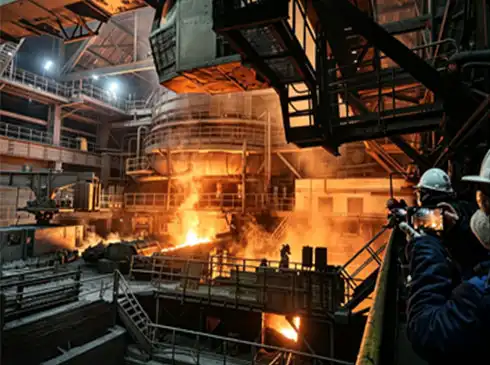
When it comes to preparation of hot metal, SMEC sets up standard treatment stations next to tapping areas for blast furnaces. This way, they can provide full service from ladle output to steelmaking transfer. During the whole treatment lifetime, this integrated model includes materials, methods, professional know-how, and a guarantee of compliance.
The service architecture in hot metal pretreatment service for blast furnace shows eight operational stages that work together to turn the output from the blast furnace into refined feedstock that meets the exact requirements of the converter. Each stage focuses on a different set of mechanical goals while keeping the production flow going and making the most of the heat.
Real-Time Sampling and Analysis
As soon as the molten iron enters the pretreatment station, samples are taken to start the treatment sequence. Immersion probes measure temperatures in real time, and optical emission spectroscopy checks the amounts of carbon, sulphur, phosphorus, and silicon. This baseline characterization, which can be done within 90 seconds of tapping, lets process engineers make treatment plans that are specific to the chemicals present instead of using trends from the past.
The accuracy of the data at this stage decides how well all the other processes work. Changes in the quality of the raw materials, the way the blast furnace works, and the properties of the coke can make the chemistry of hot metal very different from what is expected. Respondent sampling takes away the need to guess, making sure that the amount of reagent used fits the real needs of the treatment rather than using standard formulas that might treat some ladles too much or too little.
Silicon Removal and Purification
Prior to regular desulfurization, silicon reduction is a preparatory step that makes the next treatment work better. When special desilication agents are added to the molten bath, they react with the dissolved silicon dioxide to turn non-metallic impurities into compounds that separate into the slag phase. This process lowers the stiffness of the slag, which makes it easier for the metal and oxide stages to separate during later operations to remove the slag.
The desilication step is especially helpful when working with hot metal from blast furnaces that use materials that are high in silica. By dealing with the silicon content early on in the treatment process, we make it easier for the next stages to remove the sulfur and phosphorus.
Deep Desulfurization and Dephosphorization
The core metallurgical treatment uses both mechanical stirring and the passage of a carrier gas to create turbulent conditions that make the most contact between the chemical and the metal. Environmentally friendly refining agents—carefully chosen to make as few harmful byproducts as possible—react quickly with sulfur and phosphorus that have been dissolved, creating stable chemicals that move to the slag layer.
Different levels of purity can be reached by adjusting the treatment intensity. Standard desulfurization lowers sulfur to about 0.010 percent, while long treatment cycles aimed at very low levels can get it to 0.002 percent or less. Getting rid of phosphorus works in a similar way, but the thermodynamic needs are different, calling for higher basicity flows and different ways to control temperature.
When mechanical and injection methods are used together, the desulfurization rate is higher than 92%, which is better than other methods. During the whole treatment cycle, temperature loss is usually kept below 20°C. This temperature control keeps energy economy high and cuts down on the need for reheating later on.
Slag Removal and Metal Purification
After the process, special cleaning tools are used to remove layers of slag on the surface that contain oxidised impurities and non-metallic inclusions. In addition to chemical treatment, this physical separation step stops sulphur reversion, which is when sulphur that was removed from the metal phase reabsorbs if slag contact stays during transfer operations.
During skimming, electromagnetic slag detection systems make sure that all the slag is removed completely while minimizing the amount of iron that is lost to the slag that is recovered. Iron content in removed slag stays below 8% thanks to best practices in the industry. This is an important economic factor when handling thousands of tonnes of slag every month.
Temperature Homogenization
Thermal stratification in ladles makes quality differences that make processing harder later on. Insulation procedures and controlled micro-heating are used in pretreatment services to even out temperature differences between the top and bottom metal layers. This homogenization gets rid of any cold spots that might cause solidification to start too soon or create differences in composition that could hurt the performance of the converter.
Compositional Fine-Tuning
Small changes to the amounts of carbon and manganese allow the chemistry of hot metal to be perfectly matched to the charging needs of the converter. This ability to customise cuts down on variation in the processes used to make steel, saving the time it takes to make a steel bar and making the result more consistent. Even though the changes are small—usually only 0.05 to 0.15% in the concentrations of elements—they have a big effect on how well the next steps in the process work.
Quality Verification and Transfer Documentation
When the treatment is done in hot metal pretreatment service for blast furnace, secondary spectroscopic analysis and temperature confirmation happen. Certified transfer records show that the metal has reached the right level of chemistry and meets all the requirements set out before it is used in steelmaking. This paperwork works with plant management systems and keeps records for quality control and tracking, which are needed for both production control and customer certification.
Environmental Management at Treatment Stations
Particulate emissions from reagent input and slag handling are controlled by dust reduction systems during all operations. Slag from the process is evaluated and thrown away according to set environmental rules, and thorough production logs are kept as proof of compliance. These environmental protections make sure that the preparation processes meet or go beyond the rules that govern industrial metallurgical sites.
The whole process changes to working with molten metal at high temperatures without contaminating the base metal or making dangerous waste products. Ladle transfer supplies and operations run at the same time, so there are no output bottlenecks and quality keeps getting better.
Comparative Analysis of Hot Metal Pretreatment Solutions and Providers
Evaluating Technical Methodologies
There are two main types of technology used in modern pretreatment services: techniques that use mechanical stirring and techniques that use injections. KR technology is an example of the mechanical stirring method, which uses underwater impellers to mix chemicals and molten metal very thoroughly. This method is great for getting very low sulphur levels; it consistently delivers end amounts below 0.003% with high consistency. Mechanical systems, on the other hand, lose more heat (usually 25 to 30°C) and need strong lance materials that can handle rough conditions.
High-pressure carrier gases are used in injection methods to spread powdered reagents all over the metal bath. This method lets you treat things more quickly, with less expensive equipment, and with more options for smaller ladles. While desulfurization works very well for most uses, it may be limited to about 0.005% sulfur in practice, based on the reagent chemistry and injection settings.
When buying teams understand these technical trade-offs, they can match the right preparation technology with the needs of the production process. For very clean steel grades, investing in mechanical moving equipment is a good idea. For high-volume operations that meet standard requirements, injection systems may be the most cost-effective way to do things.
Provider Capability Assessment
Beyond choosing a base technology, a provider's evaluation should also look at how well it meets certification requirements, how well it can be customized, and how well it offers support after installation. Reputable pretreatment service providers keep their ISO 9001 quality certifications up to date, show that they follow the rules for environmental management systems, and have experience with a wide range of steel plant designs.
Customization is what sets truly capable providers apart from equipment sellers. The structure, output size, sources of raw materials, and types of products made in steel plants are all very different. Instead of using standard packages that force operations to be changed, a good preparation partner comes up with site-specific solutions that take these unique factors into account.

Another important differentiator is the technical support infrastructure. Full pretreatment services include process optimization advice, operator training programs, predictive maintenance plans, and quick help with fixing problems. These supporting factors often decide whether pretreatment operations provide long-term value or gradually lose their usefulness as more problems arise.
Procurement Considerations for Hot Metal Pretreatment Services
Service Structure and Pricing Models
Pretreatment services usually have pricing structures that are based on contracts and show how comprehensive the service is. Turnkey arrangements that include providing tools, reagents, operational management, and performance promises make it easier to buy things and shift risk, but they cost more than unbundled options. With agent-only contracts, plant staff have more working responsibility while ongoing service costs are lowered.
Price is greatly affected by commitments to volume. Steel makers who process steady amounts of steel can make good long-term deals that keep costs stable and guarantee a reliable supply. Flexibility clauses that allow for changes in production should be carefully considered when negotiating a contract, especially for plants that have to deal with seasonal changes in demand or changes in volume caused by the market.
Scalability and Adaptation
As production changes, the preparation infrastructure in hot metal pretreatment service for blast furnaces needs to be able to adapt to bigger capacities, changes in the products being made, and better processes. As the needs of the plant change, modular service designs make it easier to add treatment stations or improve reagent systems. This ability to change protects initial investments and helps long-term growth in operations.
After-Sales Support and Technical Partnership
After the original execution, the ongoing professional relationship decides how well the pretreatment service works. Companies that give regular process audits, metallurgical advice, and projects for ongoing growth help plants get the most out of their investments in pretreatment. Operator training programs make sure that knowledge is shared, which builds internal capabilities while keeping the service provider responsible for performance results.
How quickly maintenance services respond has a direct effect on the continuity of production. When equipment breaks down or chemical supplies get interrupted, work stops, which costs a lot of money. When buying teams look at a provider's repair infrastructure, extra parts inventory, and service response procedures, it helps them figure out operational risk and choose the right vendors.
Future Trends and Technological Advancements in Hot Metal Pretreatment
Digital Integration and Process Control
New technologies for preparation use advanced sensors, machine learning algorithms, and predictive analytics to make the treatment settings better in real time. These digital systems look at past performance data to find patterns that correspond to the best results. They then automatically change the amount of reagents used, how hard they are stirred, and the length of the treatment to get the best results at the lowest cost.
Predictive maintenance programs check the health of machines, predicting when parts will wear out and planning repairs before they happen. This proactive approach cuts down on unplanned downtime and increases the useful life of assets by planning maintenance to happen at the best time.
Environmental Innovation
Next-generation chemical formulas focus on having less of an effect on the environment without lowering their ability to work effectively in metalworking. Increasing government pressure and company commitments to sustainability can be met with bio-derived additives, recyclable carrier materials, and low-emission processing methods. Along with traditional technical and economic criteria, steel producers are increasingly judging pretreatment providers based on their environmental credentials.
Getting rid of carbon emissions is one area that needs attention. Energy-efficient treatment methods, waste heat recovery systems, and slag utilization projects all help to lower carbon emissions at the plant level, lining up pretreatment operations with the overall sustainability trends in the industry.
Strategic Recommendations for Future-Proofing Operations
When procurement professionals are looking for long-term pretreatment partnerships, they should give more weight to providers who can show technology roadmaps that are in line with how the industry is changing. When a provider invests in digital skills, environmental innovation, and constant process improvement, it shows that they want to stay competitive and create value for their customers.
The results are better when people work together and focus on shared optimization instead of simple service delivery. Steel plants that work closely with pretreatment partners to share production data, test new technologies, and create custom solutions together will be in a better position as industry standards rise and competition grows.
Conclusion
Hot metal preparation services in hot metal pretreatment service for blast furnaces that cover a lot more than just desulfurization include complex mechanical processes. Knowing everything about it—from real-time sampling and multiple stages of impurity removal to temperature control and quality certification—helps you make smart purchasing choices that have a direct effect on the output, quality, and cost of running the blast furnace. As digital integration, environmental innovation, and better process control continue to change the pretreatment landscape, choosing a provider becomes a more strategic matter. When steel companies invest in strong pretreatment relationships, they set themselves up to meet strict product requirements, save money, and stay ahead of the competition in global markets where quality consistency and operating reliability are key to making money.
FAQ
What sulfur reduction capability can modern pretreatment services achieve?
Advanced prep services can consistently lower sulphur levels from the normal range of 0.040-0.060% in blast furnaces to 0.002% or less in 12 to 15 minute treatment rounds. This skill is very important for making high-strength, low-alloy steels, grades for pipelines, and other uses where sulfur contamination hurts the properties and dependability of the material.
How do pretreatment services minimize iron loss during slag removal?
Electromagnetic slag detection technology and precise skimming tools make sure that all of the slag is removed while keeping the iron content of the extracted slag below 8 to 10 percent. To get the best results for both metallurgy and material yield, this method strikes a balance between removing all impurities and getting the most iron back at a low cost.
Does pretreatment accommodate high-phosphorus iron ore processing?
Specialized steps of dephosphorization using high-basicity flux injection are used to deal with the high phosphorus content in hot metal that comes from lower-grade iron ore. These specific treatment protocols help steel plants keep the quality of their products even when the raw materials aren't always the same. This gives them valuable operational flexibility in environments where buying things is always changing.
What temperature management can be expected during treatment?
Leading pretreatment services keep temperature loss to 15–25°C during full treatment cycles by improving the chemistry of the reagents, the protection of the ladle, and the order of the processes. This thermal discipline keeps energy efficiency high and lowers the need for reheating further down the line, which helps the overall economics of the operation.
Partner with SMEC for Advanced Hot Metal Pretreatment Solutions
SMEC offers a full hot metal pretreatment service for blast furnace operations. This service combines proven metallurgical skills with full application and ongoing technical support. Our standard treatment stations work perfectly with the infrastructure that is already in place for blast furnaces and steelmaking. They take care of the whole process, from taking samples to certifying their quality. As a well-known supplier with 486 dedicated employees, including 30 senior engineers, we bring a wealth of technical knowledge gained from a wide range of steel plant applications in the metallurgical sector.
Our pretreatment services focus on making production more efficient, protecting the environment, and making sure operations are reliable over the long term. These are goals that we know steel makers, EPC contractors, and industrial businesses looking to improve their performance can relate to. Our engineering team can create unique solutions that meet your exact needs, whether you're trying to meet ultra-low sulphur standards, deal with changing raw material quality, or improve converter operations. Get in touch with our International Trade Department at project@smec.cc to talk about how our pretreatment services can help your blast furnace produce more steel and make it better.
References
1. Ghosh, A. and Chatterjee, A. (2008). Ironmaking and Steelmaking: Theory and Practice. PHI Learning Pvt. Ltd., New Delhi.
2. Nightingale, R. J. and Monaghan, B. J. (2015). "Hot Metal Desulphurisation: A Review of Current Practice and Recent Developments." Mineral Processing and Extractive Metallurgy Review, 36(4), 217-235.
3. Dogan, N., Brooks, G. A., and Rhamdhani, M. A. (2011). "Comprehensive Model of Oxygen Steelmaking Part 3: Decarburization in Impact Zone." ISIJ International, 51(7), 1102-1109.
4. Kitamura, S., Shibata, H., and Maruoka, N. (2013). "Kinetic Model of Hot Metal Desulfurization by Injection of Lime-Based Flux." Steel Research International, 84(4), 328-337.
5. Lindström, D. and Sichen, D. (2015). "Kinetics of Sulfur Removal in Hot Metal Desulfurization with CaO and CaC2." Metallurgical and Materials Transactions B, 46(1), 83-92.
6. Pak, J. and Fruehan, R. J. (1991). "The Rate of Desulfurization of Hot Metal by Lime or Lime Calcium Carbide Mixtures." Metallurgical Transactions B, 22(6), 837-846.
Free consultation & volume discounts available
SEMC focuses on the entire metallurgical process—from coking, ironmaking, and steelmaking to continuous casting and rolling. Whether you face challenges related to equipment upgrades, energy efficiency optimization, or overall process transformation, please fill in the following information. Our technical team will provide you with tailor-made high-end equipment upgrade solutions and professional EPC design services to help your project be implemented efficiently.
Recommended Blog
Maximizing ROI: Is Investing in Tuyere Imaging Service Worth the Cost?
Blast Furnace Dedusting vs Gas Purification: Key Differences
Blast Furnace Equipment Upgrade Through Modular Renovation: A Practical Guide
Best Materials for Blast Furnace Tuyere Equipment Explained
Installation Process for Blast Furnace Cast Iron Cooling Walls