How Is the High Temperature and Wear Resistance of Tilting Iron Trough Equipment?
How Is the High Temperature and Wear Resistance of Tilting Iron Trough Equipment?
Understanding the Challenges: High Temperature and Wear in Blast Furnace Iron Troughs
- Understanding the Challenges: High Temperature and Wear in Blast Furnace Iron Troughs
- Design Principles and Material Selection for Enhancing Durability
- Technological Innovations Improving Wear and Heat Resistance
- Maintenance Strategies to Maximize Performance and Lifespan
- Comparing Tilting Iron Trough Solutions for Informed Procurement Decisions
- Conclusion
- FAQ
- Ready to Discuss Your Blast Furnace Cast House Requirements With SMEC?
- References
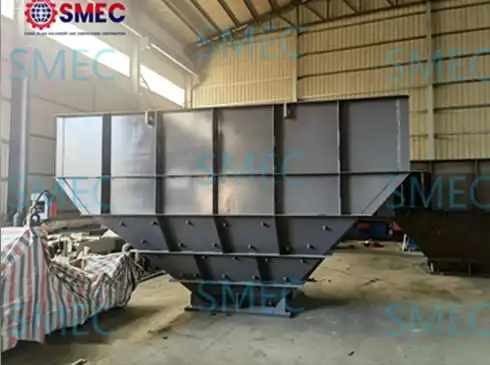
When plant engineers and procurement managers ask about the durability of cast house runners, the answer starts with one central question: can the equipment survive what a blast furnace actually throws at it? Tilting iron trough equipment for blast furnace operations must endure molten iron temperatures approaching 1,500°C, abrasive slag friction, and relentless chemical attack—simultaneously. At SMEC (China Silian Machinery and Engineering Corporation), our tilting iron trough systems are engineered from the ground up to meet these demands, delivering refractory lining service lives of one to two years and overall equipment operational lifespans of eight to ten years under standard working conditions.

Understanding the Challenges: High Temperature and Wear in Blast Furnace Iron Troughs
What Makes the Cast House Environment So Destructive?
It's not just hot in a blast furnace cast house; it's also under a lot of mechanical, chemical, and heat stress. At temperatures between 1,400°C and 1,500°C, molten iron flows. Slag, on the other hand, contains harsh oxides that break down refractory linings chemically. At the same time, thermal cycling—repeated heating and cooling during tapping operations—breaks materials down into tiny cracks. This is called thermal fatigue. The iron flow at a high speed wears away at the trough floor and walls all the time.
There are three things going on at the same time that speed up the breakdown: abrasion from moving iron and slag particles, thermal shock from sudden changes in temperature, and chemical corrosion from iron oxide, silica, and alumina compounds in the slag. Standard equipment breaks down within months if it doesn't have materials and structures that are made just for it. This is the exact reason why standard iron runners can't meet the performance needs of combined steel mills and separate coking plants during full production runs.
Design Principles and Material Selection for Enhancing Durability
How Material Choice Determines Equipment Lifespan?
The refractory lining material is what makes blast furnace iron troughs work well for a long time. SMEC chooses high-quality Al₂O₃-SiC-C (alumina-silicon carbide-carbon) composite refractories that are made by fusing them at high temperatures. This process makes a structure that is dense and has few holes. Usually, the bulk density is higher than 2.8 g/cm³, and the apparent porosity is below 18%. This structure physically stops iron from getting through and slag from getting in.
Here are the core material and structural advantages that define SMEC's trough durability:
- High-sintered refractory lining: Using high-temperature sintering to create a thick microstructure makes a high-sintered refractory lining that doesn't flake, crack, or erode like other linings do. This directly fixes the most common way that cast house runners break and increases the service life of the lining to one to two years, which is a lot longer than the six to eight months that standard refractory materials usually need to be replaced under the same throughput conditions.
- Heat-resistant structural steel shell: The main steel body is made of heat-resistant and anti-corrosion metal types that have been treated with thermal insulation barriers and coatings that keep dust out. This keeps the shell from deforming and breaking down through oxidation, even if it is exposed to direct heat at the top for a long time that is higher than 800°C.
- Wear-resistant hydraulic and drive components: All hydraulic cylinders, pivot bearings, and transmission elements are made of temperature-stable, wear-resistant materials that are sealed to keep out fine dust, which is a constant danger in cast house settings.
Together, these design choices get rid of the three most common places where things go wrong in tilting iron trough equipment for blast furnace: lining separation, structural bending, and hydraulic system seizure. Plant managers have fewer unplanned shutdowns and spend less on upkeep over the whole lifetime of the machinery.
Technological Innovations Improving Wear and Heat Resistance
Precision Engineering Meets Predictive Capability
SMEC builds sensor technology right into its moving iron trough systems so that temperature and wear can be tracked in real time. Data is fed into systems for predictive maintenance, which helps engineers find early signs of thermal wear or lining erosion before they become major problems. This feature directly cuts down on unplanned downtime, which is a big reason why continuous blast furnace campaigns cost so much to run.
High-torque actuators with an accuracy of ±0.5 degrees are used in the hydraulic tilting mechanism. Precise tilt control spreads the flow of molten iron out evenly, stopping wear hotspots that cut lining life short too soon. Automated tilt sequencing also reduces the risk of direct heat and splashing for operators.
The engineering team at SMEC, which is made up of 30 top engineers and 168 other technical staff, uses 3D structural models to find the best trough geometry for each customer's cast house plan. This customization makes sure that the flow speed is the same, stops damage caused by turbulence, and works with projects that are limited by room, whether they are new or old.
Maintenance Strategies to Maximize Performance and Lifespan
Proactive Maintenance Protects Your Investment
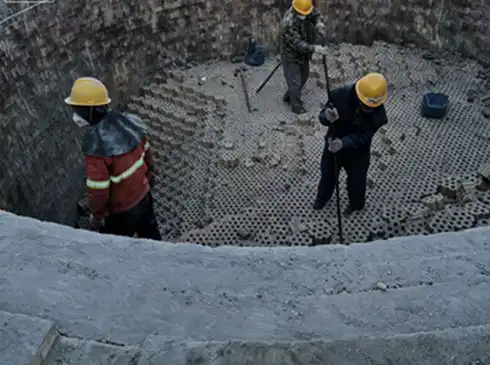
Maintenance is important for all hot metal runners, even the toughest ones, so they can do their job well. Regular inspections that happen at set times during the tapping campaign help engineers check the thickness of the lining, find places where slag skulls are building up, and spot early signs of micro-cracking. When slag is removed on time, it stops localized erosion from getting worse and causing full lining penetration.
SMEC makes its trough systems with modular lining parts that let high-wear areas be relined without having to replace the whole trough frame. Compared to monolithic designs, this modular approach cuts down on maintenance downtime by a large amount. During regular furnace maintenance windows, corrective actions like clay patch fixes or section replacement can be carried out.
Standard operating conditions and regular maintenance will keep SMEC's tilting iron trough equipment for blast furnace operations running smoothly for eight to ten years. After more than five years of reliable use, the core hydraulic tilting assembly doesn't need any major repairs. These standards directly lead to lower total costs of ownership for steel mills and coking plants that run production cycles that last more than one year.
Comparing Tilting Iron Trough Solutions for Informed Procurement Decisions
What to Evaluate Before Committing to a Supplier?
Tilting designs have clear operational advantages over fixed runners. They allow continuous tapping without stopping to change ladles, precise flow diversion for separating slag and iron, and a lot less manual intervention in dangerous areas. The performance premium is worth it during long production campaigns where the costs of downtime are higher than the differences in the starting capital spending.
When purchasing managers look at different suppliers, they should focus on material certification, clear lining composition, records of reliable hydraulic systems, and the availability of technical support after the sale. SMEC is certified by ISO 9001 and provides full paperwork for testing materials, such as their cold crushing strength and permanent linear change tests, as well as validating the hydraulic system pressure at 1.5 times the stated load. EPC contractors and foreign distributors who are building project pipelines also care about the ability to customize, the dependability of lead times, and long-term technical teamwork as ways to set their businesses apart.
Conclusion
The performance of the tilting iron trough equipment for blast furnace cast house iron trough is not a secondary issue; it directly affects the uptime of the furnace, the safety of the workers, and the cost of running the business. SMEC's tilting iron trough systems solve all of the most important problems with wear and heat resistance by using high-tech refractory composites, heat-resistant building materials, precise hydraulic systems, and maintenance support that is enabled by sensors. With linings that last one to two years and equipment that lasts eight to ten years, these systems are a good investment for blast furnace workers all over the world. The most reliable way to keep your cast house running well is to work with a manufacturer that combines deep metallurgical engineering knowledge with quick response time after the sale.

FAQ
What refractory material does SMEC use in its iron trough linings?
SMEC uses high-quality Al₂O₃-SiC-C hybrid refractories that have been sinterized at very high temperatures. This makes a structure that is very dense, with a mass density above 2.8 g/cm³ and few holes that can be seen. This structure is strong against iron entry, slag erosion, and thermal shock.
How long does the refractory lining typically last?
Under normal blast furnace conditions, SMEC's sintered composite lining lasts for one to two years. This is a lot longer than traditional refractory linings, which need to be replaced every six to eight months at the same iron flow volume.
What is the overall equipment service life?
When used normally and with regular upkeep, SMEC's sliding iron trough equipment works consistently for eight to ten years. The hydraulic turning system in particular keeps working well for more than five years before it needs major repairs.
Can the equipment be customized for specific cast house layouts?
Yes, SMEC's engineering team uses 3D structural models to change the trough geometry, tilting radius, and channel measurements to fit each customer's cast house layout. This includes brownfield retrofit cases with limited room.
Does the system support condition monitoring and predictive maintenance?
Modern SMEC units have temperature and wear sensors built in. These sensors send real-time data to predictive maintenance platforms, which can then find problems with lining wear and hydraulic component wear early on, before they get worse.
Ready to Discuss Your Blast Furnace Cast House Requirements With SMEC?
Based on years of experience, SMEC provides rotating iron trough equipment for blast furnace activities that is designed to withstand high temperatures and tough mechanical conditions. We work with steel mills, coking plants, and EPC contractors all over the world as a reliable supplier of tilting iron trough equipment for blast furnace. We use certified materials, have in-house engineering skills, and offer full after-sales support. You can look at our products at smecltd.com or email our expert team at project@smec.cc to talk about the needs of your unique project.
References
1. Iron and Steel Technology (AIST) — 2021
2. Journal of the European Ceramic Society — 2020
3. Steel Times International — 2022
4. Ironmaking & Steelmaking (Taylor & Francis) — 2019
5. Refractories and Industrial Ceramics (Springer) — 2023
6. Metallurgical and Materials Transactions B (Springer) — 2018
Free consultation & volume discounts available
SEMC focuses on the entire metallurgical process—from coking, ironmaking, and steelmaking to continuous casting and rolling. Whether you face challenges related to equipment upgrades, energy efficiency optimization, or overall process transformation, please fill in the following information. Our technical team will provide you with tailor-made high-end equipment upgrade solutions and professional EPC design services to help your project be implemented efficiently.
Recommended Blog
How Slag Granulation Equipment Reduces Environmental Impact
Is the Blast Furnace Drill Rod Changer Easy to Operate and Maintain?
Does Tuyere Camera Support Automatic Dust Cleaning and Low Maintenance?
What Makes High-Performance Blast Furnace Valves Different?