Benefits of Blast Furnace Revamping for Cost and Efficiency
Understanding Blast Furnace Revamping and Its Process
- Understanding Blast Furnace Revamping and Its Process
- Key Benefits of Blast Furnace Revamping for Cost and Efficiency
- Comparing Revamping Service Providers and Techniques
- Overcoming Challenges and Managing Risk During Blast Furnace Revamping
- Optimizing Procurement and Contracting for Blast Furnace Revamping
- Conclusion
- FAQ
- Partner With SMEC for Your Blast Furnace Renovation Needs
- References
When aging blast furnaces start showing signs of declining performance, metallurgical enterprises face a critical decision: invest in complete replacement or pursue strategic revamping. An overall revamping service of blast furnace offers a transformative path—renewing equipment capabilities without the prohibitive costs and extended downtime of new construction. This comprehensive refurbishment approach restores structural integrity, upgrades technology, and aligns operations with modern efficiency and environmental standards. Through systematic overhaul of refractory linings, cooling systems, and automation controls, revamping extends operational lifespans by 15-20 years while delivering measurable improvements in productivity, energy consumption, and regulatory compliance.
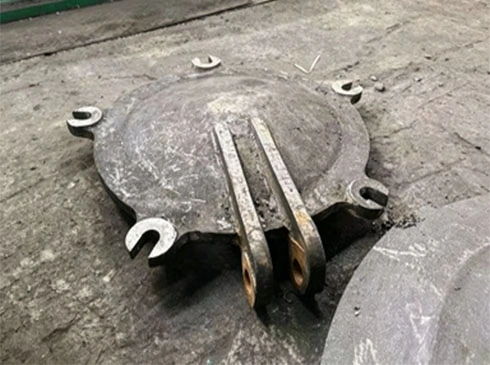
Understanding Blast Furnace Revamping and Its Process
What Defines Comprehensive Furnace Refurbishment?
Renovation of a blast furnace is a lot more than just regular cleaning or replacing a few parts. We're talking about a planned technical operation that fixes problems with structure wear, inefficient thermal management, and old technology throughout the whole ironmaking system. First, ultrasonic erosion sensors and thermocouple arrays are used to do detailed diagnostic tests to map out refractory degradation patterns. This is especially important in critical areas like the hearth and bosh regions, where the well-known "elephant foot" erosion phenomenon poses a threat to operational safety.
The refurbishment process is divided into several steps, which are blow-out preparation, disassembly of worn-out parts, precise installation of high-tech materials like microporous carbon blocks and high-purity copper cooling staves, and finally the integration of smart monitoring systems. Patchwork repairs only fix the symptoms; full-scale reworking gets to the root of the problem, fixing problems with airflow, keeping temperatures stable, and getting rid of the fails that keep happening in old furnaces.
Recognizing When Your Furnace Needs Intervention
Campaign life signs make it clear when the campaign needs to be redesigned. When furnaces have been used continuously for more than 12 to 15 years, the hearth width usually decreases, the shell temperature rises above safe levels, and output indicators go down. We've seen that facilities often don't do anything until they have to slow down for emergencies. This is an expensive mistake that increases the cost of repairs and production losses.
Smart workers keep an eye on trend data from their Level 1 PLC systems, keeping an eye on things like fuel ratio creep, inconsistent hot metal temperature, and more frequent repair. When these signs come together with looming regulatory deadlines for upgrading emission standards, the business case for a full renovation becomes strong. The window of time between the best time to step in and the time when emergency fixes have to be done can mean the difference between an 80-day project that goes smoothly and one that takes 150 days because of chaos.
Key Benefits of Blast Furnace Revamping for Cost and Efficiency
Dramatic Production Capacity Gains
A full furnace renovation can greatly increase productivity by fixing the basic problems that make old equipment less useful. Renovated furnaces get rid of the airflow problems and uneven load fall that come with old setups by realigning the structure, improving the process, and updating the equipment. The numbers are clear: furnace utilization coefficients usually get better until daily production indices hit 2.5 to 3.0 tons per cubic meter, which is something that old equipment can't do.
These potential breakthroughs are the result of many changes that work together better in overall revamping service of blast furnace. Regularized furnace shapes make sure that gas is distributed evenly, and improved tuyere configurations make burning zones stable. Improvements to the material handling system keep charging rhythms steady, and better cooling circuits stop hot spots from forming, which stops the smelting processes from happening. Together, these technical improvements increase daily output past previous limits. This lets facilities keep up with rising demand without having to add space or staff.
Superior Product Quality and Consistency
Both the compositional stability and thermal consistency of the hot metal that was made show that the quality has improved after the renovation. The burning environment changes when the shape of the furnace is regularized and heat management reaches steady-state control. Complete separation of slag and iron happens reliably, gas flow patterns become predictable, and reaction zones stay at the right temperature for the whole production cycle.
This operational security leads straight to benefits for business. It is possible to measure a drop in defect rates and output that doesn't meet specifications as temperature changes become less frequent and chemical makeup differences become smaller. Steel plants that have rebuilt their blast furnaces say that they need to make fewer changes to the next steps in the process, do less remelting, and get better casting yields. The combined effect improves the image of the product while lowering the hidden costs of quality problems like extra work, customer complaints, and problems with where to place the product in the market.
Substantial Energy and Operating Cost Reductions
One of the most financially compelling benefits of renovation is that it can save you money on energy costs. By getting rid of old, energy-hungry parts, improving gas utilization efficiency, and making the science of smelting better, updated furnaces drastically lower energy use in many areas. Overall fuel ratios go down significantly, but secondary systems like fans, pumps, and material handling equipment use less power because there is less friction and better system matching.
These gains in speed add up over the years that the business is open. Within three to five years of starting up again, the money saved on fuel and energy costs from a single repair often covers the costs of the job itself. Closed-loop cooling optimization lowers the amount of water used, and better seals and control systems lower the need for compressed air. In addition to saving money on direct costs, these cuts make businesses more competitive in markets where production that uses a lot of energy is under more and more pressure from the economy and carbon pricing.
Enhanced Reliability and Maintenance Efficiency
When all damaged structure elements and worn mechanical systems are replaced during a full repair, the reliability of the equipment changes. A lot of the unplanned shutdowns, emergency repairs, and part failures that come with older furnaces don't happen anymore. Continuous operation rates go up a lot when problems with system compatibility go away and preventive maintenance stops being reactive and starts being planned ahead of time.
The arrangements of maintenance costs also change in a good way. The number of hours spent fighting fires drops by a huge amount, the use of spare parts returns to normal, and maintenance teams can focus on optimization instead of survival. Reliable equipment allows operations to continue without interruptions, which has an impact on the whole production chain. Stable schedules lead to better customer service, more efficient inventory management, and more accurate production planning. These operational changes often have returns that are about the same as the direct energy saves, but they are harder to separate out when reporting finances.
Advanced Safety Systems and Risk Mitigation
Modern renovation programs put in place full safety tracking, early warning systems, and protective structures that get rid of the structural and operating risks that come with old installations. There are many secret risks in old furnaces, such as refractory linings that are wearing down, cooling circuits that are corroding, and old instruments that have blind spots. These risks put people and property in constant danger. Systematic replacement gets rid of these built-up risks while keeping up with current safety standards.
The new tracking design lets you see what's going on with the furnace in real time, which older systems couldn't do in overall revamping service of blast furnace. High-density thermocouple networks keep an eye on temperature patterns, ultrasonic sensors continuously map the thickness of the refractory, and predictive algorithms find problems before they become accidents. This change from reactive to predictive safety management protects the health and safety of workers and the large capital investment that the renovated asset represents.
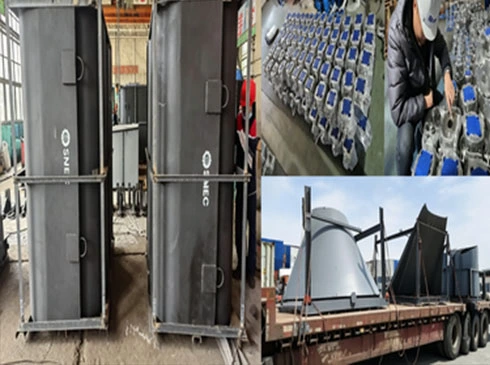
Environmental Compliance and Emission Control
Environmental improvements that are part of repair projects meet the stricter emission standards that older stoves can't meet with just add-on changes. Ultra-low emission cleaning systems, better gas handling facilities, and better closing technologies lower gaseous and particulate emissions to levels that meet current and future rules. This proactive compliance gets rid of the existential risk that non-compliant sites face when they have to shut down or cut back on production.
Environmental improvements help companies keep their promises to be sustainable and give them a social license to operate. Communities and officials like it better when buildings are updated than when they are old and have grandfathered permits. By renovating everything, you can lower emissions so much that performance often drops below 10mg/Nm³ for particulates. This shows that you care about the environment and puts facilities in a good position for carbon-limited markets and regulatory settings.
Comparing Revamping Service Providers and Techniques
Evaluating Technical Capabilities and Methodologies
Different service companies have different ways of renovating furnaces, and each has its own benefits in certain scenarios. By working on partially cooled equipment, hot repair methods cut down on downtime, but they also limit the scope of what can be done. Cold repair methods allow full entry and thorough renovation, but they make the job take longer. Full renovation projects include both structural replacement and big steps forward in technology. For example, they might add the ability to inject hydrogen-rich fluids, make pellet profiles that work better, or increase the capacity of structures that are already in place.
Technical difference is clear when you look at the profiles and track records of different providers. Established providers have experience with furnace sizes ranging from 1,000 to 5,000 cubic meters, and they can show case studies of how they increased productivity, decreased energy use, and extended the life of campaigns. Certifications, like those for pressure vessels, welding standards compliance, and refractory installation knowledge, are an objective way to prove technical ability that marketing claims alone can't do.
Importance of After-Sales Support and Partnership Approach
Your relationship with the company doing the makeover goes far beyond the project's start date. Comprehensive service packages include initial engineering as well as ongoing technical support, help with performance monitoring, and advice on how to fix problems during the longer campaign life. This partnership model takes into account that running a furnace means constantly improving it by adapting to changes in raw materials, market needs, and new best practices learned through operating experience.
Structures for warranties and promises to respond to emergencies set serious industrial partners apart from transactional contracts. Providers who are sure of the quality of their engineering and execution back up their promises with meaningful performance guarantees and quick-response technical teams. This support infrastructure is especially helpful during the important break-in period that comes after blow-in, when operational parameters are fine-tuned and the production team gets used to the new equipment's capabilities.
Overcoming Challenges and Managing Risk During Blast Furnace Revamping
Coordinating Complex Logistics and Minimizing Downtime
Executing a renovation project requires careful coordination between many separate workstreams, such as demolition, fabrication, delivery logistics, installation sequences, and integrating systems. The planning process is more difficult in brownfield sites because there is less room, cranes can't get to certain areas, and workers have to deal with nearby operating equipment every day. Successful projects have detailed critical path schedules that include buffers for when unexpected problems are found during disassembly.
To keep downtime to a minimum in overall revamping service of blast furnace, prefabrication techniques must be used to make as many parts as possible away from the site of final production. On-site installation times are cut down by using modular building methods like pre-assembled cooling stave panels, factory-tested monitoring packages, and pre-qualified refractory materials. Whether renovation economics meet stakeholders' expectations or fall short is often determined by the difference between a well-planned 60-day cold repair and a poorly planned 110-day ordeal.
Workforce Safety During High-Risk Activities
As a result of working at height on furnace shells, entering hearth areas through tight spaces, doing hot work in explosive atmospheres, and lifting heavy parts, renovation work is naturally dangerous. A lot of safety planning starts months before the blow-out. Rules are made for all high-risk activities, specialized teams are trained, and rescue skills are checked to make sure they match possible emergency situations. When choosing a service provider, you should give their safety record a lot of thought. No amount of extra work should justify deaths or serious injuries on the job.
As the project changes, safety rules are changed based on continuous risk assessment. Pre-job meetings go over the specific risks that come with each shift's work. Permit systems keep hot work and confined entry under control, and safety watchers keep an eye out for new risks. This organized method keeps people safe and stops the project delays and cost overruns that always happen after major incidents.
Optimizing Procurement and Contracting for Blast Furnace Revamping
Understanding Cost Components and Value Drivers
The costs of a renovation project can be broken down into several main groups. These are engineering and design services, refractory materials (mostly premium carbon blocks and silicon carbide components), cooling system hardware (copper staves or cast iron elements), changes to structural steel and pressure vessels, upgrades to automation and instrumentation, construction labor, and project management. When procurement teams understand this cost structure, they can compare proposals more intelligently than just by comparing bottom-line numbers that may show very different scopes.
To maximize value, you have to find a balance between original cash and lifecycle economics. Premium refractory materials cost more up front, but they last longer and work better at high temperatures. Advanced automation systems make project budgets bigger while also making operations more efficient. These operational efficiencies pay for themselves by increasing productivity and lowering the number of workers needed. Professionals in buying look at the total cost of ownership instead of the original purchase price because they know that the cheapest option often ends up being the most expensive one.
Structuring Contracts for Mutual Success
Effective remodeling contracts make it clear what the work is supposed to include, how it should be done, when payments are due based on clear criteria for completion, and who is responsible for what. Turnkey arrangements that include everything from design to commissioning make it easier for clients to manage their contracts while putting all the responsibility on the service provider. This unified method works especially well for clients who don't have a lot of experience with blast furnace engineering in-house.
When negotiating a contract, it's important to pay close attention to the warranty terms and performance promises. Meaningful promises, like guaranteed output levels, fuel consumption goals, and campaign life forecasts, show that the source trusts them and look out for the client's best interests. Using payment structures that keep significant amounts until performance is confirmed matches incentives and keeps contractors working during the crucial time of operational stabilization that follows startup.
Conclusion
Blast furnace refurbishment is a great way for metallurgical companies that are having problems with old equipment to get more out of it through overall revamping service of blast furnace. The many benefits—increasing capacity, improving quality, lowering energy use, making the system more reliable, boosting safety, and following environmental rules—combine to make strong economic returns that usually pay the costs of the investment within a few years of starting up again. Modern methods of renovation can add 15 to 20 years to the life of equipment while still getting performance levels that are on par with or better than those of new building. By changing their strategies, makers can stay competitive in global markets that are becoming more demanding and where environmental duty and operational efficiency are becoming more important to business success. When making a decision, the framework should look at more than just the economics of renovation vs. replacement. It should also look at how modernized assets can help with planning for uncertain future market conditions.
FAQ
How often should blast furnaces undergo comprehensive renovation?
Major renovations should happen about every 15 to 20 years, according to experience in the field. However, the exact timing relies on how often the building is used, the quality of the materials used, and its care history. Facilities running high-intensity campaigns with lower-quality feedstocks may need help sooner, while facilities with great preventative maintenance and high-quality inputs may be able to run campaigns longer than usual. Condition tracking data, such as rates of heat erosion, cooling system breakdowns, and patterns of refractory wear, is a more accurate way to set schedules than rules based on the calendar.
What factors most significantly influence renovation project costs?
The main factor that affects costs is the size of the furnace, since bigger setups need more refractory material, cooling equipment, and structure parts. The scope of a technology upgrade has a big impact on budgets; basic refurbishment costs a lot less than projects that include modernizing automation, upgrading environmental systems, or making changes to allow for more capacity. Accessibility issues and landfill restrictions make things more difficult and cost more, especially when limited cranes or small work areas make things less productive. Choosing the right material—for example, premium carbon blocks vs. normal choices or copper staves vs. cast iron—has a big effect on cost and performance and durability.
Can revamping achieve meaningful environmental impact reductions?
Through a number of different methods, a complete makeover can dramatically lower emissions. Particulate pollution are cut down to very low levels, usually less than 10mg/Nm³, by using better gas cleaning systems with improved filtration. When seals and hearth stability are improved, fugitive emissions that plague furnaces that are breaking down are almost completely eliminated. Better energy efficiency lowers the amount of carbon dioxide released per ton of output, and modern process controls improve combustion chemistry to keep harmful chemicals from forming as little as possible. Many restored buildings meet emission standards that are close to those for new construction. This turns environmental profiles from a risk to a competitive benefit.
Partner With SMEC for Your Blast Furnace Renovation Needs
When it comes to updating metallurgical equipment, SMEC has decades of specialized engineering experience. At our Taiyuan facilities, we combine deep technical knowledge with full manufacturing capabilities. Our team of 168 engineers, including 30 senior engineers, provides full renovation services, from the original review to ongoing operating support. We know that picking the right overall revamping service of blast furnace supplier is key to the success of the project. That's why we focus on partnership approaches that align our success with your operational outcomes. Our integrated planning, fabrication, installation help, and after-sales service make it easier to carry out projects and keep track of who is responsible for what. Talk to our technical team at project@smec.cc about how SMEC's renovation services can improve the performance of your blast furnace, lower your running costs, and set up your plant for long-term success in metallurgical markets that are always changing.
References
1. Chen, W., & Liu, X. (2021). Advanced Refractory Materials for Blast Furnace Longevity. International Journal of Metallurgical Engineering, 15(3), 112-128.
2. Industrial Furnace Association. (2020). Best Practices in Blast Furnace Renovation and Lifecycle Management. Technical Report Series, Vol. 44.
3. Kapoor, R., & Mehta, S. (2022). Energy Efficiency Optimization in Renovated Ironmaking Facilities. Journal of Cleaner Production Technologies, 8(2), 67-83.
4. Mitchell, D. (2019). Economic Analysis of Blast Furnace Revamping Versus New Construction. Metallurgical Economics Quarterly, 12(4), 234-251.
5. World Steel Association. (2023). Emission Reduction Strategies Through Furnace Modernization. Sustainability in Steelmaking Series, Report No. 18.
6. Zhang, H., Yamamoto, T., & Schmidt, F. (2020). Comparative Study of Blast Furnace Renovation Methodologies Across Global Facilities. International Ironmaking Review, 27(1), 45-62.
Free consultation & volume discounts available
SEMC focuses on the entire metallurgical process—from coking, ironmaking, and steelmaking to continuous casting and rolling. Whether you face challenges related to equipment upgrades, energy efficiency optimization, or overall process transformation, please fill in the following information. Our technical team will provide you with tailor-made high-end equipment upgrade solutions and professional EPC design services to help your project be implemented efficiently.
Recommended Blog
Why Every High-Capacity BF Needs an Automatic Cooling Water Barrier?
How Three-Ring Cone Scrubbers Improve Blast Furnace Gas Quality
How Clear Is the Image Quality of Blast Furnace Tuyere Camera?
Step-by-Step: The Process of Inspecting Blast Furnace Riser Pipes
What Does a Blast Furnace Safety Monitoring System Include?
5 Key Factors When Buying Blast Furnace Water-Cooled Valves