Key Metrics in Blast Furnace Safety Benchmarking
Understanding Blast Furnace Safety Benchmarking
- Understanding Blast Furnace Safety Benchmarking
- Key Metrics Every Procurement Manager Should Consider
- How Blast Furnace Safety Benchmarking Works: Process and Workflow
- Choosing the Right Blast Furnace Safety Benchmarking Service
- Best Practices for Leveraging Safety Benchmarking Metrics
- Conclusion
- FAQ
- Partner with SMEC for Advanced Safety Benchmarking Solutions
- References
For steel producers and metallurgical enterprises operating multiple furnaces, establishing consistent safety standards across all facilities represents a significant operational challenge. A group-level blast furnace safety benchmarking service addresses this by providing centralized evaluation frameworks that compare safety performance metrics across an entire corporate portfolio. This strategic approach transforms fragmented site-level data into unified insights, enabling leadership teams to identify high-risk facilities, standardize emergency protocols, and transition from reactive maintenance models to predictive safety management systems that protect both personnel and production continuity.

Understanding Blast Furnace Safety Benchmarking
Working in a blast furnace means being in dangerous places with toxic gases, high-pressure steam systems,, and temperatures above 2,000°C. This is why regular safety checks don't always work. Safety benchmarking is very different from regular checks because it uses ongoing tracking and comparisons against measurable performance standards. Instead of just making sure that everything is in order, this method looks at real-time operational data to find trends that can help you predict when tools will break down before they become major problems.
What Makes Benchmarking Different from Traditional Audits?
Traditional safety checks usually happen every three months or once a year, leaving dangerous gaps in information in between. Through integrated sensor networks and automated reporting systems, benchmarking sets up ongoing surveillance. This constant method picks up on small changes in the way equipment works, like slowly rising cooling wall heat loads or small changes in the way gases are distributed, that show problems that are getting worse but can't be seen during checks that happen only every so often.
Benchmarking services give international companies that manage furnaces in different regulatory settings standard ways to measure things that take into account things like equipment age, working volume, and changes in how things are done in different regions. This normalization feature makes it possible to compare the performance of a furnace that is decades old in one building to a newer installation in another, which is hard to do with standard checks.
The Business Case for Group-Level Implementation
For companies with five or more blast furnaces, it can be hard to keep safety standards consistent as each facility develops its own ways of doing things. Data silos between sites make it hard for leaders to see which sites are doing a great job with certain safety measures and which ones need help right away. Centralized measuring gets rid of these information gaps, making safety performance scores that everyone can see and use to decide who is responsible and where to put resources.
Keeping accidents from happening has financial effects that go beyond that. For better premium rates, insurance companies need safety management systems that are more and more documented. At the same time, government agencies in places like the US want full compliance documentation. A unified benchmarking framework meets both needs and saves time and money on administration compared to keeping different data systems for each site.
Key Metrics Every Procurement Manager Should Consider
SMEC's full benchmarking system in group-level blast furnace safety benchmarking service checks the safety of blast furnaces using five main areas with more than 40 measurable signs. This multi-layered approach makes sure that operational risks can be seen clearly and finds out whether performance gaps are caused by broken equipment or weak management systems. Each type of metric gives specific information that can be used to make both short-term fixes and long-term choices about capital plans.
Furnace Body Safety Operation Indicators
For safety reasons, the furnace's structure is the most important thing to think about. Hearth and bottom refractory erosion rates are important measurement parameters because they directly show how much longer a campaign will last. The smallest layer of covering that is still there acts as an early warning system for possible breakout risks. Baselines for the cooling wall heat load show if thermal management systems are working as planned.
Monitoring the amounts of hot spots in the furnace shell shows where refractory failure might be about to happen, so steps can be taken to stop it before it gets too bad. Tuyere leakage fault probability studies help figure out when these high-stress parts will need maintenance, and tracking the length of time that tap holes are working makes sure that molten iron removal methods are safe. The number of high-risk safety risks in the group is counted and ranked. This lets the leaders know right away which facilities need instant attention and resources.
Production Stability and Furnace Condition Metrics
In addition to structural safety, operating security has a direct effect on the safety of workers and the cost of production. The furnace utilization rate shows how well each unit turns raw materials into liquid iron, and the hanging and slipping fault frequencies show issues with load distribution that can cause dangerous gas flow interruptions. Hearth activity levels show if the melting zone keeps the right temperature ranges, and gas flow uniformity tests look for imbalances that could lead to overheating or partial burning in certain areas.
The first-grade approval rates for molten iron show how well the process is controlled, and the tapping stability metrics show how consistent the iron removal operations are. These indicators, when put together, let you compare how well different sites handle production, pointing out the best practices that can be used across the whole company.
Energy Consumption and Environmental Performance
Today, safety concerns in blast furnace activities can't be separated from environmental concerns and the energy economy. Comprehensive coke rate benchmarking compares how efficiently different units use fuel, and pulverized coal consumption tracking finds ways to make things better. Metrics for electricity and water use show inefficient operations that are often linked to worn-out equipment that affects safety systems.
The utilization and recovery rates of blast furnace gas show how well facilities collect useful leftovers instead of throwing them away as trash. Concentrations of exhaust pollutants show how well facilities are following stricter environmental rules, and the frequency of environmental alarms shows how often facilities are getting close to the rules. This dimension helps leaders find places that use a lot of resources and are bad for the environment and need specific improvements or changes to how they work.
Equipment System Operational Indicators
Overall furnace safety is directly related to how reliable critical support systems are. Metrics for measuring the performance of a cooling system check to see if its ability to remove heat meets design requirements when it is actually used. Evaluations of coal injection systems check how consistently fuel is delivered, and evaluations of dust removal and cleaning systems make sure that worker exposure stays within safe limits.
Intelligent monitoring equipment accuracy rates in group-level blast furnace safety benchmarking service show if sensor networks are giving correct real-time data, and fault frequency tracking finds parts that aren't working right and need to be replaced. Instrument calibration qualification rates make sure that measurements are accurate, and comparing the costs of equipment care helps find out if some facilities have too much wear and tear because of how they are run or because the parts they use aren't very good.
Operations Management System Benchmarking
Without good management methods, even the best tools will break down. Comparing inspection standards between buildings shows if sites follow thorough preventive maintenance plans. Evaluations of the accuracy of maintenance records find holes in the records that usually point to inconsistent work methods. Emergency reaction capability evaluations check how well each site can handle major events, and personnel operating procedure compliance checks make sure that workers follow the rules for safety.
Tracking the implementation of safety training makes sure that knowledge is shared consistently across the organization. The platform makes facility ranks, weakness heat maps, root cause analysis reports, and repair priority lists all by itself. This detailed report makes it clear to the group offices which furnaces don't meet standards, which indicators are behind their peers, and whether poor management or problems with the tools are to blame for poor performance.

How Blast Furnace Safety Benchmarking Works: Process and Workflow
For benchmarking to work, you need a sophisticated data infrastructure that can collect data from many different sources and keep it accurate and up to date. Industrial Internet of Things (IIoT) sensor networks are used in modern implementations to keep an eye on hundreds of parameters across furnace systems all the time. These sensors pick up on a huge range of things, from the temperature of refractory materials at different depths to small changes in pressure in gas distribution systems. They create huge datasets that show subtle patterns that can't be seen by hand.
Data Collection and Integration Technologies
Advanced measuring services retrieve data without damaging DCS and SCADA systems. This method keeps output running and provides lots of operating data. During scheduled maintenance windows, ultrasonic testing equipment checks key pressure vessels without damaging them, and infrared thermal imaging systems detect hot spots on furnace shells before they become visible.
Normalizing data from furnaces of varying ages, designs, and manufacturers makes integration difficult. Complex algorithms adjust raw measures based on tools, campaign stage, and workload to make comparisons fair. Performance scores take into account the fact that a newly relined furnace will have different heating qualities than an older one.
Analysis Methodologies and Predictive Capabilities
Analytical frameworks that compare current performance to historical patterns, peer facility averages, and industry best practices make raw data relevant. The statistical process control method can detect parameters outside their normal limits. This initiates investigations before things worsen. Years of operating data can teach machine learning algorithms to identify failure patterns. They can send early warnings for preventative measures.
Instead of time intervals, predictive analytics may predict when parts need to be changed based on their breakdown rate. Focusing on real demands rather than arbitrary timetables maximizes resource use in condition-based maintenance. The method calculates each facility's risk score using multiple indicators. This enables leaders to choose where to invest in safety for the most impact.
Reporting Architecture and Continuous Improvement Cycles
When done correctly, benchmarking simplifies technical data into insights that all company employees may use. In real time, automated dashboards provide crucial performance indicators, and color-coded alerts indicate critical factors. Analytical reports compare facility performance to group standards and best-in-class benchmarks by indicator area.
Reports are organized to suit different users. Leaders obtain high-level safety performance summaries to make strategic decisions, while plant engineers can get technical information to make practical improvements. Monthly reviews ensure timely application and verification of corrective actions. This feedback loop keeps improvements coming, and measured performance gains strengthen the company's safety commitment.
Choosing the Right Blast Furnace Safety Benchmarking Service
To choose the right benchmarking partners, you need to carefully look at their technical skills, experience in the industry, and how well their service scope fits with your business's needs. Not all providers really offer group-level blast furnace safety benchmarking services; some just collect reports from different sites without doing the normalisation and comparison analysis that gives strategic value. The best services combine in-depth knowledge of metalworking with cutting-edge data analysis skills and a track record of successful implementations in a variety of business settings.
Essential Evaluation Criteria
Screening begins with industry qualifications. ISO 45001 certification implies workplace safety procedures are organized. Providers should demonstrate knowledge of OSHA Process Safety Management (PSM) laws and metalworking safety codes in your business regions. You should evaluate providers' technical skills. Use case stories to demonstrate how they normalise data and how their analytical systems perform.
This highly specific field requires experience. Long-term blast furnace providers comprehend the small differences between natural variation and emerging issues. Because of the furnace type, materials loaded, and operation, the same sensor values can signify various things. Use customer samples from similar-sized and located firms to ensure that the solutions being explored will work as promised.
Service Differentiation and Customization Options
The best benchmarking businesses offer customizable service models that may be customized for every organization. Entry-level implementations may only report key safety signs every three months. However, full programs monitor all metrics with real-time screens. Organizations can prioritize strategic KPIs by altering indicator weightings. Facilities wanting to extend a campaign may prioritize refractory erosion, while those trying to improve environmental performance may prioritise emissions metrics.
Integration skills determine a project's difficulty and long-term success. Services using current control systems require less installation disturbance than parallel sensor networks. Cloud platforms provide improved data access and automatic updates, but some firms prefer on-premise installations for data security. Indicate if the service includes on-site technical support throughout deployment and how it continues.
Investment Considerations and Return on Investment
Scale, number of facilities, and personalization affect benchmarking service costs. Instead of merely looking for the lowest price, consider the whole cost of ownership, including implementation, membership, and internal resources. Well-designed services automate data collection and report creation, simplifying administration. Membership costs are justified by increased output.
Calculate the return on an investment by considering direct and indirect advantages. Fixing and stopping major incidents can cost millions, more than years of benchmarking service fees. Directly preventing them saves money. Indirect benefits include improved maintenaprioritize that extends campaign life, better compliance with rules that reduce legal risk, and better insurance terms that reflect recorded safety management systems. Companies frequently realise a return on investment (ROI) during the first year when benchmarking prevents one significant safety incident or extends a heating program by a few percent.
Best Practices for Leveraging Safety Benchmarking Metrics
Setting up systems for benchmarking is only the beginning. To get the most out of it, metrics need to be integrated into the way decisions are made at all levels of a company. Companies that do well use benchmarking data as strategic information to guide everything from daily operating changes to long-term capital planning. For this integration to work, there needs to be clear communication so that everyone who needs to know gets the right information in a format that they can use, along with enough background information to make sense of it.
Integrating Metrics into Operational Decision-Making
Effective metric use begins with assigning responsibilities for each indicator area. Assigning managers to measure cooling system performance or environmental compliance fosters responsibility and encourages improvement. Regular review meetings should focus on trend data, not single-point measurements. This will distinguish accidental variation from necessary modifications. Before correcting indicators that go wrong, research methods should find the causes. This avoids treating symptoms without treating the cause.
By linking benchmarking metrics to maintenance planning, reactive repairs can become proactive asset management. Companies can plan rebuilds for planned production breakdowns instead of shutting down for emergencies when erosion rates indicate refractory lives will end within particular time frames. Failure frequency analytics can optimize spare parts inventory by showing which parts to stock and which to buy on demand.
Building Safety Culture Through Transparency
Sharing benchmarking data with the firm increases safety and accountability rather than limiting access to management. In control rooms and common spaces, graphic dashboards demonstrate safety performance. This keeps safety top of mind during daily operations. Recognising sites and teams that reach excellence standards motivates everyone in the firm to do better, while constructively supporting underperforming locations prevents personnel from becoming defensive and hiding issues.
Training programs are more effective when tied to company success data. Customised safety training addresses benchmarking analysis gaps instead of general safety presentations. Comparison of data from similar sites without the same problem demonstrates how to prevent occurrences from happening again.
Regulatory Compliance and Audit Preparation
Complete benchmarking paperwork in the group-level blast furnace safety benchmarking service meets regulatory requirements and simplifies audit preparation. When safety regulators want performance proof, organizations with well-established benchmarking systems provide figures showing continuous monitoring and improvement. Organizations frequently have better regulator relations when they proactively document rather than scramble to obtain information during inspections.
Structured benchmarking data simplifies ISO- and corporate governance framework-required internal management system audits and evaluations. Audit teams use central databases with full performance records instead of manually obtaining information. This efficiency reduces audit time and cost while boosting quality by providing more data.
Conclusion
Blast furnace safety monitoring has gone from being a nice-to-have management tool to a must-have for companies that want to be the best at what they do. Continuous tracking, comparison analysis, and the ability to make predictions all work together to improve safety performance in ways that older methods can't. As rules and expectations for corporate responsibility rise, documented safety management systems offer competitive advantages that go beyond preventing accidents and include lower insurance costs, better relationships with regulators, and the ability to attract workers.
Comprehensive benchmarking services pay for themselves in a number of ways, including fewer accidents, longer equipment life, better maintenance, and higher operational efficiency. When businesses see safety measures as strategic information instead of legal requirements, they set themselves up for long-term success in global markets that are becoming more competitive.
FAQ
How often should group-level benchmarking assessments occur?
Full benchmarking audits are usually done once a year to cover full operational cycles and seasonal changes. However, important safety parameters need to be constantly monitored in real time. Facilities with a high risk of failure or that are almost at the end of their campaign may need more frequent, in-depth checks. The best regularity strikes a balance between thorough evaluation and resource efficiency. Most organizations find that yearly deep assessments, along with constant automatic tracking, give them enough coverage without overburdening their own teams.
Can benchmarking services accommodate different furnace types and capacities?
Modern group-level blast furnace safety benchmarking service tools use normalization algorithms to change performance metrics based on things like the furnace's working volume, design vintage, campaign life stage, and operational intensity. This mathematical change lets you compare different pieces of equipment fairly, taking into account their natural differences while showing real performance gaps. Customization includes differences in regional regulations, making sure that tracking compliance is in line with the rules that apply in each operating area.
Does benchmarking implementation disrupt active production?
Modern comparison services get data from existing control systems without interfering with them, so there are no breaks to regular operations. Inspections that need to reach equipment are done during repair windows that are already planned into working calendars. The first part of the installation process is usually integrating the system during planned downtime. After that, continued monitoring happens naturally, so it doesn't change how the furnace works or need any extra help from an operator.
Partner with SMEC for Advanced Safety Benchmarking Solutions
SMEC has decades of experience with metallurgical tools and can help current blast furnace operators with the safety management problems they face. Our group-level blast furnace safety benchmarking service works with your current operations and gives large companies all the information they need. With the help of our Large-scale Intelligent Coking Equipment Research Institute's advanced research tools and its 168 engineering professionals, 30 of whom are senior engineers, we know the technical details that set effective comparison apart from mere data collection.
SMEC is a trusted group-level blast furnace safety benchmarking service provider with a lot of experience putting solutions into action in a wide range of operational settings. They can make solutions that are tailored to your exact needs. Our team has the technical knowledge and real-world experience that your safety efforts need, whether you are in charge of integrated steel plants, an EPC contractor providing full projects, or an independent coking and metallurgical facility. Get in touch with our experts at project@smec.cc to talk about how our benchmarking tools can help you improve safety across all of your processes while also getting the most out of your investments in buying and maintenance.
References
1. American Iron and Steel Institute. (2023). Blast Furnace Safety Management Systems: Industry Best Practices for Multi-Site Operations. Washington, DC: AISI Technical Publications.
2. International Organization for Standardization. (2023). ISO 45001:2023 - Occupational Health and Safety Management Systems in Metallurgical Operations. Geneva: ISO Standards Catalogue.
3. National Institute for Occupational Safety and Health. (2022). Process Safety Management in Iron and Steel Production: Hazard Identification and Risk Assessment Methods. Cincinnati: NIOSH Publications.
4. Society for Mining, Metallurgy & Exploration. (2023). Predictive Maintenance Technologies for Blast Furnace Equipment: Data Analytics Applications. Englewood: SME Technical Division.
5. World Steel Association. (2024). Safety Performance Indicators for the Global Steel Industry: Benchmarking Methodology and Standards. Brussels: World Steel Safety and Health Committee.
6. Zhang, L., & Roberts, M. (2023). Digital Transformation in Metallurgical Safety: Real-Time Monitoring Systems and Comparative Performance Analysis. Journal of Process Safety and Environmental Protection, 178, 245-267.
Free consultation & volume discounts available
SEMC focuses on the entire metallurgical process—from coking, ironmaking, and steelmaking to continuous casting and rolling. Whether you face challenges related to equipment upgrades, energy efficiency optimization, or overall process transformation, please fill in the following information. Our technical team will provide you with tailor-made high-end equipment upgrade solutions and professional EPC design services to help your project be implemented efficiently.
Recommended Blog
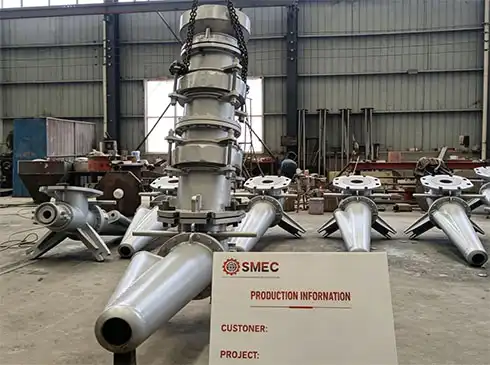
A Complete Guide to Choosing the Right Feeding Hopper for Blast Furnace Systems

Why Cooling Water Barrier Systems are the Last Line of Defense in BF Safety?
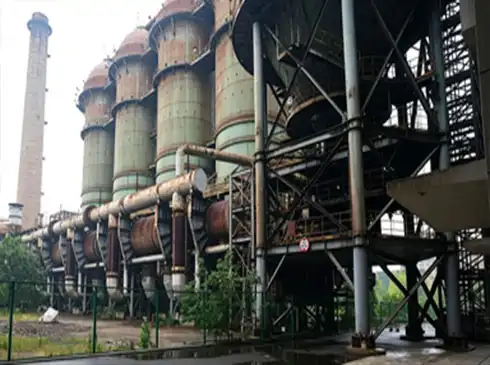
How Does a Blast Furnace Drill Rod Replacement Device Work?
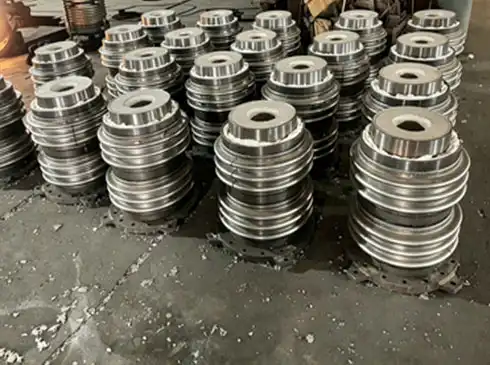
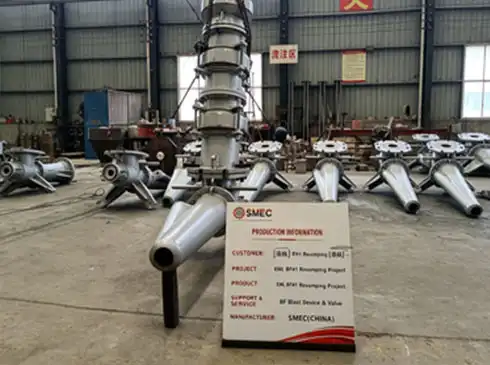
How to Choose a Reliable Blast Furnace Vent Valve Manufacturer?
How to Choose Durable Blast Furnace Water-Cooled Valves for Long-Term Use?