A Complete Guide to Choosing the Right Feeding Hopper for Blast Furnace Systems
A Complete Guide to Choosing the Right Feeding Hopper for Blast Furnace Systems
Understanding Feeding Hoppers in Blast Furnace Systems
- Understanding Feeding Hoppers in Blast Furnace Systems
- Comparing Feeding Hopper Options for Blast Furnace Applications
- How to Select the Right Feeding Hopper for Your Blast Furnace System
- Maintenance, Troubleshooting, and Safety for Blast Furnace Feeding Hoppers
- Procurement and Supplier Insights: Partnering with SMEC for Feeding Hopper Solutions
- Conclusion
- FAQ
- Partner with SMEC for Advanced Blast Furnace Feeding Solutions
- References
In modern ironmaking facilities, choosing the right feeding hopper for the blast furnace BLT equipment has a direct effect on how much iron is made, how safe it is, and how much it costs to run. This pressure-retaining vessel is an important buffer and metering container in bell-less top charging systems. It controls the exact flow of sinter, pellets, coke, and additives into the furnace while keeping important pressure seals. Procurement professionals and plant engineers can make smart investment decisions that improve furnace throughput and extend equipment life by knowing the technical specifications, operational requirements, and supplier capabilities.
Understanding Feeding Hoppers in Blast Furnace Systems
Every part of a modern blast furnace has to work precisely and reliably, and the feeding hopper for the blast furnace BLT equipment is one of the most important parts of the material supply chain. We have seen over many years of metallurgical engineering that switching from traditional bell-type systems to bell-less top configurations has completely changed how materials are fed into the furnace.
Core Function and Operating Principles
The feeding hopper is at the top of the furnace and acts as a pressure tank. It takes in raw materials from the conveyor systems and holds them under controlled pressure before sending them out through the distribution tube. This setup gets rid of the huge gas leaking issues that came with older Bell systems. It also allows for high-top pressure operation, which increases output while lowering coke use. The hopper works with the upper and lower sealing valves to keep the pressure difference between the inside of the furnace and the outside air. This allows for continuous charging cycles without lowering the efficiency of the furnace.
Structural Components and Material Engineering
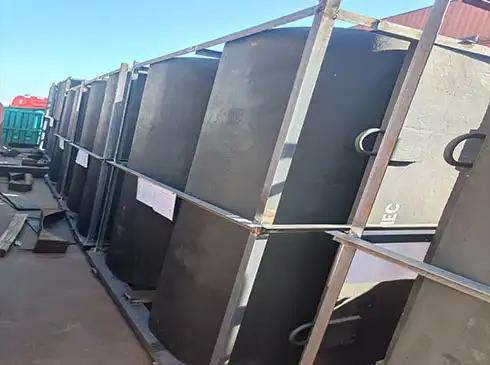
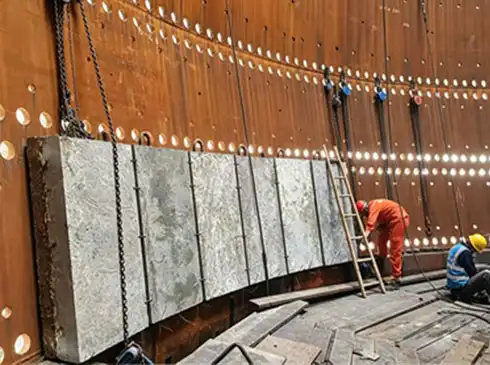
The hopper's sturdiness and useful life are determined by the materials used to build it. The main body of the tank is made of high-strength structural steel like Q345B or Q355R. It is designed to handle design pressures of up to 0.3 to 0.4 MPa and temperature changes of up to 250°C while gas flows through it. To protect the inside sides from the constant wear and tear from dropping ores and coke particles, high-chromium cast iron plates, microcrystalline alumina ceramics, or tungsten carbide hard-facing is used for special lining treatments.
The funnel shape is the result of a lot of hard work in the engineering world, and it is embodied in the feeding hopper for the blast furnace BLT equipment. It is often improved using the discrete element method to stop material segregation and the annoying "hanging" or "bridging" effects that can stop charging sequences. Keeping the valley angle at least 65° and using low-friction ceramic linings make sure that materials move smoothly, even when dealing with burden materials that are wet.
Quality Standards and Pressure Vessel Compliance
Every part of making feeding hoppers must follow international standards. Using codes like ASME Section VIII or GB/T 150 for pressure vessels makes sure that integrated sealing valves work perfectly and don't leak. As part of strict quality control procedures, all circumferential and longitudinal welds are tested with x-rays and ultrasounds to make sure that the pressure vessels are intact at every joint. Hardness testing makes sure that inner plates meet certain Brinell or Rockwell scales, usually HRC 58–62, which means they can handle wear and tear well. Before equipment leaves the factory, it is tested for leaks using either hydrostatic or pneumatic pressure decay. This makes sure that the seals are still tight at 1.25 times the design pressure.
In these situations, accuracy in measurements is very important. Laser tracking checks that the lip is flat within 0.5 mm, which makes sure that the material gates and seal valves fit perfectly to stop catastrophic gas passage during charging sequences. In metallurgical production settings that are open 24 hours a day, seven days a week, and where downtime costs quickly add up, these strict quality controls protect not only the health of the equipment but also the safety of the workers.
Comparing Feeding Hopper Options for Blast Furnace Applications
To find your way around the different charging system configurations, you need to know how the different designs affect operational performance and the money you make. We know that procurement teams have to weigh the costs of capital investments against the benefits of increased dependability and efficiency over the long run.
System Architecture Variations
Feeding hoppers for the blast furnace BLT equipment units can be built in a number of different ways to suit different production levels and retrofit situations. Single-hopper systems are used in smaller furnaces or in situations where short breaks can happen between charge cycles. Large integrated steelworks with blast furnaces that can hold more than 4,000m³ of material usually use two hoppers set up next to each other. This allows for truly continuous filling cycles that can handle up to 10,000 tonnes of material every day without stopping production.
Automation level represents another critical distinction. The initial cost of a manual control system is lower, but the operator has to keep watching it all the time, and the weighing of batches is less accurate. Programmable charging sequences can be overridden manually in semi-automated configurations, which balances operational flexibility with consistency. Fully automated systems connect to control networks that run the whole plant and carry out complicated charging recipes. High-precision load cells with heat protection allow for precise weighing within ±0.1%.
Energy Efficiency and Environmental Control
Modern food hoppers have technologies that keep dust from getting in that meet stricter environmental rules in the US and around the world. When materials are moved, sealed charging systems keep fugitive emissions to a minimum, and dust collection ports built in can connect to baghouse filtration systems. Different valve actuation systems use very different amounts of energy. For example, hydraulic systems can cycle quickly but use more power than electromechanical ones.
The operational cost benefits go beyond just using less energy. Automatic hoppers cut down on material waste by precisely batching, which also lowers the impact of changes in chemistry that hurt furnace performance. High-top pressure operation made possible by reliable sealing lowers overall coke rates by 5–8%. This saves a lot of money over the course of a year's worth of production, which is measured in millions of tonnes.
Investment Considerations and Total Cost of Ownership
Evaluating feeding hopper choices requires going beyond buy expenditure to cover installation difficulty, maintenance requirements, and operating lifespan. The cost of installation depends on how hard it is to connect to the existing heating infrastructure and whether the project is building something from scratch or making changes to facilities that are already in use. The quality and thickness of the lining material directly affect how much it costs to maintain. High-wear areas need to be inspected every six months, and depending on how rough the load is, they need to be replaced every two to four years.
The financial effects of unplanned downtime should be taken into account in a full cost analysis. In continuous metallurgical operations, every hour of downtime can mean a big loss of income. This is why reliability and quick access to repair are such important factors that they warrant buying high-end equipment as long as it is backed up by strong service networks after the sale.
How to Select the Right Feeding Hopper for Your Blast Furnace System
Whether your feeding hopper for the blast furnace BLT equipment becomes a production asset or a constant maintenance challenge depends on how well you match the equipment specifications to the operational needs. We've helped a lot of metallurgical plants make this choice, and there are some review factors that always make the difference.
Capacity and Throughput Requirements
The main standard is the material handling volume, which is found by figuring out the furnace's production rate, the make-up of the load, and how often it should be charged. A 3,000m³ blast furnace that makes 7,000 tonnes of hot metal every day needs hopper capacity that lets it keep charging processes going even when repair is being done. When hoppers are too small, they cause bottlenecks that limit the amount of work that can be done, and when they are too big, they add extra costs to the machine without improving how it works.
Also, think about how the material's density changes across different load components. Sinter, pellets, and coke all have different mass densities and flow properties, so the hopper needs to be big enough to hold the largest amount of material needed for a single charge batch while still allowing enough time for the material to settle down.
Material Compatibility and Wear Resistance
The features of the burden determine the choice of covering material. When high-alkali sinter or aggressive nut coke grades are used, wear rates go up quickly. This means that special multi-layer impact plates and high-quality wear-resistant linings are needed. Coal chemical plants that use very rough feedstocks benefit from tungsten carbide hard-facing, even though it costs more at first, because it lasts longer and requires less maintenance, which means less downtime for production.
Temperature contact is another thing that affects harmony. When hoppers are used with preheating systems or with materials that are warmer than room temperature, the design of the vessels needs to take thermal expansion into account. They also need special high-temperature sealing compounds, like Viton-based gaskets that have been tried for 300,000 cycles at 200°C, to keep the pressure limits.
Supplier Credibility and Technical Support
How long an item lasts depends a lot on how well it was made and how well it is supported by technical staff. When judging a supplier's skills, you should look at their technical knowledge, manufacturing licenses, quality control methods, and infrastructure for after-sales service. If a supplier has a history of making pressure vessels and working with metals, they can bring useful process knowledge that goes beyond just providing parts and can also include application engineering help.
The Large-scale Intelligent Coking Equipment Research Institute and the Shenzhen Research Branch are two research institutes that SMEC, which is part of the Taiyuan Silian Heavy Industry Group, uses to show its wide range of provider capabilities. Our engineering team of 168 technical staff members, including 30 top engineers, gives application-specific design advice and works closely with universities on research projects. This level of technical detail makes sure that feeding hopper solutions work well with current furnace systems and use the newest automation, emission control, and predictive maintenance technologies.
Customization and System Integration
Standard hopper designs work for most situations, but sometimes they need to be changed to fit specific operating needs. To connect to current furnace control systems, you need instruments and communication methods that work with each other. Facilities using Industry 4.0 can benefit from hoppers that are equipped with high-tech sensors that give real-time information on material amounts, valve positions, pressure differences, and structure health signs that are used by algorithms that plan preventative maintenance.
Physical integration factors include the amount of space that is available for installation, the amount of structural support that is needed, and how well the new system will work with existing distribution and conveyor systems. Detailed engineering coordination during the specification phase stops changes that cost a lot of money and installation delays that cause projects to take longer than planned and production schedules to be thrown off.
Maintenance, Troubleshooting, and Safety for Blast Furnace Feeding Hoppers
Systematic maintenance plans and quick responses to operational problems are needed to keep the feeding hopper for the blast furnace BLT equipment running reliably over many decades. We've created thorough maintenance plans that keep equipment available as much as possible while keeping costs low over its lifetime.
Preventive Maintenance Protocols
Schedules for regular inspections are what reliability programs are built on. Every shift, visual checks look for early signs of damage, wear, or problems with the way things are working before they become major problems. Every month, thorough checks are done to keep track of how the liners are wearing, how well the valves are sealing, and the strength of the weld joints and pressure boundaries. Ultrasonic thickness measurement and thermographic images are two examples of advanced checking methods that can find problems that can't be seen with the naked eye.
High-wear areas need extra care, and the state of the internal lining should be checked every six months during planned breaks. By replacing the liner before it fails due to recorded wear rates, a major failure that could damage the vessel body and require longer repair times is avoided. Verifying the load cell's calibration makes sure that the accuracy of each batch weighs within the allowed range. This keeps the furnace's load chemistry under control, which has a direct effect on output and quality.
Common Operational Challenges and Solutions
Material bridging is one of the most common practical problems. It can be caused by changes in the amount of moisture in the material or by the way it sticks together, creating strong beams within the hopper's shape. Some ways to stop this from happening are to keep the wall angles right, make sure the liner surfaces don't have a lot of friction, and use vibration or air-pulsing systems that stop the arch from forming without hurting the vessel's integrity.
Uneven spread of materials during release can lead to problems with how well the furnace works. This usually happens because of uneven wear in the hopper throat or distribution chute, which needs specific liner replacement or adjustments to the discharge gate mechanisms. During operation, keeping an eye on the patterns of material flow through observation ports helps find distribution issues early on, before they have a big effect on the flow of gas through the boiler.
Safety Systems and Regulatory Compliance
Seal valve degradation shows up as pressure drops or gas leaks that can be seen. Rapid thermal cycling speeds up the breakdown of seal material, so it needs to be replaced on a regular basis even if there is no obvious damage. When properly maintained, seals made of silicone or Viton that are designed to withstand cycling at high temperatures work reliably for long periods of time.
Technologies that control dust protect both the environment and the health of workers. During charging, fugitive emissions are kept to a minimum by sealed transfer points and integrated extraction systems. Explosion prevention strategies take into account the flammable dust risks that come with working with pulverized materials by including inert gas cleaning, spark detection systems, and pressure release features that let out safely when a deflagration happens.
Operator training programs make sure that workers know how to do their jobs correctly, what to do in an emergency, and what safety gear they need to wear. Regular safety drills keep people ready for things like pressure limit fails, material spills, and gas releases. OSHA rules and industry safety standards must be followed as a minimum. Reliable providers back these requirements with a lot of paperwork and training materials.
Procurement and Supplier Insights: Partnering with SMEC for Feeding Hopper Solutions
Buying industrial tools is more than just comparing technical specs and getting quotes from different companies. Strategic partnerships with suppliers who offer full technical support and a track record of performance deliver better long-term value than transactional buying methods that only look at the cost of the initial purchase.
Engineering Expertise and Customization Capabilities
SMEC has decades of experience working with integrated steel mills, separate coking operations, and coal chemical plants around the world. They bring specialized coking and metallurgical equipment knowledge to their work. Our 23,000-square-meter factory is in Taiyuan City, Shanxi Province, which is the center of China's energy and heavy chemical industries. It has high-tech production tools like precision machining, automated welding systems, and a full testing system that makes sure the feeding hopper for the blast furnace BLT equipment works well before it ships.
Quality Assurance and Certification Standards
The Large-scale Intelligent Coking Equipment Research Institute is always coming up with new ways to create feeding systems. They use advanced materials, automation technologies, and predicted maintenance to make equipment last longer and cost less to run. Working together with top universities gives us access to cutting-edge research and new technologies that help us keep our products at the top of the global market.
Every filling hopper that is made at SMEC facilities goes through strict quality control procedures. Non-destructive testing includes x-rays and ultrasonic scans of all pressure boundary welds to make sure they are structurally sound at every joint. Material certifications show what kinds of steel are used and how strong they are, making sure that they meet certain grades and international standards. Coordinate measuring machines are used for dimensional inspection, which checks geometric tolerances that are important for sealing and material flow.
Pressure testing makes sure that the seal is intact and that the pressure limit works properly at 1.25 times the design pressure. This simulates the worst-case working conditions to make sure that there are safe operational margins. Load cell calibration papers show that the scales are accurate across the whole measurement range. They also provide tracking, which is important for quality control in ISO-certified factories.
Comprehensive After-Sales Support Network
Help with equipment commissioning makes sure that it is installed correctly and works properly at first. Our field service experts supervise the installation on-site, make sure the system works well together, and train operators in important skills that will help the system work reliably for a long time. Technical paperwork includes troubleshooting guides, spare parts catalogs, and detailed maintenance instructions that help plant maintenance teams keep equipment running smoothly.
The supply of spare parts is an important aspect of service. SMEC keeps important wear parts like valve seals, liner plates, and sensors in stock so they can be sent quickly. This cuts down on downtime during planned maintenance or fixes that come up out of the blue. Our technical support team helps with remote diagnosis and offers engineering advice to deal with operational problems or changes that need to be made as production conditions change.
Streamlined Procurement Process
Before you can ask for quotes, you need to have a technical conversation to make sure you understand the application requirements, site conditions, and integration requirements. Our sales engineers work with clients to find the best way to set up their equipment, taking into account both performance needs and budget limits to get the best value. Comprehensive technical specs, quality documentation, shipping schedules, and warranty terms are all part of detailed proposals that help people feel confidence in their purchasing choices.
For large orders and projects with more than one unit, volume discounts and coordinated delivery schedules that work with construction schedules are helpful. Large capital projects often have different spending cycles and ways of buying things, so flexible financing plans are needed to work with them. International shipment logistics use established freight partnerships to make sure that equipment gets to project sites safely all over the world and in the United States.
Conclusion
To choose the right feeding hopper for the blast furnace BLT equipment, you have to weigh the technical specs, the working needs, the supplier's skills, and the total costs over the equipment's lifetime. Modern Bell-less Top charging systems are much more productive and efficient than older ones. To get these benefits, though, you need equipment that is built to exacting standards and backed by full technical support. Integrity of the pressure vessel, construction that doesn't break down easily, exact handling of materials, and smooth automation integration are some of the basic requirements that set premium feeding solutions apart from cheaper options. Strategic partnerships with experienced suppliers that offer proven engineering expertise, strict quality control, and strong after-sales support networks are the basis for reliable long-term operation in harsh metallurgical environments where equipment performance has a direct effect on production costs and the company's ability to compete.
FAQ
1. How often should internal liners be replaced in blast furnace feeding hoppers?
Replacement times rely on how rough the load is and how hard it is being used. In normal working conditions, high-wear areas should be inspected every six months, and the whole liner should be replaced every two to four years. When operations handle particularly rough materials or are running at full capacity, parts may wear out faster and need to be replaced more often. Regular checks allow planned replacements to happen during regular maintenance windows, which avoids unplanned downtime.
2. What factors influence feeding hopper capacity requirements?
Calculations of capacity take into account the rate at which the burner makes things, the make-up of the load material, changes in bulk density, and the desired charge frequency. The right amount of volume must be used to meet the needs of the biggest single batch while keeping the right amount of material residence time for the right flow properties. When hoppers are too small, they slow down production, and when they're too big, they add extra costs to the capital without improving operations.
3. How does automation impact feeding hopper performance?
Automated systems are more accurate at weighing batches; they usually get within ±0.1%, while manual operations can get as off as ±2-5%. This uniformity improves the chemistry control of the furnace load, which directly raises output and lowers the amount of coke used. Automated charging sequences also reduce the amount of work that operators have to do and the chance of mistakes that people make. They can also be connected to process control systems that run the whole plant, which supports advanced optimization strategies and predictive maintenance programs.
Partner with SMEC for Advanced Blast Furnace Feeding Solutions
Engineered feeding hoppers for the blast furnace BLT equipment made for demanding metallurgical applications are available from SMEC to help you with your modernization and optimization projects. We have decades of experience working in the steel and coking industries, so we can offer a wide range of services, such as application engineering, custom design, precision manufacturing, and lifecycle technical support. As a trusted feeding hopper for the blast furnace BLT equipment maker, we offer solutions that boost output, make sure that regulations are followed, and lower running costs over the decades-long lifecycles of the equipment. Email project@smec.cc to talk to our engineering team about your unique needs and get a thorough technical proposal that is made to fit your operational needs and performance goals.
References
1. Brown, R. & Associates. (2021). Modern Blast Furnace Charging Systems: Engineering and Operations. Metallurgical Industry Press.
2. International Iron and Steel Institute. (2020). Pressure Vessel Design Standards for Metallurgical Equipment. Technical Report Series Vol. 47.
3. Kumar, S. & Chen, W. (2022). "Optimization of Bell-less Top Charging Systems in Large Blast Furnaces," Journal of Iron and Steel Research International, 29(4), pp. 315-328.
4. Miller, J.D. (2019). Wear-Resistant Materials for High-Temperature Industrial Applications. Materials Science Publications.
5. Thompson, A.R. & Davis, M.K. (2023). "Automation and Process Control in Modern Ironmaking," Metallurgical Transactions B, 54(2), pp. 892-910.
6. United States Steel Association. (2022). Safety and Environmental Standards for Blast Furnace Operations. Industry Guidelines and Best Practices Manual.
Free consultation & volume discounts available
SEMC focuses on the entire metallurgical process—from coking, ironmaking, and steelmaking to continuous casting and rolling. Whether you face challenges related to equipment upgrades, energy efficiency optimization, or overall process transformation, please fill in the following information. Our technical team will provide you with tailor-made high-end equipment upgrade solutions and professional EPC design services to help your project be implemented efficiently.
Recommended Blog
Why Is Blast Furnace Gas Purification Important for Steel Plants?
OEM vs Standard Blast Furnace Vent Valves: Which Is Better?
How Blast Furnace Tower Equipment Supports Large-Scale Production?
Future of Steelmaking: AI-Powered Blast Furnace Tuyere Imaging Services
How Much Does Blast Furnace Slag Granulation Equipment Cost?
Maintenance Tips for Blast Furnace Drill Rod Replacement Equipment
Why Wear-Resistance is Key for Your Next Blast Furnace Riser Pipe?