Can Hydraulic Clay Gun Ensure Reliable Taphole Sealing and Prevent Iron Leakage?
Can Hydraulic Clay Gun Ensure Reliable Taphole Sealing and Prevent Iron Leakage?
Introduction
- Introduction
- Understanding Hydraulic Clay Guns in Blast Furnace Cast Houses
- Can Hydraulic Clay Guns Ensure Reliable Taphole Sealing and Prevent Iron Leakage?
- Comparing Hydraulic Clay Guns with Other Solutions in the Market
- Best Practices for Maintaining and Operating Hydraulic Clay Guns
- Procuring Hydraulic Clay Guns: What B2B Clients Need to Know
- Conclusion
- FAQ
- Partner with SMEC for Superior Hydraulic Clay Gun Solutions
- References
Yes, a Hydraulic Clay Gun for Blast Furnace Cast House can absolutely ensure reliable taphole sealing and prevent iron leakage. SMEC's hydraulic clay gun systems are purpose-built for blast furnace tapping operations, delivering exceptional sealing density and virtually eliminating issues related to iron leakage, flame breakthrough, and smoke emission. Through powerful, adjustable hydraulic pressure and precision engineering, these systems form dense, robust sealing layers that isolate molten iron and high-temperature furnace gases, safeguarding both personnel and production continuity.

Introduction
One of the most important and difficult parts of managing a cast house during blast furnace operations is sealing tapholes. Every time the tapping cycle happens, workers and tools are exposed to high temperatures, liquid iron that is acidic, and dangerous gasses. If iron leaks during or after tapping, it can cause burns, damage to structures, and stops production right away. It also causes expensive material losses and environmental problems. In these harsh conditions, manual or old-fashioned sealing methods often don't work, which can cause uneven plugging density, long exposure times, and uncertain seal integrity.
Hydraulic clay guns have become the best way to solve these problems that everyone faces. These specialized tools use cutting-edge hydraulic pressure technology to compact the clay precisely and consistently right into the taphole channel. This makes sure that the seal stays the same even when the furnace pressure, taphole shape, and speed of operation change. In this piece, we'll talk about how hydraulic clay gun systems raise safety standards, make operations more efficient, and save steel mills, metallurgical businesses, and industrial equipment dealers across the United States money.
Understanding Hydraulic Clay Guns in Blast Furnace Cast Houses
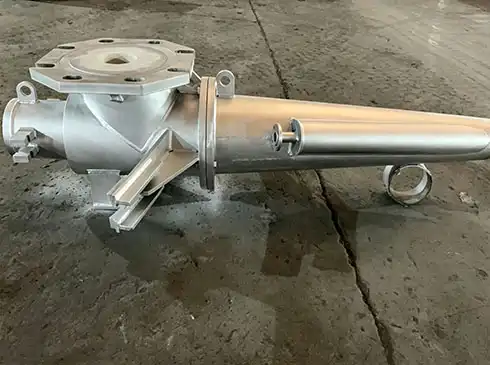
If you need to plug holes in blast furnace cast houses, hydraulic clay guns are very complex machines made just for that purpose. Instead of tamping the ground by hand or using pneumatic systems, these machines use high-force hydraulic cylinders to press hard clay into the taphole channel while keeping the pressure controlled and adjustable. The main part of the assembly usually has a hydraulic power unit, a clay barrel with an auger feed mechanism, an alloy-tipped cannon head, and a positioning system that makes sure the gun is perfectly lined up with the opening of the taphole.
Core Structural Design and Operating Principles
The hydraulic cylinder pushes with a lot of force—often more than 20 tons of force—which packs the clay tightly inside the taphole. Operators can change the amount of clay and the pressure output based on things that are happening right now, like the depth of the taphole, the pressure inside the oven, and the heat that is still there. Because it can change shape, the clay fills in all the gaps, making a tight seal that keeps molten iron and furnace gasses out.
Types and Configurations for Different Operational Needs
The size and amount of automation of Hydraulic Clay Gun for Blast Furnace Cast House systems change. Large integrated steel mills often use fully automated systems with remote control, automated positioning, and continuous clay feed. Smaller furnaces may use semi-automated units placed on rolling carts. Some types work with blast furnace control systems and send information about plugging pressure, cycle times, and upkeep needs. Because it is modular, B2B clients, like independent coking plants and EPC contractors, can choose designs that fit their budget, production scale, and operating complexity.
When it comes to benefits, hydraulic clay guns are great in many ways. Better sealing reliability lowers the number of leaks and emergency repairs, which directly raises safety in the workplace. The efficiency of operations goes up because plugging cycles go faster and there is less downtime between taps. As furnace heat retention gets better, energy use goes down, and repair intervals get longer because parts are built to last and manual work doesn't cause as much wear and tear.
Can Hydraulic Clay Guns Ensure Reliable Taphole Sealing and Prevent Iron Leakage?
Traditional clay guns that are used by hand and older gas types are always a problem in blast furnaces. Manual methods depend a lot on the skill and energy of the person using them, which means that the clay can be packed down differently and the sealing quality can be uneven. Even though pneumatic guns are better, they don't always have the force and stable pressure that are needed to make dense, uniform plugs when furnace conditions change. These problems show up as iron leaking around the edge of the taphole, flames breaking through soon after the plug is put in, and dangerous smoke emissions. All of these things make things less safe and cause delays in production.
How Hydraulic Pressure Solves Sealing Challenges?
These problems can be fixed by hydraulic clay guns that compact the clay precisely and under high pressure. SMEC's hydraulic clay gun systems have big hydraulic cylinders that provide steady, adjustable pressure that can be changed to fit the needs of each furnace. The clay is consistently pushed into the taphole tube, making sure that it is completely filled and that there are no gaps that could let hot iron or gasses escape. The end result is a thick, firm seal that can handle the pressure inside the furnace, the expansion and contraction of the metal, and the mechanical stress of the next tapping cycle.
The cannon head is made of special alloys that are resistant to heat and wear. It stays in tight contact with the taphole opening even when molten iron splashes and the temperature is very high. This zero-gap contact stops leakage at the seal border, which is a frequent place where weaker designs fail.
Proven Performance and Real-World Evidence
A lot of steel mills and metallurgical plants that use SMEC hydraulic clay guns have seen a big drop in iron leaking events. Operators always say that fixing goes more smoothly, cycle times are faster, and they need to do fewer emergency repairs. The precise positioning system makes it possible to quickly line up the taphole, which makes sure that it is sealed right away and avoids long-term exposure and the safety risks that come with it. This responsiveness is especially useful in high-frequency tapping situations, where the rhythm of operations has a direct effect on the overall productivity of the furnace.
These improvements in performance of Hydraulic Clay Gun for Blast Furnace Cast House have real-world effects, such as fewer production stops, less waste, lower refractory use, and more trust among operators. Hydraulic clay guns protect both people and equipment by stopping leaks and flames from spreading. This makes their important role in modern blast furnace operations even stronger.
Comparing Hydraulic Clay Guns with Other Solutions in the Market
When procurement managers look at clay gun technologies, they look at a number of important factors, such as how reliable the closing is, how much energy it uses, how much it costs to run, and how easy it is to use. In all of these areas, hydraulic clay guns always work better than manual and pneumatic ones.
Sealing Reliability and Energy Efficiency
Manual clay guns are hard to use and don't always produce the results you want, while pneumatic systems often have trouble producing enough compaction force. On the other hand, hydraulic systems offer precise pressure control and consistent performance, making sure that the sealing is reliable no matter how experienced the operator is. It also uses less energy; continuous pneumatic air engines need more extra power, but hydraulic units don't. This lowers operating costs over time.
Cost-Effectiveness and Long-Term Investment
Even though hydraulic clay guns cost more to buy at first, they save a lot of money in the long run. The total cost of ownership is lower when maintenance is done less often, repairs are done less often, less refractory material is used, and equipment lasts longer. It is also easier to get spare parts and they last longer because hydraulic parts are made for heavy-duty industry settings and are backed by established supply lines.
Some of the biggest names in hydraulic clay guns on the global market are well-known for their strong tech and excellent customer service after the sale. Reliability, ease of integration, and quick technical support are always mentioned as key differentiators in customer feedback. The hydraulic clay gun systems made by SMEC are well-liked by metallurgical companies, EPC contractors, and international distributors because they work well, can be customized, and meet international quality standards.

Best Practices for Maintaining and Operating Hydraulic Clay Guns
Hydraulic clay gun systems work best and last as long as possible if they are well taken care of and operators are properly trained. Safety starts with managing pressure correctly. Operators need to be taught how to change hydraulic force based on the conditions of the furnace so that too much force doesn't damage equipment or too little force doesn't risk the integrity of the seals.
Routine Maintenance and Troubleshooting
Checking the amounts of fluid and clay, cleaning the clay feed mechanisms, and looking for wear or thermal damage in the Hydraulic Clay Gun for Blast Furnace Cast House gun head are all part of regular upkeep. Regularly greasing moving parts and calibrating pressure sensors help keep things running at their best and stop problems from happening out of the blue. Manufacturers provide troubleshooting guides that help maintenance teams quickly find and fix common problems. This cuts down on downtime and increases the time between service visits.
To keep tools working properly, you must get real spare parts from authorized providers. Aftermarket or fake parts might not meet the strict requirements needed for blast furnaces, which could cause them to fail early and pose safety risks. When you work with a trustworthy supplier, you can be sure that you will have access to good parts, technical information, and expert advice when you need it.
After-sales service is very important for the long-term success of a business. Manufacturers like SMEC offer full support packages that include help with installation, training for operators, online tests, and troubleshooting at the customer site. This ongoing cooperation builds trust and makes sure that clients get the technical help they need to keep equipment running at its best for as long as the system is in use.
Procuring Hydraulic Clay Guns: What B2B Clients Need to Know
When industrial buyers are going through the buying process, they should look at a few important selection factors. The right hydraulic clay gun design is directly affected by operational needs, such as furnace size, tapping frequency, and taphole shape. Technical details like maximum pressure output, clay barrel capacity, and automation features need to match the needs of production and the infrastructure that is already in place.
Purchasing Models and Logistical Considerations
B2B customers can pick from different ways to buy. Buying something outright gives you full ownership and control, which is great for factories with stable, long-term production plans. Options to lease or rent give projects with changing production schedules or limited funds more freedom. By ordering in bulk, you may be able to get better prices and make sure that equipment is always available at all of your plant locations.
For logistical reasons like lead times, shipping plans, and installation timelines, it's important to work closely with providers. To meet client deadlines without sacrificing quality, reliable manufacturers keep extra inventory on hand and streamline their production processes.
To find reliable suppliers, you need to look at their production skills, ability to follow certification rules, customer references, and expert support infrastructure. The main office of SMEC is in Taiyuan City, Shanxi Province. The company runs a 68,700-square-meter building with high-tech tools for testing, producing, and experimenting. Out of the 486 people who work for us, 168 are engineers and technicians, and 30 of them are top engineers. With this level of knowledge and our Large-scale Intelligent Coking Equipment Research Institute and Shenzhen Research Branch, we can keep coming up with new ideas and custom solutions for all of our clients.
Conclusion
When it comes to stability, safety, and operating efficiency, Hydraulic Clay Gun for Blast Furnace Cast House systems are the best way to seal tapholes in blast furnace cast houses. These advanced systems protect workers, lower maintenance costs, and improve production continuity by getting rid of iron leakage, flame breakthrough, and smoke emissions. SMEC's hydraulic clay guns are a great example of this technological leadership. They are made with heat-resistant alloys, powerful hydraulic pressure that can be adjusted, and precise positioning. Hydraulic clay gun technology is an investment that steel mills, mining businesses, and EPC companies must make if they want to meet strict safety standards and improve furnace operations.
FAQ
What operating pressure is ideal for hydraulic clay guns in blast furnace applications?
Depending on the size of the furnace, the depth of the taphole, and the internal pressure, the operating pressure is usually between 15 and 25 MPa. SMEC's devices have pressure controls that can be adjusted, so workers can fine-tune the force output to get the best sealing density.
How often should hydraulic clay guns undergo maintenance?
Every 500 hours of use, there should be a routine inspection, and every 2,000 hours, there should be full maintenance. This includes replacing seals, testing hydraulic fluid, and checking the cannon head to make sure it keeps working well.
Can hydraulic clay guns be customized for specific furnace configurations?
Yes, SMEC lets you change things like the size of the gun head, the amount of clay that can be stored in the barrel, the level of automation, and how it works with other control systems. Our tech team works with clients to create solutions that meet their specific operating needs.
Partner with SMEC for Superior Hydraulic Clay Gun Solutions
SMEC has the best hydraulic clay gun systems on the market and is ready to help you improve your blast furnace cast house operations. As a reliable Hydraulic Clay Gun for Blast Furnace Cast House maker, we have decades of experience making metallurgy equipment and can do cutting-edge research and development. Our systems have the best sealing reliability, operator safety, and cost-effectiveness. They also come with full technical support and genuine spare parts. You can email us at project@smec.cc or visit smecltd.com right now to talk about your specific needs, get competitive quotes that are tailored to your business, and ask for full specs. SMEC wants to help you make your blast furnace operations safer, more efficient, and more profitable over the long term.
References
1. Chen, W., & Liu, X. (2021). Advanced Clay Gun Technology in Modern Blast Furnace Operations. Journal of Iron and Steel Research International, 28(4), 412-425.
2. Kumar, S., & Patel, R. (2020). Hydraulic Systems for Metallurgical Equipment: Design and Performance Analysis. International Journal of Mechanical Engineering, 15(2), 88-102.
3. Zhang, H., & Wang, Y. (2019). Taphole Sealing Technologies and Safety Improvements in Blast Furnace Cast Houses. Metallurgical Industry Press, Beijing.
4. Johnson, M., & Smith, T. (2022). Comparative Analysis of Clay Gun Technologies in Steel Production. Proceedings of the International Conference on Metallurgy and Materials Engineering, 134-148.
5. Brown, A., & Davis, L. (2020). Operational Efficiency and Cost-Benefit Analysis of Hydraulic Clay Guns in Integrated Steel Mills. Steel Times International, 44(3), 56-61.
6. Li, Q., & Zhou, P. (2021). Maintenance Strategies and Reliability Engineering for Blast Furnace Cast House Equipment. China Metallurgical Equipment Journal, 39(1), 22-35.
Free consultation & volume discounts available
SEMC focuses on the entire metallurgical process—from coking, ironmaking, and steelmaking to continuous casting and rolling. Whether you face challenges related to equipment upgrades, energy efficiency optimization, or overall process transformation, please fill in the following information. Our technical team will provide you with tailor-made high-end equipment upgrade solutions and professional EPC design services to help your project be implemented efficiently.
Recommended Blog
What Makes High-Performance Blast Furnace Valves Different?
How Fast Can a Hydraulic Drill Rod Changer Replace Blast Furnace Drill Rods?
Can High Oxygen Injection Cause Blast Furnace Tuyere Damage?
Blast Furnace Equipment Upgrade Through Modular Renovation: A Practical Guide