What Is the Function of a Water-Cooled Valve for a Blast Furnace?
Understanding the Role of Water-Cooled Valves in Blast Furnaces
- Understanding the Role of Water-Cooled Valves in Blast Furnaces
- Common Challenges and Maintenance Tips for Water-Cooled Valves
- Comparing Water-Cooled Valves with Alternative Valve Technologies
- Procurement Insights: Selecting and Purchasing Water-Cooled Valves
- Installation and Operational Best Practices for Water-Cooled Valves
- Conclusion
- FAQ
- Partner with SMEC for Water-Cooled Valve Solutions That Perform
- References
A water-cooled valve for blast furnace operations is the core flow-control device within the furnace cooling circuit. It regulates cooling water pressure and flow across individual branches, enables rapid shut-off during maintenance, and protects the furnace shell from localized overheating. By circulating water through an internal jacket or pipe network, the valve body stays below critical thermal stress thresholds—even when process temperatures exceed 1,000 °C. Without this precise control, uneven cooling leads to stave damage, refractory erosion, and unplanned shutdowns that cost steel mills millions of dollars per incident.
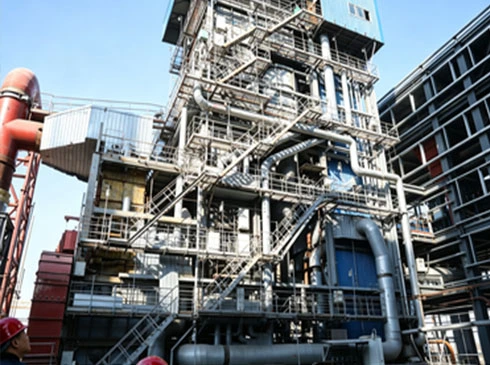
Understanding the Role of Water-Cooled Valves in Blast Furnaces
For making iron in a blast furnace, precise temperature control is needed in dozens of cooling zones at the same time. In just a few hours, a single problem with the controls can cause the furnace wall to burn through. This is why water-cooled valves are essential safety devices and not just extras.
How Internal Cooling Protects the Valve Body
Around the disk, seat, and body of each valve is a forced-water circuit that is either jacketed or based on pipes. This keeps the temperature of the metal's surface well below the point where it starts to wear out, which stops the thermal warping that breaks down regular industrial valves. It is common for the design pressure to be between 0.25 and 1.6 MPa, and the standard widths to fit the size of the furnace to be between 200 mm and 2,200 mm.
Flow and Pressure Regulation Across Cooling Branches
The hearth, belly, and shaft of the furnace all carry different amounts of heat. The valve lets operators fine-tune the amount of water in each branch separately, putting more flow where the thermal load is highest and less waste where it is lowest. This branch-level control keeps the temperature of the staves within safe ranges 24 hours a day, 7 days a week.
Emergency Shut-Off Capability
The valve stops water flow right away when a stave is being replaced or a leak is being fixed. If the water doesn't get separated quickly, it comes into contact with the molten iron, which causes steam explosions. Cobalt-based alloys, like Stellite 6, are often used on sealing faces because they stay hard at high temperatures and don't wear down easily when gas-borne particles hit them. This means that the shut-off function stays reliable even after years of cycling.
Common Challenges and Maintenance Tips for Water-Cooled Valves
Even parts that were well thought out can wear down in a water-cooled valve for blast furnace. Finding problems early on is much cheaper than having to fix them quickly. Feel free to use the following list of common problems and how to solve them:
- Scaling and channel blockage: Untreated or hard water deposits calcium carbonate inside cooling channels, creating hotspots. Using demineralized water and scheduling internal flushing every 12–18 months keeps flow rates stable and prevents thermal cracking.
- Seat leakage from thermal cycling: Repeated heat-up and cool-down cycles cause micro-gaps between disc and seat. Non-destructive testing—including dye penetrant inspection on sealing surfaces and ultrasonic testing on body welds—catches micro-cracks before they propagate into full leaks.
- Cooling water contamination: Gas-side contamination enters the water circuit through pinhole cracks. A dedicated hydrostatic test of the water jacket at 0.6–1.0 MPa, performed during scheduled furnace downtime, confirms jacket integrity before the furnace restarts.
Most of the time, these three types of failure cause valves to need to be replaced without planning to. If you catch them early through regular tracking, the service life is extended well past the normal check cycle.
Comparing Water-Cooled Valves with Alternative Valve Technologies
Not every type of valve works well in a blast furnace. Before recommending a plan, procurement engineers often look at three options:
Air-Cooled Valves
When the wall temperature stays below 400 °C, air cooling works well in smaller furnaces or gas lines with lower temperatures. When that level is reached, air can't get rid of the heat fast enough, and valve bodies start to warp. For big blast furnaces with hearth temperatures above 1,400 °C, air-cooled designs are too dangerous.
Diaphragm Valves
It is possible to close a diaphragm valve tightly, and it can handle toxic media in by-product gas lines. But their elastomer diaphragms break down quickly above 200 °C, so they can only be used in cooler parts of the gas circuit and not in high-heat areas where water-cooled designs work.
Electric Control Valves
Electric controls are useful because they allow automation and setting from a distance. But the body of the valve still needs to be protected from heat. Modern blast furnaces often use water-cooled valve bodies and electric actuators together. This gives accurate position control and long-lasting thermal performance. SMEC offers this combination as a matched assembly.
Procurement Insights: Selecting and Purchasing Water-Cooled Valves
It takes more than just comparing prices to find the right water-cooled valve for blast furnace valve supplier. Before making an order, B2B buyers should look at four things:
Certifications and standards for quality: Make sure the company has ISO 9001 and that their goods meet GB/T 12224 or a similar international standard. Ask for hydraulic shell and seat test results that meet EN 12266-1 standards and show that there is no leakage at 1.5× design pressure.
- Certifications and quality standards: Confirm the manufacturer holds ISO 9001 and that products comply with GB/T 12224 or equivalent international codes. Ask for hydraulic shell and seat test reports per EN 12266-1, showing zero leakage at 1.5× design pressure.
- Material traceability: Valve bodies manufactured from Cr-Mo heat-resistant alloy steel should ship with mill certificates. Sealing surfaces must document the specific hardfacing alloy and hardness values.
- Customization capability: Blast furnaces vary in size and gas composition. A competent water-cooled valve manufacturer adapts DN dimensions, flange standards (ANSI, DIN, GB), and actuator interfaces to your exact piping layout without extended lead times.
- After-sales infrastructure: Spare seal kits, replacement discs, and field service support must be available for the valve's full operational life—often 15 to 20 years. Confirm that the supplier maintains documented spare parts inventory and can respond to technical queries across time zones.
Before a purchase order is signed, most supply chain risks are gone if these factors are looked at early on in the sourcing process.
Installation and Operational Best Practices for Water-Cooled Valves
How long the valve lasts before it needs major service depends on how well it was installed. Skipping pre-installation checks is the main reason why things fail quickly.
Pre-Installation Verification
Before you place it, make sure that the pipe flanges are clean and square, that the connections for the cooling water inlet and exit match the valve's port orientation, and that the actuator torque values match the valve's design torque. A test that sends a ball through the cooling path makes sure that there is enough space inside and rules out any production debris that could cause a hotspot to form.
Integrating the Cooling Circuit
Connect the cooling water supply to the lower inlet port. This will make the water rise against gravity, which will naturally get rid of air pockets. Keep the inlet pressure within the given range and put flow indicators on the exit lines so workers can see right away if there is a blockage without having to open the valve.
Real-Time Monitoring and Routine Audits
Put temperature sensors on the body of the valve and the water lines that come out of it. The first sign that internal scaling is lowering flow is a rising outlet temperature compared to the inlet temperature. By comparing flow rates to baseline values every three months, audits find degradation trends months before they reach failure thresholds. This keeps furnace productivity and safety records safe.
Conclusion
The furnace shell is protected, operating costs are reduced, and production is safe when a water-cooled valve for blast furnace systems is properly specified and maintained. The valve controls the flow across the cooling branches, shuts off the system in an emergency, and can handle temperatures that would destroy most other valves. It's important to choose a maker that meets international standards, uses approved materials, and backs up their products for the whole life of the furnace. This will determine whether the furnace meets its campaign goals or has costly unplanned outages.
FAQ
1. How often should a water-cooled blast furnace valve be inspected?
In continuous 24/7 operations, a full internal inspection is recommended every 12 to 18 months. Seal integrity checks should occur during any scheduled furnace downtime.
2. Can these valves be retrofitted to an existing furnace?
Yes, provided the replacement valve matches the existing flange standard, face-to-face dimension, and cooling pipe connection size. A manufacturer with customization capability can produce a direct replacement without major piping modification.
3. What happens if cooling water flow is interrupted?
Loss of cooling flow in a high-temperature blast furnace environment causes rapid body deformation and seat failure within minutes. An interlock system that triggers an alarm and actuates the valve to a safe position is strongly recommended.
4. What materials perform best under blast furnace conditions?
Cr-Mo alloy steel bodies combined with Stellite 6 hardfacing on sealing surfaces are the accepted standard. Stellite maintains hardness at elevated temperatures and resists erosion from dust-laden gas streams.
5. How does water quality affect valve service life?
Hard or untreated water causes scaling that restricts flow and generates hotspots. Demineralized, treated cooling water dramatically extends internal channel life and reduces thermal cracking risk.
Partner with SMEC for Water-Cooled Valve Solutions That Perform
With help from Taiyuan Silian Heavy Industry (Group) Co., Ltd., SMEC makes water-cooled valves for blast furnaces that meet international standards and have full test records and material tracking. We provide customizable specs, long-term spare part support, and quick technical service for water-cooled valve for blast furnaces, with 168 in-house engineers and committed R&D resources. To get technical advice or a price on a product, email our team at project@smec.cc.
References
1. Iron and Steel Technology (AIST Transactions), 2022
2. Journal of Iron and Steel Research International, 2021
3. Metallurgical and Materials Transactions B, 2020
4. Industrial Valves and Actuators: Engineering Principles and Applications — Instrument Society of America, 2019
5. Steel Times International, 2023
6. Chinese Standard GB/T 12224: Steel Valves — General Requirements, National Standards Committee of China, 2015
Free consultation & volume discounts available
SEMC focuses on the entire metallurgical process—from coking, ironmaking, and steelmaking to continuous casting and rolling. Whether you face challenges related to equipment upgrades, energy efficiency optimization, or overall process transformation, please fill in the following information. Our technical team will provide you with tailor-made high-end equipment upgrade solutions and professional EPC design services to help your project be implemented efficiently.