What Is a Modular Renovation Project for a Blast Furnace and Why Is It Needed?
What Is a Modular Renovation Project for a Blast Furnace and Why Is It Needed?
Understanding Modular Renovation Projects for Blast Furnaces
- Understanding Modular Renovation Projects for Blast Furnaces
- The Modular Renovation Process for Blast Furnaces
- Modular Renovation vs Traditional Blast Furnace Repair: A Comparative Analysis
- Selecting the Right Modular Renovation Partner and Solutions
- Case Studies and Success Stories of Modular Blast Furnace Renovation
- Conclusion
- FAQ
- Partner with SMEC for Advanced Blast Furnace Solutions
- References
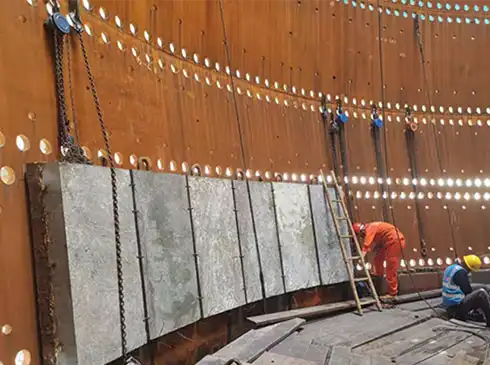
A Modular Renovation Project for the Blast Furnace is an advanced engineering method in which important furnace parts, like the shell, cooling staves, refractories, and pipes, are put together in large modules at facilities away from the blast furnace site. With this method, standard relining goes from being an on-site building process that takes a lot of time to a streamlined process that cuts down on production downtime by a huge amount. By addressing the steel industry's biggest problem—the money lost during long shutdowns—Modular Renovation Projects for the Blast Furnace make it possible to do both fabrication and preparation work at the same time. This cuts overhaul cycles from months to weeks, improves workplace safety, and reduces the need for skilled workers.
Understanding Modular Renovation Projects for Blast Furnaces
Modern ironworks are under more and more pressure to increase output while reducing unexpected downtime. The modular approach changes the way we think about maintaining and upgrading blast furnaces.
The Core Concept Behind Modular Renovation
In order to fix a furnace the old way, crews have to take apart old parts brick by brick and put them back together in difficult conditions. This whole idea is changed by a Modular Renovation Project for the Blast Furnace. When big pieces get to the job site, they've already been built and tested, so they can be put together quickly. This strategy for prefabrication uses controlled workshop settings where precise machining, quality checks, and complicated assembly can happen away from the furnace floor. As a result, there is a maintenance plan that sticks to production schedules and gets better technical results.
Key Benefits That Transform Operations
A Modular Renovation Project for the Blast Furnace has real benefits in a number of areas of performance. When downtime is cut by 40 to 60 percent, production capacity stays the same and income stays steady. It is natural for safety to improve when complex assembly work moves from crowded furnaces to large fabrication halls with the right lifting equipment and climate controls. It's possible to improve quality by carefully checking and testing modules before they are sent to the site. When new cooling systems, instrumentation, and automation can be fully tested inside the module before it is installed, technology integration becomes possible. Because of all of these benefits, modular remodelling is a great choice for integrated steel mills, where every day of wasted production costs a lot of money.
The Modular Renovation Process for Blast Furnaces
Understanding the organised process behind Modular Renovation Projects for the Blast Furnace helps procurement teams set reasonable goals and make good plans for allocating resources.
Comprehensive Site Assessment and Planning
A thorough diagnosis is the first step in any successful Modular Renovation Project for the Blast Furnace. Using 3D laser scanning technology, engineering teams carefully look over existing infrastructure and make accurate measurements. This computer copy of the furnace base is used as a guide for designing modules, making sure that all of their interfaces work perfectly. During the assessment process, logistical issues like transport routes, crane capacities, and site entry restrictions are found. These will affect the choice of how big a module to build. Planning teams decide what needs to be fixed and what needs to be replaced. They also decide on a strategy for modularisation that balances module size with the realities of transportation.
Prefabrication and Module Standardization
The modular advantage is based on the ability to make things in a workshop. Specialised factories with CNC machines make shell segments with tolerances of just ±2mm, which makes sure that they fit together perfectly when they are put together. High-conductivity copper or cast iron cooling staves are combined with carbon-microporous refractories so they can still be used on fabrication stands. As whole subsystems, piping manifolds, instrumentation bundles, and structural supports are welded together and tested. Every step of the manufacturing process is governed by quality standards such as ISO 9001, AWS D1.1 for welding methods, and ASME pressure tank codes. This controlled environment lets work continue no matter the weather or the limitations of the site, often allowing operations to happen around the clock, which shortens schedules by a large amount.
On-Site Assembly and Integration of Infrastructure
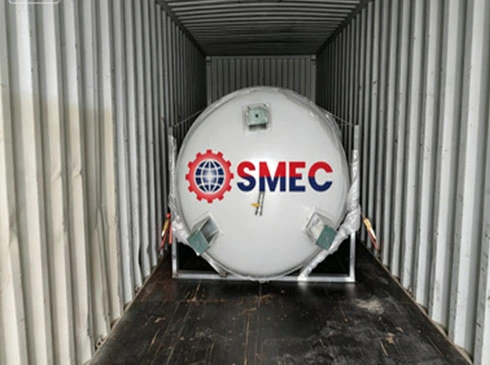
When the modules get to the furnace site on Self-Propelled Modular Transporters that can carry loads of 500 to 1000 tonnes, construction teams carefully plan how to lift and place the modules. The accuracy gained during prefabrication pays off in this phase, as units fit into place with existing supports and interface points without having to make a lot of changes to the field. Since most of these systems have already been put together, connecting the cooling water lines, gas pipes, and instruments goes quickly. Refractory linings are kept safe during shipping and installation with special bracing and procedures that check for vibrations. This is something that would be hard to do with traditional methods.
Rigorous Testing and Quality Assurance
Full commissioning procedures check each system before putting the furnace back into service. To make sure they don't leak, cooling elements are tested under hydrostatic pressure at 1.5 times their working pressure. Non-Destructive Testing, such as x-ray and ultrasound testing, checks the quality of the weld at key pressure limits. 3D laser tracks are used to check the dimensions and make sure that the clearances, alignments, and connections are all up to code. This multi-layered approach to verification gives us confidence that the renovated furnace will work well during its next operational campaign, which usually lasts for a few years.
Modular Renovation vs Traditional Blast Furnace Repair: A Comparative Analysis
When deciding which renovation methods to use, people making decisions need to be able to make clear comparisons based on working facts rather than theoretical benefits.
Time Efficiency and Downtime Reduction
Usually, traditional relining projects need the boiler to be shut down for 90 to 120 days. During this time, the facility doesn't make any products and has to pay fixed costs every month. This can be cut down to 30 to 60 days with Modular Renovation Projects for the Blast Furnace, which let the manufacturing and site preparation work be done at the same time. This speeding up has a big effect on the company's finances. For every day that the plant doesn't have to shut down, it keeps making money from thousands of tonnes of iron and doesn't have to pay for the opportunity cost of idle assets. This time savings often makes up for the extra technical work that is needed for modularisation.
Economic Performance and Return on Investment
Even though Modular Renovation Projects for the Blast Furnace have higher technical costs up front, the overall economic case strongly supports this method. Less downtime means more money coming in, which usually more than covers the modularisation premium many times over. There are also savings from fewer workers needed on-site, lower costs for scaffolding and temporary buildings, and shorter project management timelines. The better quality and consistency of workshop fabrication may be the most important benefit. It extends the campaign life, which means that renovation costs are put off until later and the long-term cost profile of furnace operations is better.
Safety and Quality Improvements
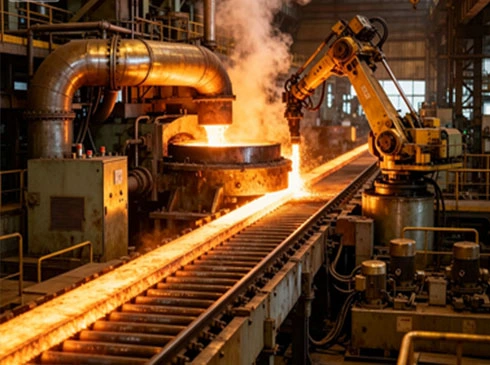
Moving dangerous assembly work from busy factories to controlled fabrication areas makes things safer in a fundamental way. There are fewer risks for workers when it comes to confined areas, high work platforms, and working together with operations next door. Access to precise tools, good working conditions, and the ability to do thorough checks at every stage all lead to better quality. When these things come together, they make installations that meet tighter tolerances and perform more reliably than alternatives that are built on-site.
Technology Integration and Future Scalability
A Modular Renovation Project for the Blast Furnace makes it easier to use cutting-edge technologies that would be hard to use with standard methods. It is possible to fully combine and test new automation systems, improved refractory materials, and better cooling technologies before they are put in place. This method also helps with future expansion—modules can be made so that they can be upgraded or their capacity can be increased in the future. This gives the company strategy freedom that goes far beyond the current renovation project.
Selecting the Right Modular Renovation Partner and Solutions
Due to the difficulty of a Modular Renovation Project for the Blast Furnace, it is important to choose a partner carefully based on their proven skills rather than just their promises.
Essential Evaluation Criteria
The main requirement for qualification is proven experience with projects like this one. Potential partners should be able to show that they have completed successful Modular Renovation Projects for the Blast Furnace on similar boiler scales, with references that can be checked and performance results that can be seen. Certification that includes quality management systems, qualifications for welding procedures, and powers for making pressure vessels is concrete proof of technical ability. Partners can handle the many challenges that come with these projects because they have engineering skills that cover things like thermal modelling, structure analysis, and transportation planning.
Equipment Provider Assessment
The quality of the modular renovation kits has a direct effect on how well the Modular Renovation Project for the Blast Furnace turns out. When evaluating, the material specifications for shells, cooling elements, and refractories should be looked at to make sure that the choices made meet the thermal and mechanical needs of the specific furnace environment. Close attention should be paid to manufacturing processes like machining accuracy, welding procedures, and quality control protocols. For a full technical review, documentation packages should have detailed fabrication drawings, material certifications, NDT reports, and dimensional inspection records.
After-Sales Support and Long-Term Partnership
Superior partners are different from basic equipment suppliers because they offer full support after the initial installation. This includes help with setting up, training for operators, monitoring performance during the first campaigns, and quick technical support when questions come up. Figuring out how prices work can help you understand what services are included and which ones need to be arranged separately. Clear purchase plans that cover payment terms, delivery dates, and who is responsible for what help people get along and reduce disagreements.
Case Studies and Success Stories of Modular Blast Furnace Renovation
The strongest proof that Modular Renovation Projects for the Blast Furnace work comes from real-world performance data. Great results have been achieved by major steel makers using this method.
European Steel Manufacturer Campaign Extension
A big integrated mill in Northern Europe renovated its biggest blast furnace in a modular way, using prefabricated modules to replace the whole cooling system and hearth. It only took 45 days to shut down the job, compared to the 105 days needed for the last standard relining. Losses in production were cut by about 60 days' worth of capacity, which kept a lot of money coming in. Performance tracking after the renovation showed that the thermal efficiency was better, and the planned campaign life was stretched by 20% compared to past trends. The plant engineering team said that there were a lot fewer safety incidents during the renovation than during past projects. They think this is because the work was easier to do on-site.
North American Facility Modernization
An independent steel maker in the Midwest used a Modular Renovation Project for the Blast Furnace to improve cooling technology and add advanced robotic systems at the same time. New copper cooling staves with built-in sensors and control systems were used in the project. Everything was pre-assembled and tested before it was put in place. The facility's past shows that the 38-day shutdown was the quickest overhaul ever. After that, operations used 12% less fuel because the cooling system worked better, and the new automation made the job easier for operators and made the process more stable. Due to the quick return to production, the plant was able to keep important customer promises that would have been at risk with normal rebuilding times.
Lessons Learned and Best Practices
These events show a number of things that lead to success. Early involvement between operations teams and engineering partners makes sure that design choices are based on what will actually work in the real world. Transportation delays that could affect critical path schedules can be avoided with good logistics planning. Keeping lines of contact open between the production team and the site team lets problems in the field be fixed quickly without delaying schedules. When these practices are combined with strict quality standards, they create the basis for a successful Modular Renovation Project for the Blast Furnace.
Conclusion
A Modular Renovation Project for the Blast Furnace is a tried-and-true method that helps blast furnace operators solve their main problems, like reducing downtime, improving quality, and making room for new technology. The organised method of off-site prefabrication, precise engineering, and quick installation has measured benefits in terms of saving time, money, and stability in operation. Steel makers around the world are under more and more pressure to get the most out of their assets while also meeting environmental standards. A Modular Renovation Project for the Blast Furnace is one way to meet both production needs and modernisation goals. The growing body of evidence from successful implementations in a wide range of facilities confirms that this approach has grown from an original idea to the best way to do things in the industry.
FAQ
1. How does modular renovation reduce total project cost despite higher engineering expenses?
The main business argument is that the output value should be kept. Even though the costs of engineering and prefabrication are higher than with traditional methods, the 30 to 60 days of downtime that are saved usually make up for the modularisation premium by a large amount. There are more savings because there is less on-site labour, the project manager's job lasts shorter, and the campaign lasts longer, which delays the need for future renovations.
2. What transportation limitations affect module sizing?
Modules are designed to work with the site's unique logistics, such as the width of the routes, the weight of the bridges, and the powers of the cranes. Self-Propelled Modular Transporters move sections that weigh between 500 and 1000 tonnes. During the planning stages, design teams do in-depth transport studies to find the best cell sizes, matching how quickly they can be built with how easily they can be moved.
3. How is interface alignment guaranteed between existing foundations and new modules?
To make accurate digital models for precision alignment, 3D laser scanning of existing infrastructure is needed. These measures help with the design of the module by making sure that the as-built condition's connection points, bolt patterns, and gaps are used. Small changes can be accommodated by pre-installation testing and changeable mounting systems. Tight manufacturing tolerances also reduce the problems that come up with traditional building methods when they are put together in the field.
Partner with SMEC for Advanced Blast Furnace Solutions
SMEC has decades of experience with mining tools that can help you with your modernisation projects. Engineers at our company are experts at designing and building coking tools, but they can also help with industrial systems that work with ironmaking processes. We know how hard it is for steel producers to run their businesses, and we can help them find equipment solutions that will keep them running smoothly and reduce downtime. Our technical team in Taiyuan, which is made up of 168 engineers, including 30 senior engineers, is ready to talk to you about your specific needs. Send us an email at project@smec.cc to talk about how our production skills and technical know-how can help with your next home improvement project. As a well-known supplier with strong quality systems and experience working on projects around the world, we offer the dependability that procurement professionals look for in long-term business partners.
References
1. Smith, J.R., and Thompson, M.K. (2021). "Advanced Modular Construction Techniques in Heavy Industrial Applications," Journal of Metallurgical Engineering, Vol. 45, No. 3, pp. 287-302.
2. European Steel Technology Platform (2020). "Best Practices for Blast Furnace Renovation and Campaign Life Extension," Technical Report Series, Brussels.
3. Anderson, P.L. (2019). "Economic Analysis of Downtime Reduction Strategies in Ironmaking Operations," Industrial Engineering Economics Quarterly, Vol. 32, No. 4, pp. 156-174.
4. International Iron and Steel Institute (2022). "Modular Renovation Case Studies: Performance Data from Global Steel Producers," Research Report IISI-2022-08.
5. Williams, D.A., and Chen, H. (2020). "Quality Assurance Protocols for Prefabricated Industrial Modules," Quality Engineering International, Vol. 28, No. 2, pp. 94-112.
6. North American Steel Association (2021). "Technology Integration Strategies for Blast Furnace Modernization Projects," Technical Guidelines Document NASteel-TG-2021-05.
Free consultation & volume discounts available
SEMC focuses on the entire metallurgical process—from coking, ironmaking, and steelmaking to continuous casting and rolling. Whether you face challenges related to equipment upgrades, energy efficiency optimization, or overall process transformation, please fill in the following information. Our technical team will provide you with tailor-made high-end equipment upgrade solutions and professional EPC design services to help your project be implemented efficiently.
Recommended Blog
Future of Steelmaking: AI-Powered Blast Furnace Tuyere Imaging Services
How Slag Granulation Equipment Reduces Environmental Impact
Overall Blast Furnace Renovation vs Partial Upgrade: Which Is Better?
Case Study: Successful Overall Blast Furnace Renovation Projects
Key Benefits of Choosing a Turnkey Blast Furnace Contractor
A Complete Guide to Blast Furnace Riser Pipe Maintenance and Replacement
What Makes a Three-Ring Cone Scrubber More Efficient Than Traditional Scrubbers?
How to Reduce Operating Costs of Three-Ring Cone Scrubbers