How Long Is the Service Life of Blast Furnace Self-Standing Furnace Shell Equipment?
How Long Is the Service Life of Blast Furnace Self-Standing Furnace Shell Equipment?
Understanding the Service Life of Blast Furnace Self-Standing Furnace Shell Equipment
- Understanding the Service Life of Blast Furnace Self-Standing Furnace Shell Equipment
- Key Components and Construction Materials Impacting Durability
- Common Issues and Maintenance Practices That Affect Service Life
- Comparing Blast Furnace Self-Standing Furnace Shells with Other Furnace Shell Types
- Procurement Considerations: Buying and After-Sales Support for Blast Furnace Self-Standing Furnace Shells
- Conclusion
- FAQ
- Partner with SMEC for Reliable Blast Furnace Self-Standing Furnace Shell Equipment
- References
When plant engineers and procurement managers evaluate major capital equipment, lifespan sits at the center of every calculation. A furnace shell that fails prematurely disrupts production, inflates maintenance budgets, and stalls entire ironmaking campaigns. So, how long does blast furnace self-standing furnace shell equipment actually last? Under standard operating conditions with proper maintenance, a well-engineered self-standing furnace shell is designed to match a full blast furnace campaign of 20 years or more — significantly outperforming conventional shell designs that typically plateau between 15 and 18 years. The precise figure depends on material grade, structural design, operational intensity, and maintenance discipline.
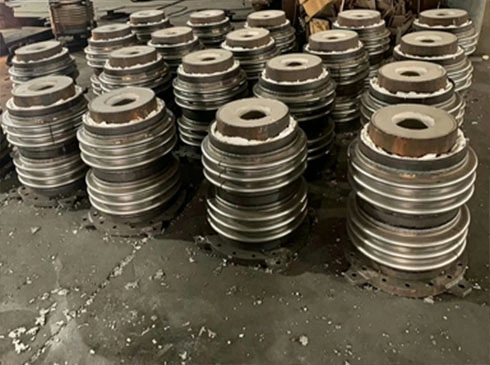
Understanding the Service Life of Blast Furnace Self-Standing Furnace Shell Equipment
In this case, "service life" refers to the amount of time that a furnace shell can be used continuously without needing to be completely replaced. During this time, it keeps its structural integrity, physical stability, and gas-tight containment. Most industry efforts aim for 15 to 25 years, and the best self-standing shell designs aim for longer than 20 years. Understanding the blast furnace self-standing furnace shell equipment's service life is essential for long-term planning.
What Drives Lifespan Variation?
How long a shell lasts depends on a number of factors that affect each other. At normal operating temperatures inside a blast furnace, the shell is often heated above 300°C on the outside. During high-top-pressure activities, the internal gas pressure often goes above 0.3 MPa. When you add in changing thermal loads, erosive gas streams, and corrosion caused by humidity, the structural demands get very high. If these stresses aren't taken into account when building equipment, it will break down quickly, warping, breaking, or having weld-seam porosity long before the campaign is over.
Instead of just looking at the buy price, procurement teams that understand these factors can make lifetime cost models that are more accurate. A shell rated for more than 20 years in campaign conditions is a very different investment than one rated for 15 years.
Key Components and Construction Materials Impacting Durability
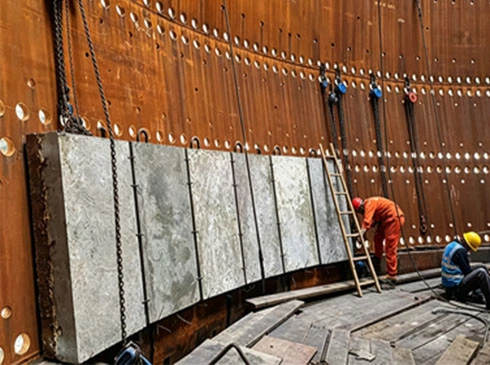
A self-standing furnace shell is built in a way that is very different from standard integrated or monolithic forms. Instead of relying on nearby buildings to spread the load, the self-standing setup does it itself through an engineered segmented frame. This stops stress transfer between sections, which is what usually leads to dependent-shell designs breaking too soon. This design philosophy is central to modern blast furnace self-standing furnace shell equipment.
Material Selection: The Foundation of Longevity
The shell sections are made by SMEC using high-yield-strength pressure vessel plates in grades like Q345R, P355GH, and ASTM A516 Grade 70. The wall thicknesses vary from 30 mm to over 100 mm depending on the furnace zone. Each plate goes through a process that stops rusting, a high-temperature oxidation resistance processing (which works up to 400°C on the steel surface), and an anti-fatigue strengthening. When these treatments are used together, they stop the shell from deforming, structural loosening, and material aging that happen with lower-quality options over long campaigns.
Here are the main structural benefits of the self-standing design that directly lead to a longer service life:
- Precision stress simulation during manufacturing: SMEC uses finite element stress analysis to find areas with a lot of stress and high temperatures that cause erosion. At those exact spots, they add more wall thickness and strengthen the structure. This proactive method makes the shell more resistant to damage from wear before it is even put to use.
- Independent load-bearing frame: Since the shell doesn't depend on outside structures for support, stress is spread evenly throughout the whole body. There are no localized overload points, which is a common place for failure to start in attached-shell designs. This keeps the structure strong throughout the campaign.
- Modular section architecture: The shell is made up of separate modules that can be swapped out. During a planned outage, if a certain area, like the bosh, belly, or stack, shows signs of wear, that area can be fixed without having to start a full structure repair.
These benefits directly lead to a measured drop in the costs of long-term structural upkeep and unexpected downtime. Long-term math will make sense to procurement teams that look at total cost of ownership instead of unit price.
Common Issues and Maintenance Practices That Affect Service Life
Even the most solidly constructed shell needs regular maintenance to last as long as it's supposed to. Thermal fatigue cracking, chemical corrosion near the tuyere and hearth zones, and cumulative dimensional drift from repeated thermal cycling are the three main ways that materials break down. Regular care is the only way to ensure the durability of blast furnace self-standing furnace shell equipment.
Recommended Maintenance Protocol
Every two to three years, during short planned outages, Non-Destructive Testing (NDT) should be done on the longitudinal and circumferential weld seams using Radiographic Testing and Ultrasonic Testing. Verification of dimensions using 3D laser scanning checks for straightness and roundness, making sure that the cooling stave holes stay within the acceptable range. Material traceability records connect each plate to its original heat number. This lets maintenance teams compare real service performance to original material approvals and find areas that are getting close to the limits.
Condition-monitoring systems built into modern shell designs keep an eye on changes in shell temperature and gas pressure all the time. This lets engineers know about problems early on, before they get worse and cause structural events. When plants use this method, they regularly report fewer unplanned shutdowns and longer average times between big fixes.
Comparing Blast Furnace Self-Standing Furnace Shells with Other Furnace Shell Types
Older monolithic designs and traditional refractory-dependent shells both have a weakness: they let heat and mechanical stress pass through connection points, making load lines that are very concentrated. These tracks cause stress cracks, flange deformities, and refractory delamination over time, which speeds up the aging process.
Precision-engineered expansion joints and moving supports in self-standing shells separate this stress transfer. This separation keeps each shell segment working within its intended stress range, no matter what happens to sections next to it. In real life, this means that the shell will age more evenly and have fewer unexpected failures.
Energy usage varies too. Self-standing shells' insulation design keeps heat from escaping at the shell's surface, which helps keep fuel costs low over a long campaign. The initial cost per ton of steel for blast furnace self-standing furnace shell equipment may be higher, but the lower regularity of relining, campaign delays, and energy losses usually make up for it over the course of the asset's lifetime.
Procurement Considerations: Buying and After-Sales Support for Blast Furnace Self-Standing Furnace Shells
It takes more than reading a technical manual to find a high-specification ironmaking shell. Buyers should make sure that the company follows quality standards like ASME Section VIII Division 1, EN 13445, or GB 713 and can show full paperwork for material tracking and heat treatment records after welding for each shell section. Purchasing blast furnace self-standing furnace shell equipment requires thorough vendor vetting.
Getting raw materials, plate making, welding, NDT, and modular pre-assembly can all take up to 10 months, which is how long it usually takes to deliver a full shell set. People who are planning campaign outages need to make sure that this timeline is included correctly in their project schedules.
Support systems after the sale are just as important. If a provider connection is valuable beyond the initial delivery, it depends on things like warranty coverage, on-site installation advice, expert help during commissioning, and the ability to access replacement units for future partial repairs. All of these parts are part of SMEC's service model, and dedicated engineering staff are available throughout the lifecycle of the equipment. Visit smecltd.com to find out more.
Conclusion
A blast furnace shell is not a simple thing to buy; it is an important part of a whole ironmaking campaign. SMEC's blast furnace self-standing furnace shell equipment is designed to last at least 20 years. This is made possible by high-quality material processing, stress-simulation-guided structural strengthening, and a modular construction that lets maintenance be done on specific parts without having to replace the whole system. This mix of precise structure and proven durability makes it a clear operating edge over other shell options for steel mills, coking operations, and EPC contractors looking at long-term ironmaking infrastructure.
FAQ
How does the self-standing design handle thermal expansion differently from a standard shell?
Each shell section is separated from the outside structural frames by precision-engineered expansion gaps and sliding support systems. This stops deformation caused by stress during thermal cycling and keeps each segment within the load range it was designed for during the whole campaign.
What kinds of NDT checks must be done during the service period?
It is suggested that all main weld seams be tested with ultrasound and x-rays every two to three years during planned small outages. Each checking cycle should include laser scans of the holes' dimensions and checks for shell roundness.
Can existing conventional shells be upgraded or partially replaced with self-standing sections?
Yes. Self-standing shell systems are built in a way that lets specific parts be replaced, like the bosh or stack sections, without having to take the whole structure apart. This means they can be used for projects to update them in the middle of a campaign.
What material grades are used in SMEC's shell fabrication?
SMEC uses high-yield-strength pressure vessel plates like Q345R, P355GH, and ASTM A516 Grade 70. These plates are treated to prevent corrosion, high temperatures, and stress in a way that is specific to each furnace zone.
How long does procurement and delivery typically take?
Depending on the size and scope of the furnace, it takes about 6 to 10 months from the time the order is confirmed until the final quality inspection of the complete shell set.
Partner with SMEC for Reliable Blast Furnace Self-Standing Furnace Shell Equipment
Heavy industrial engineering is something that SMEC has done for decades and brings to every shell job. As a reputable company that makes trusted blast furnace self-standing furnace shell equipment, we use stress-simulation-driven design, certified material procurement, and strict NDT quality control to make shells that will last for the whole campaign. Lifecycle upkeep costs are lower with our modular systems, and changes can be made in the middle of a campaign without stopping production. You can email our engineering team at project@smec.cc or go to smecltd.com to get technical advice and a quote that fits your needs.
References
1. Iron and Steel Technology — AIST, 2021
2. Journal of Iron and Steel Research International — Springer, 2020
3. Steel Construction — Ernst & Sohn / Wiley, 2019
4. Ironmaking & Steelmaking: Processes, Products and Applications — Maney Publishing, 2018
5. Metallurgical and Materials Transactions B — Springer, 2022
6. Industrial Heating Magazine — BNP Media, 2023
Free consultation & volume discounts available
SEMC focuses on the entire metallurgical process—from coking, ironmaking, and steelmaking to continuous casting and rolling. Whether you face challenges related to equipment upgrades, energy efficiency optimization, or overall process transformation, please fill in the following information. Our technical team will provide you with tailor-made high-end equipment upgrade solutions and professional EPC design services to help your project be implemented efficiently.