What Is the Function of Protective Fittings Around Blast Furnace Tuyere?
What Is the Function of Protective Fittings Around Blast Furnace Tuyere?
Understanding Protective Fittings Around Blast Furnace Tuyere
- Understanding Protective Fittings Around Blast Furnace Tuyere
- Key Materials and Design Considerations for Protective Fittings
- Common Issues and Maintenance Tips for Protective Fittings
- How to Choose and Procure Protective Fittings for Blast Furnace Tuyeres
- Trusted Suppliers for Protective Fittings Around Blast Furnace Tuyeres
- Conclusion
- FAQ
- Get Reliable Tuyere Protective Fittings from SMEC
- References
Protective fittings around blast furnace tuyere are a set of refractory linings, water-cooled jackets, sealing gaskets, and blowpipe assemblies installed at the tuyere zone of a blast furnace. Their primary function is to shield the tuyere and surrounding furnace shell from high-temperature hot blast (up to 1,250°C), molten slag splashing, abrasive dust, and chemical corrosion. By forming a durable thermal and mechanical barrier, these components prevent hot blast leakage, tuyere burn-through, and furnace wall erosion—directly protecting both equipment safety and structural integrity during continuous ironmaking operations.
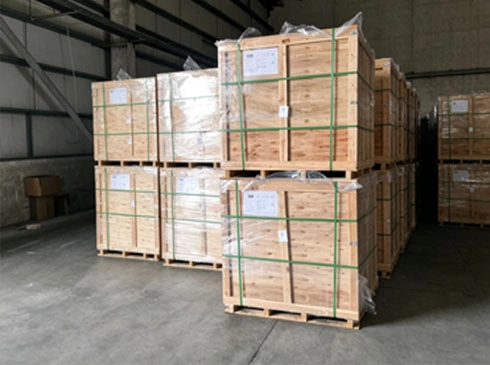
Understanding Protective Fittings Around Blast Furnace Tuyere
What Are Tuyere Protective Fittings?
The protected structure that goes between the blast furnace shell and the tuyere cooler is called the tuyere surround components. They protect the furnace's interior from the outside world, where temperatures often go over 1,200°C and pressures can reach 0.6 MPa. If this layer wasn't there, hot gases and iron-slag mixtures would be able to directly wear away the connection zone between the tuyere and the furnace body.
Why This Zone Is the Most Vulnerable
Most people agree that the tuyere belt is the weakest part of a blast furnace's structure. Industry research shows that over 40% of unexpected furnace outages in integrated steel mills are caused by tuyere failures. This area is constantly hit by hot blasts, molten slag can back-splash when smelting conditions aren't stable, and pulverized coal injection (PCI) brings in fast-moving abrasive particles that speed up wear.
Core Functions at a Glance
The protective parts of the tubere do three important jobs at the same time. For starters, they keep the blast temperature steady by preventing heat loss along the blowpipe. Second, they make a gas-tight seal at the tuyere stock joints that stops harmful CO from leaking out. Third, they protect expensive equipment further down the line, like hot blast mains, from mechanical shocks caused by slag-iron back-flow.
Key Materials and Design Considerations for Protective Fittings
Refractory Materials Used in Tuyere Surrounds
The most common materials used for tuyere liners are high-alumina castables and silicon carbide composites. The Refractoriness Under Load (RUL) of high-alumina castables is higher than 1,500°C, and the thermal conductivity control for silicon carbide grades is less than 1.2 W/m·K. Metallic contact parts that need precise tolerances to make a solid metal-to-metal gas seal are made of chromium-nickel heat-resistant alloys.
Critical Design Parameters
A number of measurable factors affect the sound design of tuyere protective components. The blast volume and working temperature of each protective fitting around the blast furnace tuyere must be used to figure out the thickness of the thermal insulation. Laser dimensional proof is needed for spherical joint shape to avoid misalignment that could lead to CO emissions. Thermal cycling simulations must be used to make sure that the expansion coefficients of the metal shell and protective fittings around the blast furnace tuyere refractory lining are compatible before the parts leave the factory.
Customization for Different Furnace Scales
Large blast furnaces (2,500 m³ to 5,000 m³ or more) put a lot more heat and pressure stress on the system than smaller ones. For these furnaces' protective fittings, you need custom wall thicknesses, special anchor systems, and better cooling circuit designs. It is important for procurement teams to make sure that providers offer engineering designs and custom sizes instead of off-the-shelf sizes, since a bad fit directly raises the risk of failure before its time.
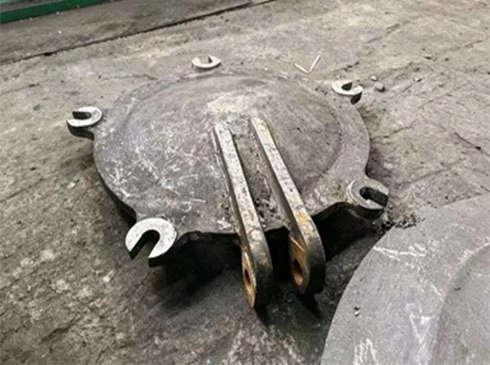
Common Issues and Maintenance Tips for Protective Fittings
Typical Failure Modes
Protective parts at the tuyere zone break down in a number of clear ways. Rapid changes in temperature can cause top layers to break apart and separate. This is called thermal spalling. Chemical breakdown from alkali and zinc fumes, which are common in blast furnaces, can weaken refractory links over time. Deformation of metal parts happens because of constant mechanical stress during PCI operations, which creates joint gaps and gas leakage paths.
Recommended Inspection Practices
Regular inspection greatly increases the service life of tuyere surround parts. Three tried-and-true ways that work well in real life:
- Infrared thermography applied to the tuyere stock shell can detect abnormal hot spots before visible damage appears, giving maintenance teams time to schedule controlled repairs rather than emergency shutdowns.
- Ultrasonic testing (UT) of weld seams on blowpipe assemblies identifies internal voids that standard visual checks would miss, particularly in high-wall-thickness sections.
- Cooling water temperature monitoring provides a real-time alert when the water-cooled jacket begins losing efficiency due to scaling or localized overheating.
When these three ways are put together in a planned review cycle that happens at the same time every 12 to 18 months, during small protective fittings around blast furnace tuyereoutages, the risk of unexpected downtime is greatly reduced.
Maintenance Best Practices
If everything goes according to plan, blowpipe linings should last between 12 and 24 months. This can last up to 36 months with high-quality refractory types. Managing the quality of the cooling water, which includes regular anti-scaling treatment, prevents deposits that make heat transfer less effective. Replacement plans should be organized with outage planning so that fixes in the middle of a campaign don't mess up the furnace's ability to let coke through and cause it to use more of it.
How to Choose and Procure Protective Fittings for Blast Furnace Tuyeres
Selection Criteria for Procurement Teams
To pick the right tuyere safety parts, you must first make sure that the material requirements match the real working conditions. The blast temperature, top pressure grade, PCI rate, and coal ash makeup are some of the most important things to consider when choosing a furnace. When high-sulfur or high-ash coal is injected, the grade of the material used for the inner lining must be changed so that it doesn't break down chemically.
OEM Certification and Supplier Qualification
Procurement teams should ask for specific material test results that include Cold Crushing Strength (CCS) and apparent porosity data that meet ISO standards.
Cost Efficiency and Lead Time Planning
Large steel mills that need to buy for more than one tuyere position—sometimes 20 to 40 tuyeres per furnace—can save money on each unit and get priority shipping slots by making a volume purchase deal with an approved maker. Custom refractory castable parts usually have lead times of 8 to 14 weeks. To keep production from stopping, it is important to coordinate planned outage plans with purchase timelines.
Trusted Suppliers for Protective Fittings Around Blast Furnace Tuyeres
What to Look for in a Long-Term Partner
A reliable company that makes protective fittings around blast furnace tuyeres offers more than just parts. It's just as important to have technical support during installation, detailed engineering drawings, and quick service after the sale. Suppliers who do their own research and development (R&D) can change designs to fit furnaces that aren't standard, which is a benefit that general list suppliers can't offer.
SMEC's Capabilities in Blast Furnace Protective Components
SMEC is based in Taiyuan, Shanxi Province, which is China's main energy and metals industrial base. It is part of the Taiyuan Silian Heavy Industry (Group) Co., Ltd. The company has a building that is 68,700 square meters in size, with 23,000 square meters set aside for industrial plants. It has 486 employees, and 30 of them are senior engineers. Of those, 168 are engineers and technical staff.
As part of the "Large-scale Intelligent Coking Equipment Research Institute," SMEC works with top universities to run a Product R&D center, a Quality Inspection Department, and a Process Technology Department. This structure gives SMEC the technical knowledge to make tube protectors that meet the strict requirements of blast furnace operation.
After-Sales Support and International Service
An integrated steel mill, an EPC contractor, and a foreign equipment dealer are all customers of SMEC. The company's International Trade Department helps with detailed paperwork, making sure that certifications are followed, and coordinating things after the sale. This level of organized support lowers seller risk and boosts trust in long-term equipment performance for business-to-business buying teams that buy things all over the world.
Conclusion
Protective fittings around the protective fittings around blast furnace tuyere zone are not extras; they are necessary for the furnace to run safely, efficiently, and continuously. Every part of these parts, from the choice of refractory lining to the accuracy of measurements and check plans, impacts the length of the campaign and the cost of running it. When procurement workers put in the time to qualify suppliers and check materials, they see a clear return in the form of less downtime and fewer replacements. If you buy the right tuyere protective assembly from a reputable company, it protects not only the tuyere but also the whole furnace campaign.
FAQ
1. How often should tuyere protective fittings be replaced?
Blowpipe linings typically last 12 to 24 months. With premium-grade refractory materials, service life can extend to 36 months. Replacement intervals depend on PCI rate, coal ash composition, and cooling water quality.
2. What causes the most failures in tuyere surround components?
Thermal fatigue and PCI abrasion are the primary drivers. Cooling water scaling compounds the problem by reducing jacket efficiency, accelerating thermal overload on adjacent refractory sections.
3. Can these components reduce energy consumption?
Yes. High-performance insulation in the blowpipe lining can reduce blast temperature drop by 15 to 30°C, which measurably lowers the coke rate and improves fuel efficiency across the campaign.
4. How do you detect early-stage failure?
Monitor cooling water outlet temperature for sudden rises, perform infrared thermography on the tuyere stock shell, and conduct UT inspection of blowpipe weld seams during scheduled outages.
5. Are tuyere protective fittings compatible with different coal types?
Yes, but material grade selection must account for coal ash chemistry. High-ash or high-sulfur coals require lining grades with stronger chemical resistance to prevent accelerated degradation.
Get Reliable Tuyere Protective Fittings from SMEC
The engineering team at SMEC plans and makes safety fittings for protective fittings around blast furnace tuyere assemblies that are made for tough ironmaking environments. Engineers and contractors who work with steel mills and EPC contractors trust SMEC's solutions because they are made with precision and come with full after-sales support. Get in touch with our team right away to talk about your technical needs and ask for a unique answer.project@smec.cc is the email address.
References
1. Geerdes, M., Chaigneau, R., & Kurunov, I. Modern Blast Furnace Ironmaking: An Introduction. IOS Press, 2015.
2. Biswas, A. K. Principles of Blast Furnace Ironmaking. SBA Publications, 1981.
3. Iron and Steel Technology (AIST Transactions). Association for Iron & Steel Technology, 2019.
4. Babich, A., Senk, D., & Gudenau, H. W. Ironmaking. RWTH Aachen University Press, 2016.
5. Refractories for Ironmaking and Steelmaking Applications. The Refractories Institute Technical Report, 2020.
6. Cores, A., Babich, A., Muñiz, M., Isidro, A., & Ferreira, S. "Influence of Different Parameters in the Blast Furnace Tuyere Zone on the Coke Degradation." ISIJ International, 2010.
Free consultation & volume discounts available
SEMC focuses on the entire metallurgical process—from coking, ironmaking, and steelmaking to continuous casting and rolling. Whether you face challenges related to equipment upgrades, energy efficiency optimization, or overall process transformation, please fill in the following information. Our technical team will provide you with tailor-made high-end equipment upgrade solutions and professional EPC design services to help your project be implemented efficiently.