What Are the Benefits of a Radial Blast Furnace Mixing Chamber?
Understanding the Radial Blast Furnace Mixing Chamber
- Understanding the Radial Blast Furnace Mixing Chamber
- Core Benefits of Radial Blast Furnace Mixing Chambers
- Making Informed Procurement Decisions: Why Choose Radial Mixing Chambers?
- Best Practices for Operation and Maintenance
- Future Outlook and Innovations
- Conclusion
- FAQ
- Upgrade Your Hot Blast System with SMEC's Radial Mixing Chamber Solutions
- References
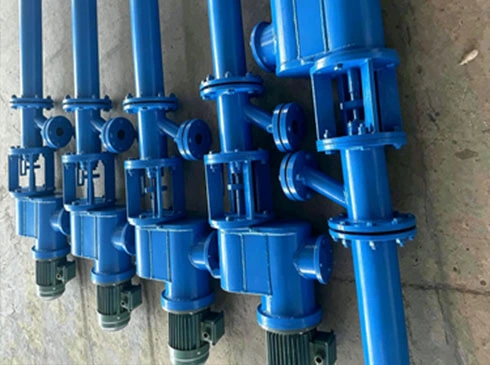
The blast furnace mixing chamber (radial type) is a high-precision thermotechnical component built into the hot blast stove system. It blends cold blast air with ultra-high-temperature hot blast—often exceeding 1,200°C—before the air reaches the tuyeres. By directing gas flow radially through multiple circumferential inlets, it achieves temperature deviations of less than ±5°C across the cross-section. This design reduces pressure loss, supports high-volume gas conditions, and fits compact plant layouts. For coking plants, steel mills, and EPC contractors, it directly improves furnace stability, energy efficiency, and long-term operational reliability.
Understanding the Radial Blast Furnace Mixing Chamber
What Makes the Radial Design Different
In contrast to axial or vertical tank-type mixing chambers, radial types have many inlets arranged around the outside of the chamber. As gas moves in and out in a circular direction, centrifugal turbulent flow is created. This gets rid of laminar stratification, which happens when differences in temperature cause the refractory lining to expand unevenly. The outside shell is usually made of high-strength pressure vessel steel like Q345R, which meets ASME or GB150 standards. This makes sure that the structure stays strong even when it's being used 24 hours a day, seven days a week.
How Gas Flow Is Managed
The radial shape makes flow resistance a lot lower. When gas moves through low-resistance radial pathways, the total pressure drop is less than with baffle-type or T-joint mixers. The mixing response time is sped up by multi-layer radial guide vanes. This design works well for big blast furnaces with lots of air and fast gas flows. This directly means that less energy is lost while the gas is being moved, and the furnace conditions are more stable.
Refractory and Thermal Properties
The refractory covering on the inside is usually made of high-purity mullite- or andalusite-based materials that can withstand temperatures hotter than 1,550°C. In the impact zone, high-alumina bricks that are very resistant to heat shock or silicon carbide-reinforced castables are used to protect against high-speed air contact. These material choices give the same high-temperature and corrosion-resistant performance as vertical tank-type tanks. The circular shape, on the other hand, makes it easier to change the flow and space.
Core Benefits of Radial Blast Furnace Mixing Chambers
Because it is circular, it solves real operating problems that engineers and plant managers face every day. In real life, these are the main benefits this device provides:
- Temperature uniformity below ±5°C: Radial inlets distribute gas symmetrically, eliminating hot spots that damage refractory linings and cause silicon content fluctuations in the furnace thermal state. This directly stabilizes product quality and reduces unplanned downtime.
- Lower pressure drop and reduced energy consumption: Because gas flows along radial channels with minimal obstruction, transport energy losses are lower than in axial or pipe-style mixers. Over a furnace campaign of 10–15 years, this produces measurable savings in blower energy costs.
- Compact footprint for brownfield retrofits: The radial layout occupies less floor space than long mixing pipes or vertical tank chambers. This makes it particularly suitable for older blast furnace sites where available installation space is limited.
- Reduced shell vibration: The symmetrical radial flow balances forces acting on the blast furnace mixing chamber (radial type) shell, which often reduces the low-frequency vibrations commonly seen in T-joint mixers. This extends the service life of both the shell and the refractory lining.
These benefits directly fix the most common issues with blast furnace gas systems that make them hard to use: inconsistent temperatures, high energy losses, limited space, and wear and tear on the parts. The radial form is better than vertical tank-type tanks because it allows for faster mixing and lower flow resistance while still having the same level of heat and corrosion protection.
Making Informed Procurement Decisions: Why Choose Radial Mixing Chambers?
Total Cost of Ownership
When evaluating a radial mixing chamber supplier, the purchase price is only one part of the equation. Energy savings from reduced pressure drop, lower refractory replacement frequency, and reduced maintenance labor all affect the total cost across a furnace campaign. A unit with high-quality mullite lining and verified dimensional precision—confirmed by laser tracking of radial entry angles—will outperform a cheaper alternative within the first few years of operation.
Key Supplier Selection Criteria
Not all manufacturers deliver the same level of quality control. Reliable suppliers conduct 100% radiographic testing (RT) or ultrasonic testing (UT) on all pressure-bearing welds of the radial inlets, hydrostatic pressure tests at 1.5 times the design pressure, and cold-state crushing strength tests on the refractory lining. Buyers should request documented quality records and confirm that the supplier can provide CFD modeling reports to verify mixing efficiency before delivery.
Customization and After-Sales Support
For EPC contractors managing turnkey metallurgical projects, customization capability matters. A qualified blast furnace mixing chamber (radial type) manufacturer should be able to adapt blast furnace mixing chamber (radial type) dimensions, refractory specifications, and inlet configurations to match specific blast furnace volumes and site layouts. After-sales support—including installation guidance, hot commissioning assistance, and spare parts availability—reduces project risk and protects long-term operational performance.
Best Practices for Operation and Maintenance
Daily Monitoring Parameters
Using multi-point thermocouple arrays, plant teams should keep an eye on the temperatures of the gases coming in and going out all the time. Any change in temperature across the cross-section greater than ±5°C is a sign of an early flow imbalance that needs to be looked at. Regular thermographic imaging of the shell's top layer finds refractory wear before it puts the structure at risk.
Preventive Maintenance Schedule
During regular repair times, ultrasonic tests should be used to check the stability of the refractory lining. Weld seams on radial inlets are places with a lot of stress that should be tested without damaging the part. Keeping track of the pressure readings at regular check times can help you spot slow drops in pressure that point to damage or fouling inside the pipe.
Troubleshooting Common Issues
A lot of the time, increased shell shaking means that the radial spread of gas isn't even. This could be because one or more of the inlets are partially blocked. Temperature stratification at the outlet is a sign of incomplete mixing, which can be found with the help of CFD analysis. By taking care of these issues early, you can avoid the much more expensive need for emergency refractory replacement or unplanned furnace downtime.
Future Outlook and Innovations
Automation and Smart Monitoring
More and more, newer radial mixing chambers have sensor arrays and automatic control systems that change the parameters of gas flow in real time. This makes it easier for the blast furnace to respond to changes in load while requiring less work from the operator. Engineers can also keep an eye on performance data from central control rooms thanks to remote tracking.
Environmental Compliance
Tougher rules on emissions in the US and around the world are forcing steel mills and coking plants to cut down on heat loss and boost gas usage rates. The radial design helps by keeping the hot blast system from losing energy that isn't needed and keeping the combustion conditions fixed, which lowers the total emissions per ton of output.
Strategic Procurement Alignment
The need for high-performance hot blast mixing equipment will increase as blast furnace technology improves to include more oxygen and bigger furnace volumes. If buyers choose a blast furnace mixing chamber (radial type) supplier with a history of both greenfield and brownfield projects and proven manufacturing skills, they will be set up for long-term operational success.
Conclusion
The rotary blast furnace mixing chamber (radial type) works better than other versions in a way that can be measured. It improves temperature consistency, lowers pressure loss, makes installation easier, and lowers mechanical wear. It does all of this within a tried-and-true structure that is made to last a full furnace campaign. When purchasing teams, plant engineers, and EPC contractors look at upgrading or installing a new hot blast system, the radial type is the most technically sound and cost-effective option. The right provider relationship, backed by strict quality control, the ability to customize, and quick service after the sale, makes a long-lasting difference in how well the furnace works and how much it costs to run.
FAQ
1. How does the radial design improve temperature uniformity compared to axial types?
Axial designs let hot and cold blast streams mix along a single plane. This often creates temperature differences in the cross-section. The radial design lets gas in through many circular openings. This creates uniform turbulent flow that gets rid of stratification. This keeps the temperature changes below ±5°C, which directly stabilizes the furnace's thermal state.
2. What is the typical service life of this type of mixing chamber?
With good mullite coating and frequent thermographic checks, the service life is usually the same as the blast furnace campaign, which is about 10 to 15 years.
3. Can it be installed in facilities with limited space?
Yes.
4. How is mixing efficiency verified before delivery?
Manufacturers with a good reputation use CFD models for the planning phase and multi-point thermocouple arrays for hot testing to make sure the temperature uniformity meets the requirements.
5. What refractory material is used in the high-impact zone?
For the impact zone, high-alumina bricks with good thermal shock resistance or silicon carbide-reinforced castables are standard. These can handle air contact at high speeds and temperatures above 1,200°C.
Upgrade Your Hot Blast System with SMEC's Radial Mixing Chamber Solutions
With strict quality control, full CFD design verification, and committed after-sales technical support, SMEC, a subsidiary of Taiyuan Silian Heavy Industry (Group) Co., Ltd., produces and provides the blast furnace mixing chamber (radial type). Our engineering team works with your needs from design to completion to make sure you get the radial type mixing chamber you need, whether it's for a new installation or a change to an old one. Contact us right away to set up a personalized technical consultation. You can send your question to project@smec.cc.
References
1. Biswas, A. K. Principles of Blast Furnace Ironmaking. Cootha Publishing House, 1981.
2. Geerdes, M., Chaigneau, R., & Kurunov, I. Modern Blast Furnace Ironmaking: An Introduction. IOS Press, 2015.
3. Iron and Steel Technology (AIST Transactions). Association for Iron & Steel Technology, 2019.
4. Babich, A., Senk, D., & Gudenau, H. W. Ironmaking. RWTH Aachen University, Department of Ferrous Metallurgy, 2008.
5. Journal of Iron and Steel Research International. Springer, 2021.
6. Peacey, J. G., & Davenport, W. G. The Iron Blast Furnace: Theory and Practice. Pergamon Press, 1979.
Free consultation & volume discounts available
SEMC focuses on the entire metallurgical process—from coking, ironmaking, and steelmaking to continuous casting and rolling. Whether you face challenges related to equipment upgrades, energy efficiency optimization, or overall process transformation, please fill in the following information. Our technical team will provide you with tailor-made high-end equipment upgrade solutions and professional EPC design services to help your project be implemented efficiently.