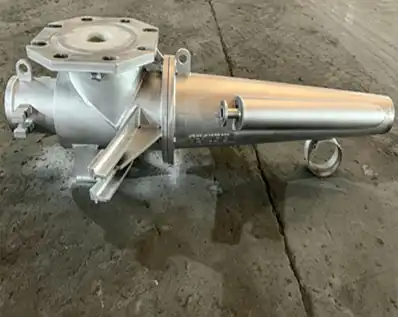
How Much Does Blast Furnace Slag Granulation Equipment Cost?
Overview of Blast Furnace Slag Granulation Equipment
- Overview of Blast Furnace Slag Granulation Equipment
- Key Factors Influencing the Cost of Blast Furnace Slag Granulation Equipment
- Comparing Blast Furnace Slag Granulation Equipment Cost with Alternatives
- How to Choose the Right Blast Furnace Slag Granulation Equipment for Your Plant?
- Maintenance, Operational Costs, and Long-Term Value
- Conclusion
- FAQ
- Partner with SMEC for Advanced Slag Granulation Solutions
- References
Cost patterns are very important for business decision-makers to understand when they are looking at investments in blast furnace slag granulation equipment technology. Blast furnace slag granulation equipment costs a lot depending on how much it can produce, how well it is automated, and how it is designed. Small systems made for smaller steel plants are usually low-cost investments, while high-throughput setups that handle more than 1,500 tons of steel every day cost more because they use more modern materials and control systems. How difficult it is for the tools to reach a glass phase content of more than 95%—which is necessary for making high-quality GGBFS—is directly related to how much it costs and how complicated the technology is. The way materials are put together, especially the use of chromium-molybdenum wear-resistant metals in important parts, has a big effect on both the original cost and the value over time.
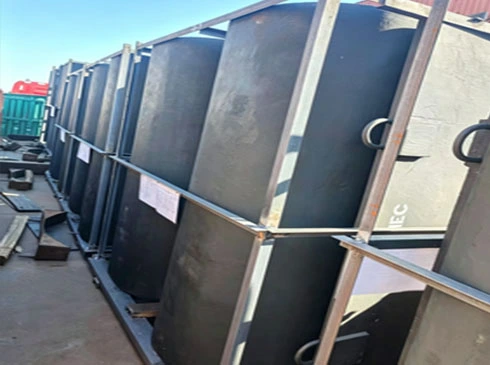
Overview of Blast Furnace Slag Granulation Equipment
Blast furnace slag granulation equipment is an important part of efforts to move toward a circular economy in the metalworking industry. Using high-pressure water jets or mechanical atomization, the system quickly cools down molten slag. This stops minerals from crystallizing and keeps the cementitious qualities that are needed in the cement business. This process solves important operating problems like controlling sulfur emissions, dealing with hazardous garbage, and recovering thermal energy.
Primary System Configurations
Water granulation systems are the most common type of installation in industrial settings because they are reliable and cool things down quickly. The water-to-slag ratio stays between 1:8 and 1:12 in these designs. This makes sure that the cooling speed is faster than the rate at which silicate grains crystallize. The glassy grains that are made meet the requirements of ASTM C989 for ground powdered blast furnace slag used in high-performance concrete.
Different types of dry granulation use mechanical ways to separate molten streams into grains without using water. Even though these systems use less water and get rid of liquid waste, they usually need more advanced equipment for managing heat. The choice between wet and dry methods is based on the supply of water at the spot, environmental rules, and the needs of processing that comes after.
Automation and Control Technologies
Manual systems need constant human supervision to change the flow and check the quality, which means they cost more to run but less to buy at first. Automatic setups include PLC-based control systems that manage the flow rates of slag, change the pressures at the nozzles on the fly, and keep an eye on important factors in real time. These advanced systems improve throughput while lowering the chance of human mistake. This makes them especially useful for large-scale operations that must maintain quality and continuity.
Key Factors Influencing the Cost of Blast Furnace Slag Granulation Equipment
The amount of money that needs to be spent on blast furnace slag granulation equipment depends on a lot of different technical requirements and operating skills. When procurement teams know about these cost causes, they can choose equipment that fits both short-term financial needs and long-term goals for creating value.
Production Capacity and Throughput Specifications
The starting level for independent coking plants and smaller metallurgical businesses is equipment made to handle less than 500 tons per day. Integrated steel mills with modest blast furnace capacity can use mid-range systems that can handle 500 to 1,200 tons per day. Large sites that process more than 1,500 tons of material per day require the most money because they need stronger structure parts, bigger quenching tanks, and stronger hydraulic systems. The granulation head, which is made of special metals that can handle extreme temperature shock, alone accounts for a big chunk of the high-capacity equipment cost.
Material Quality and Component Durability
Because liquid silicates are acidic and rough, they require very careful material choice for blast furnace slag granulation equipment. Granulator heads made of chromium-molybdenum alloys that are resistant to wear have service lives that are similar to 10 to 15 years of blast furnace campaigns. Standard steel structure may lower the original cost, but it requires replacing the liner more often, which raises upkeep costs and delays production. When reviewing quotes from different suppliers, buyers need to think about the pros and cons of both the initial cost of materials and the costs of upkeep over the product's lifetime.
Automation and Control System Sophistication
Basic hand controls lower the initial investment needed, but they also raise the need for operating work and make quality more variable. Using variable frequency drives and changeable tip angles in intermediate automation packages makes operations more flexible when the viscosity of the slag changes. Advanced systems with built-in steam condensation, H2S cleaning towers, and predictive maintenance diagnostics are expensive purchases that save a lot of money on operating costs by using less energy and not having to pay as much to comply with environmental laws. These complex designs are especially helpful for businesses that have to follow strict pollution rules in North America and Europe.
Integrated Environmental Protection Systems
More and more modern systems use sealed condensation hoods and chemical scrubbing towers to get rid of sulfurous fumes before they are released into the air. These environmental protection parts make the system more complicated and cost more to buy at first, but they are necessary to get operating permits in places where they are controlled. Meeting ISO 13500 standards and local pollution limits is often what determines whether a project is possible, rather than just being a nice-to-have.
Comparing Blast Furnace Slag Granulation Equipment Cost with Alternatives
When judging investments in blast furnace slag granulation equipment, you need to look at both the capital costs and the operating efficiency compared to other options. This comparison helps procurement teams make the case for choosing a tool by using measurable success indicators.
Modern Granulation Technology Versus Conventional Cooling Methods
Traditional slag pits and air-cooling beds need a lot of space and make solid material that can't be used in many business situations. These methods require less money to be spent on capital, but they miss out on sales of GGBFS to cement makers and don't collect heat energy. Modern blast furnace slag granulation equipment turns garbage streams into profit centers while lowering the risk to the environment. For medium to large steel plants, the higher material value and lower disposal costs usually make the machine investment worth it within three to five years of operation.
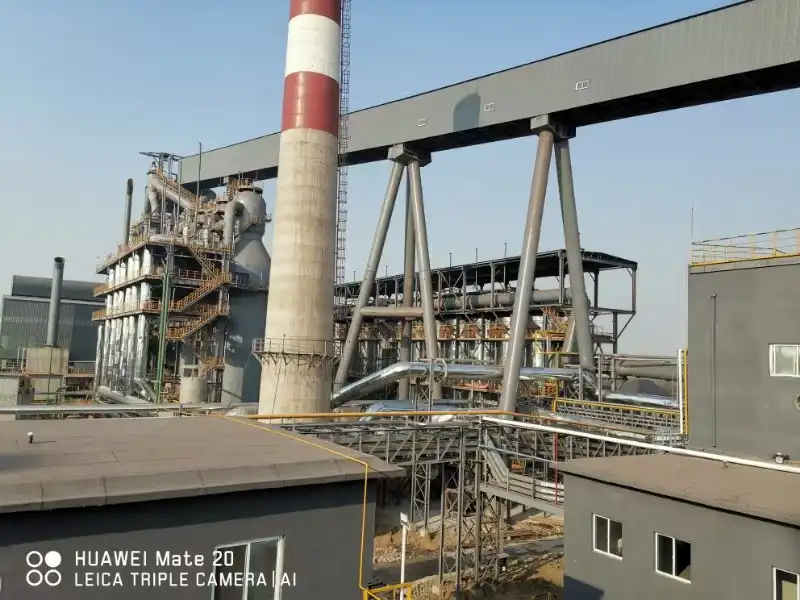
Manual Versus Automatic System Economics
When compared to fully automatic options, manual setups save about twenty to thirty percent on initial costs. Continuous operator needs, on the other hand, make ongoing labor costs go up by a lot. Automatic systems provide more consistent grain size distribution, which is important for meeting the needs of the cement business, and allow a single person to oversee multiple units. Automation is usually a good idea for sites that plan to be open for longer periods of time because it saves money on labor and makes products better, which usually covers the higher start-up costs within four years.
Regional Cost Variations and Supply Chain Considerations
Buying equipment made in well-established Asian markets is often cheaper, but it may take longer to get and require more complicated import processes. European and North American suppliers usually offer better expert help and faster access to spare parts, which lowers operating risk. Instead of just looking at FOB prices, buyers should look at the total landed cost, which includes shipping, customs taxes, and execution support. Changes in currencies and tariff policies can have a big effect on comparative economics. Because of this, supply diversification is a smart way to control risk.
How to Choose the Right Blast Furnace Slag Granulation Equipment for Your Plant?
To choose the best blast furnace slag granulation equipment, you need to carefully consider your technical needs, your budget, and the supplier's abilities. This organized method lowers the risk of buying while ensuring long-term operating alignment.
Assessing Plant Capacity and Production Requirements
Start by figuring out how much liquid slag is produced each day based on the plans and output of the blast furnace. To avoid bottlenecks during times of high flow, equipment capacity should be enough to handle peak production rates with a small spare cushion, usually 15% to 20%. Think about your plans for future growth, because flexible designs let you add more space without having to update the whole system. Check the particle size needs based on the uses further down the line. For best hydraulic activity, customers in the cement business usually ask for granules between 0.5mm and 5mm.
Budget Considerations and Financial Planning
Set a budget for the whole project that includes buying equipment, building infrastructure for installation, teaching operators, and getting an initial supply of extra parts. Look into different ways to get the money you need, like leasing tools and using payment plans from vendors that match your cash outflows with your income. Figure out the lifecycle cost by taking into account how much energy is used, how often upkeep needs to be done, and when parts are likely to need to be replaced. Systems that cost more to install at first but use less energy usually pay for themselves over the fifteen to twenty years that most equipment lasts.
Supplier Evaluation and Partnership Criteria
Give more weight to makers who can show they have worked on similar projects in similar operational settings. Ask for full reference lists from facilities that handle similar amounts of output and types of materials. Check that the company follows the relevant international standards, such as ISO 13500 and ASTM C989, which show good engineering methods and quality control. Check the infrastructure for after-sales support, such as the availability of a professional contact, the ability to do tests remotely, and the storage of extra parts in the area. Strong relationships with suppliers are very helpful when setting up tools and for as long as it is in use.
Customization and Future Scalability
Standardized equipment setups can save money, but they might not work as well in real life. Customized solutions that deal with site-specific issues like limited room, changing water quality, and integrating with existing infrastructure often make the extra money spent worthwhile by increasing performance. Modular designs that allow for staged capacity increase give businesses that are expecting growth a lot of freedom. Talk to potential providers about ways to improve so that the investment you make today can meet the needs of production tomorrow without becoming obsolete too soon.
Maintenance, Operational Costs, and Long-Term Value
Buying blast furnace slag granulation equipment is only the first step in the economics of total ownership. Lifecycle value and return on investment are based on how well maintenance is done, how efficiently operations are run, and how long parts last.
Preventive Maintenance and Component Lifecycle
Every 3,000 hours of use for blast furnace slag granulation equipment, granulation heads need to be inspected, and the metal liner needs to be replaced every twelve to eighteen months, based on how acidic and rough the slag is. Setting up strict maintenance schedules stops catastrophic fails that lead to extended downtime and costly fixes in an emergency. Dynamic balance checks of spinning drum parts make sure they work smoothly and increase the life of bearings. Buyers should ask for full maintenance training to be included in the equipment's launching so that they can learn how to fix things themselves and not have to rely on outside service providers.
Spare Parts Strategy and Technical Support
Important worn parts, like nozzle assemblies, rotor blades, and hydraulic seals, should be kept on-site so that there is as little downtime as possible when they need to be replaced. Find out how long it takes for suppliers to get specialized parts and set inventory levels that balance the cost of holding on to items with the risk of production not happening. You might want to negotiate full service agreements that ensure reaction times and parts availability. This is especially helpful for installations that are far away or that don't have a lot of repair infrastructure. Having local expert help has a big effect on the overall running cost because it cuts down on travel costs and speeds up problem resolution.
Energy Efficiency and Environmental Impact
Using a lot of electricity for hydraulic systems, water pumps, and weather control tools is a big part of running a business. Modern designs with variable frequency drives use less power because they adjust pump speeds to match the flow rates of slag instead of always running at full capacity. Efficient filtration systems keep the moisture content below 15%, which lowers the amount of drying energy needed to prepare the end product. These working efficiencies add up over the life of the equipment, making a big difference in the company's bottom line while also helping it meet environmental goals and legal requirements.
Return on Investment Calculations
To figure out how much blast furnace slag granulation equipment is worth, you have to compare the money you make from selling granulated slag, lowering the cost of disposing of trash, and capturing thermal energy to the total amount you spend on owning it. When all the financial benefits are taken into account, most metallurgical activities have payback times of three to six years. Facilities that make high-quality GGBFS that sells for more money get their money back faster. To make sure that business choices are based on realistic maintenance costs and conservative assumptions about product prices, you should figure out the net present value. Case studies from similar projects that have been documented are a great way to check how accurate financial models are.
Conclusion
Any money spent on blast furnace slag granulation equipment is a long-term strategy choice that will have effects for at least fifteen years. To find the right mix between initial capital spending and lifecycle value creation, procurement professionals have to look at things like machine capacity, automation complexity, material quality, and supplier capabilities. Most of the time, the cheapest option isn't the best one. Better planning, stronger building, and full support lead to long-lasting performance that makes the extra money spent worthwhile. A thorough analysis of production needs, a thorough review of suppliers, and a realistic financial model that takes into account both direct costs and operating efficiencies are all necessary for equipment selection to go smoothly. When companies go through the buying process carefully, they can find relationships for tools that help them meet their production goals and give them clear financial returns.
FAQ
What determines typical lead times for slag granulation equipment orders?
For normal configurations, it usually takes eight to fourteen months from the time the buy order is placed until the factory finishes making the product. Custom designs that meet the needs of a specific spot may take more engineering work. Shipping times depend a lot on where the goods are coming from and where they are going. For example, it takes four to eight weeks for ocean freight from Asian makers to North American ports. Installation and commissioning can take an extra two to three months, based on how well the site is prepared and how hard it is to connect to the current infrastructure.
Are used slag granulation systems cost-effective alternatives to new equipment?
Buying used blast furnace slag granulation equipment is cheaper, but it comes with operating risks, such as not having a record of its upkeep history and critical parts wearing out faster than they should. Before buying used systems, they need to be carefully checked out by trained experts. Think about how long wear parts are still good for, whether new parts are available for designs that might become outdated, and whether you need to change to meet current environmental standards. When looking at total ownership economics, the perceived cost benefit is often lessened by the lack of current control systems and limited warranty coverage.
How does automation level affect long-term lifecycle expenses?
Automated blast furnace slag granulation equipment lowers ongoing labor costs by allowing supervision of multiple units and finding the best operating settings to use the least amount of energy and wear on parts. While the original investment is twenty to forty percent higher than with manual methods, the savings from fewer employees, more consistent products, and less upkeep usually cover the higher cost within four years of operation. Better safety and following the rules are two more non-quantifiable benefits of investing in technology.
Partner with SMEC for Advanced Slag Granulation Solutions
With 30 years of experience in metallurgical engineering, Taiyuan Silian Heavy Industry Group's SMEC branch offers a wide range of blast furnace slag granulation equipment options. At the moment, our sites serve large steel plants and cement factories all over Asia. We are also growing our position in the North American and European markets. The 486-person team is made up of 168 engineering experts, including 30 certified senior engineers. They work together through our Large-scale Intelligent Coking Equipment Research Institute to improve the technology used to process slag.
Our 68,700-square-meter plant in Shanxi Province is where our products are made. It uses modern production methods that have been fine-tuned through constant improvements to coking equipment. Trusted provider of blast furnace slag granulation equipment, we offer full turnkey solutions that include system design, equipment manufacturing, installation supervision, user training, and technical support throughout the equipment's lifetime. Because we want to be a leader in technology, we keep investing in research relationships with top colleges. This way, we can make sure that our clients get equipment that uses the newest developments in materials science and process automation.
Talk to our International Trade Department about your needs for handling slag by emailing project@smec.cc. We offer personalized talks where we look at site-specific factors, output goals, and price factors to suggest the best system configurations. Our clear price policy and open payment options can be used in a wide range of procurement settings. To figure out if SMEC's powers meet your operational needs, you should ask for full technical specs and installation documentation. You can count on our years of experience to give you lasting, effective blast furnace slag granulation equipment for sale that turns problems with byproducts into long-term opportunities to make money.
References
American Society for Testing and Materials. (2023). "ASTM C989-23: Standard Specification for Slag Cement for Use in Concrete and Mortars." ASTM International, West Conshohocken, PA.
International Organization for Standardization. (2022). "ISO 13500:2022 Petroleum and Natural Gas Industries—Drilling Fluid Materials Specifications and Tests." ISO Technical Committee, Geneva, Switzerland.
Chen, Y., & Liu, M. (2021). "Thermal Management and Energy Recovery in Blast Furnace Slag Granulation Systems." Journal of Iron and Steel Research International, 28(4), pp. 412-425.
European Best Available Techniques Reference Document. (2023). "BAT Conclusions for Iron and Steel Production." European Commission Joint Research Centre, Brussels, Belgium.
National Slag Association. (2022). "Granulated Blast Furnace Slag: Production, Properties, and Cementitious Applications." NSA Technical Report Series, Pleasant Grove, UT.
Wang, H., Zhang, L., & Zhao, B. (2023). "Advanced Materials for High-Temperature Slag Processing Equipment: Performance Analysis and Selection Criteria." Materials Science and Engineering: A, 865, pp. 144-158.
Free consultation & volume discounts available
SEMC focuses on the entire metallurgical process—from coking, ironmaking, and steelmaking to continuous casting and rolling. Whether you face challenges related to equipment upgrades, energy efficiency optimization, or overall process transformation, please fill in the following information. Our technical team will provide you with tailor-made high-end equipment upgrade solutions and professional EPC design services to help your project be implemented efficiently.
Recommended Blog
Comparing Different Types of Blast Furnace Tuyere Equipment
What Makes High-Performance Blast Furnace Valves Different?
Future of Steelmaking: AI-Powered Blast Furnace Tuyere Imaging Services
Why Every High-Capacity BF Needs an Automatic Cooling Water Barrier?
Why Steel Plants Prefer Custom Blast Furnace Tuyere Equipment?
5 Key Factors When Buying Blast Furnace Water-Cooled Valves
A Complete Guide to Blast Furnace Riser Pipe Maintenance and Replacement
What Are the Benefits of a Blast Furnace Cast Iron Cooling Wall?